
South Korea's Manufacturing Sector in Freefall: US Tariffs Trigger Worst Slump in 31 Months
South Korea’s manufacturing sector has entered its steepest contraction in nearly three years, as the April 2025 Purchasing Managers’ Index (PMI) plummeted to 47.5—the lowest reading since September 2022. This sharp decline, driven by escalating US tariffs and weakening global demand, has cast a pall over the export-reliant economy. The data underscores a deepening crisis for industries such as automotive and electronics, which are central to South Korea’s economic growth.
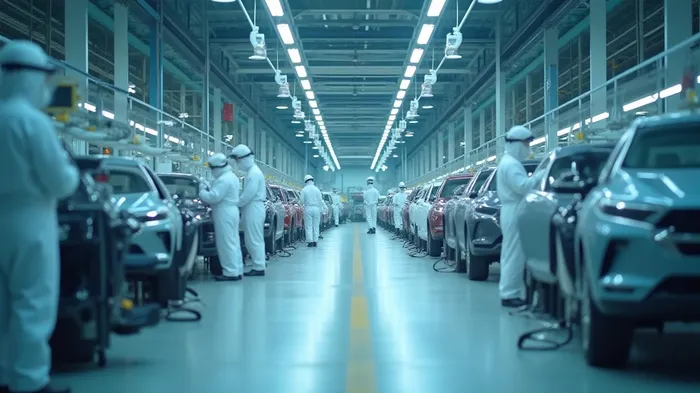
The Tariff Effect: How US Policies Are Squeezing South Korean Exports
The US tariffs, implemented in April 2025 as part of a “reciprocal” trade strategy, impose a 25% levy on all South Korean imports, including automobiles, steel, and consumer electronics. This follows pre-existing duties like the Section 232 national security tariffs (25% on steel, 25% on automobiles). The combined impact is devastating:
- Automotive Sector: New export orders for cars and parts fell to their lowest level in 22 months, with output contracting at the fastest pace since June 2023. Hyundai and Kia, the nation’s largest automakers, face margin pressure as US tariffs force higher prices for US buyers.
- Electronics: SemiconductorsON--, TVs, and smartphones now carry a 25% tariff, undermining South Korea’s competitive edge. Even exempted components like memory chips face indirect harm as global supply chains fracture.
The tariffs have also triggered a 2.3% rise in global consumer prices since 2025, according to The Budget Lab. In the US, motor vehicle prices jumped 8.4%, squeezing demand for South Korean exports.
A Perfect Storm: Domestic Weakness and Global Supply Chain Strains
The PMI data reveals a sector in freefall:
- New orders fell for the third straight month, with domestic demand contracting at its fastest pace in 31 months.
- Employment dropped to its lowest level since September 2020, signaling layoffs across manufacturing hubs like Ulsan and Gyeonggi.
- Input costs rose sharply, but firms struggled to pass these onto buyers, compressing profit margins.
Meanwhile, global supply chains face renewed disruption. The US tariffs have spurred reshoring efforts and trade diversification, but South Korea’s deeply integrated value chains—particularly in automotive and semiconductors—make adaptation costly and time-consuming.
Trade Talks and the July Deadline: A Race Against Time
South Korea and the US agreed in April to negotiate a tariff relief package by July 2025, when a temporary pause on reciprocal duties expires. However, uncertainty looms:
- A failure to reach an agreement would extend the 25% tariff burden indefinitely, worsening the contraction.
- Even if resolved, the damage may already be done. Oxford Economics projects a 0.9% GDP hit to the US economy in 2025 due to tariffs, further weakening demand for South Korean exports.
Investment Implications: Navigating the Fallout
The data paints a bleak picture for investors in South Korean manufacturing equities:
- Automotive stocks: Hyundai (005380.KS) and Kia (000270.KS) have seen 20%+ declines in 2025 amid falling US sales.
- Semiconductors: Samsung (005930.KS) and SK Hynix (000660.KS) face headwinds as global tech spending slows.
- ETFs: The iShares MSCI South Korea ETF (EWY) has underperformed emerging markets indices, down 15% year-to-date.
However, opportunities may emerge if the July trade talks succeed. A tariff rollback could trigger a rebound in auto and electronics exports, lifting equities. Investors should monitor the PMI closely—a return to 50 would signal stabilization.
Conclusion: A Turning Point for South Korea’s Economy
The April PMI data confirms that South Korea’s manufacturing sector is in crisis. With US tariffs stifling exports, domestic demand faltering, and global supply chains in disarray, the path to recovery hinges on diplomatic success. If the July deadline passes without a resolution, the contraction could deepen, pushing GDP into negative territory.
The numbers tell the story:
- A 47.5 PMI is the worst since 2022, with no end to the slump in sight.
- Auto export orders have collapsed, and input cost inflation is squeezing margins.
- The US GDP penalty—0.9% in 2025—highlights how interconnected the two economies are.
For investors, the outlook is cautious. While tariff relief could spark a rally, the current trajectory favors defensive plays. Monitor the July negotiations closely—the fate of South Korea’s manufacturing sector, and its stock markets, may hang in the balance.







Comentarios
Aún no hay comentarios