
South Korea's Landmark Bitcoin Seizure Ruling: A Catalyst for Enhanced Crypto Compliance and Regulatory Clarity
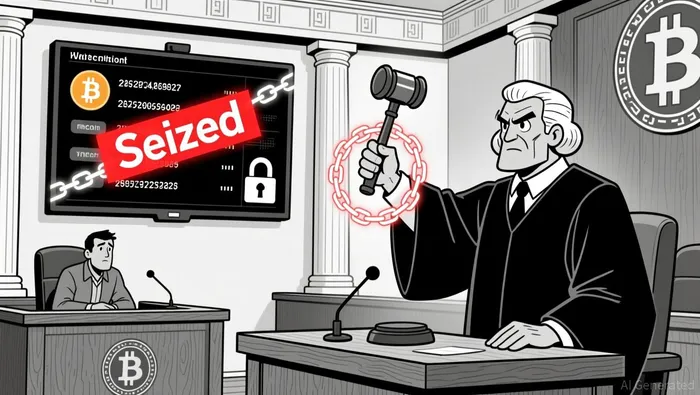
South Korea's Supreme Court delivered a landmark ruling in December 2025, affirming that BitcoinBTC-- held on centralized exchanges qualifies as seizable property under the Criminal Procedure Act. This decision, rooted in a 2020 money laundering case involving the seizure of 55.6 Bitcoin (worth $413,000), resolved a critical legal ambiguity by classifying digital assets as "electronic tokens with the ability to be independently managed, traded, and substantially controlled in terms of economic value". The ruling not only aligns South Korea with global practices in the U.S. and EU but also signals a pivotal shift in how digital assets are regulated, with profound implications for investors, exchanges, and compliance-driven firms.
Legal Clarity and Enforcement Expansion
The court's decision builds on earlier precedents recognizing Bitcoin as intangible property with economic value. By affirming that users retain control over their assets via private keys-even when stored on exchanges-the ruling provides law enforcement with clear legal grounds to freeze or seize crypto assets linked to crimes such as fraud, money laundering, and tax evasion. This has immediate consequences for platforms like Upbit and Bithumb, which collectively hold over $33 billion in crypto assets and now face heightened compliance obligations.
The Financial Services Commission (FSC) is already exploring pre-emptive freeze mechanisms for crypto accounts suspected of market manipulation, mirroring existing practices in traditional stock markets. These measures are part of a broader regulatory push to finalize "Phase 2" digital asset legislation in 2026, which will include stablecoin regulation and the introduction of Bitcoin ETFs. According to analysis, this legal clarity reduces uncertainty but also heightens the risk of asset exposure to enforcement actions, particularly for those holding assets on centralized exchanges.
Investor Behavior and Self-Custody Trends
The ruling has accelerated a shift toward self-custody solutions among South Korean investors. With over 16 million individuals holding crypto accounts, the prospect of asset seizures has prompted many to migrate holdings to private wallets or offshore platforms. Data from Q4 2025 highlights the explosive adoption of self-custody wallets like Best Wallet, which gained traction due to multi-chain integration and biometric security features. This trend is further amplified by regulatory constraints on domestic exchanges, which are limited to spot trading while offshore platforms like Binance and Bybit offer derivatives and leveraged products. Market data shows trading volumes on local exchanges have declined by 80% compared to earlier periods.
However, the transition to self-custody is not without risks. While it reduces exposure to enforcement actions, it also places the onus on individual users to manage private keys and mitigate security vulnerabilities. For institutional investors, this underscores the importance of robust custodial solutions that balance compliance with user control.
Compliance Technology Investments and Market Dynamics
South Korean crypto exchanges are now under pressure to invest in compliance technology to meet the FSC's evolving requirements. The ruling mandates that platforms cooperate with law enforcement requests to freeze or transfer assets, necessitating upgrades to transaction monitoring systems and KYC protocols. For example, the FSC's proposed pre-emptive freeze system aims to prevent suspects from moving assets to private wallets or overseas exchanges, a capability that requires real-time transaction tracking.
Despite these investments, domestic exchanges face significant headwinds. In 2025, over $110 billion in crypto assets were transferred to foreign platforms, driven by dissatisfaction with South Korea's restrictive regulatory environment. This outflow has led to an 80% decline in trading volumes on local exchanges compared to earlier periods. While platforms like CoinW and BitMart have emerged as regional leaders in trading volume, the broader market remains fragmented, with investors favoring offshore exchanges for their product diversity.
Strategic Implications for Investors
For investors in South Korean crypto exchanges, the ruling presents a dual-edged scenario. On one hand, it legitimizes the sector by aligning it with global regulatory standards, potentially attracting institutional capital as Bitcoin ETFs and stablecoin frameworks materialize in 2026. On the other hand, the outflow of assets and regulatory pressures could erode exchange revenues and market share, particularly for platforms that fail to adapt to compliance demands.
Investors in compliance-driven firms, however, may find opportunities in the sector's transformation. The need for advanced transaction monitoring tools, pre-emptive freeze systems, and cross-border compliance solutions is likely to drive demand for fintech firms specializing in digital asset regulation. Additionally, the FSC's focus on stablecoin oversight and anti-money laundering (AML) frameworks could create a fertile ground for innovation in compliance-as-a-service models.
Conclusion
South Korea's Bitcoin seizure ruling marks a turning point in the country's approach to digital asset regulation. While it enhances legal clarity and enforcement capabilities, it also exposes investors to new risks and compliance challenges. For exchanges, the path forward requires significant technological and operational investments to meet regulatory expectations. For investors, the key lies in balancing exposure to domestic platforms with strategic diversification into self-custody solutions and compliance-focused fintech firms. As the FSC moves toward its 2026 regulatory agenda, the South Korean crypto market is poised for a period of consolidation and innovation, with long-term implications for global digital asset governance.






Comentarios
Aún no hay comentarios