
South Korea's KRW1 Stablecoin: A Strategic Investment in Digital Finance's Future
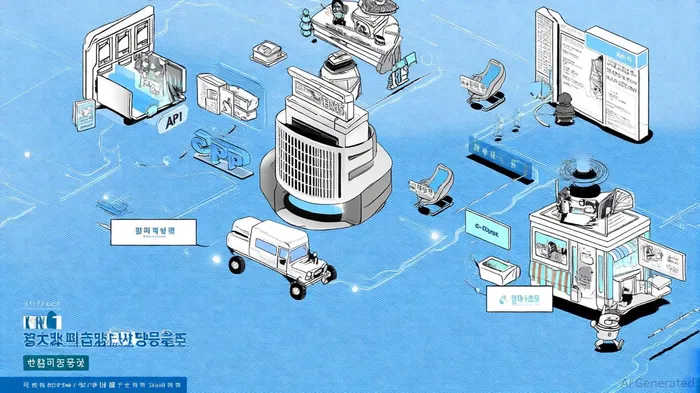
South Korea's digital finance landscape is undergoing a seismic shift with the launch of KRW1, the nation's first stablecoin fully backed by the Korean won. Issued by BDACS in collaboration with Woori Bank and built on the AvalancheAVAX-- blockchain, KRW1 represents a bold step toward financial sovereignty and technological innovation. For investors, this development raises critical questions: How does KRW1's structure and regulatory alignment position it for growth? What systemic implications could its adoption have for South Korea's economy and global stablecoin markets?
Investment Potential: A Confluence of Innovation and Regulation
KRW1's design is a masterclass in balancing transparency and scalability. Each token is collateralized 1:1 with KRW reserves held in escrow at Woori Bank, with real-time proof of reserves enabled via API integration [2]. This eliminates the trust issues that have plagued many stablecoins, particularly those backed by opaque asset baskets. The choice of Avalanche—a blockchain known for its sub-second finality and low fees—further enhances KRW1's utility for cross-border remittances and domestic transactions [3].
Regulatory tailwinds are equally compelling. South Korea's Financial Services Commission (FSC) is finalizing the Virtual Asset User Protection Act by October 2025, which mandates full reserve backing for stablecoins and places them under the Bank of Korea's oversight [4]. While this could limit non-bank entities like BDACS, the Digital Asset Basic Act's requirement of a 500 million won minimum capital threshold suggests the government is prioritizing stability over exclusivity [5]. For BDACS, this creates a first-mover advantage: as the only won-backed stablecoin in a pilot phase, KRW1 is positioned to dominate early adoption in sectors like e-commerce and public-sector disbursements [6].
Market dynamics also favor KRW1. South Korea's stablecoin outflows surged to 57 trillion won in Q1 2025, with USD-pegged stablecoins like USDTUSDT-- and USDCUSDC-- accounting for 47.3% of activity [1]. KRW1's launch could disrupt this trend by reducing reliance on foreign-pegged assets, a strategic priority for a nation seeking to insulate its economy from U.S. monetary policy shocks. Early data suggests demand is already strong: with 18 million South Koreans engaged in digital assets, KRW1's integration into remittance platforms and P2P networks could accelerate adoption beyond expectations [7].
Systemic Implications: Redefining Financial Infrastructure
The broader implications of KRW1 extend beyond BDACS's balance sheet. By anchoring a stablecoin to the won, South Korea is asserting control over its digital monetary sovereignty. This aligns with global trends, such as China's digital yuan and the EU's digital euro initiatives, but with a unique edge: KRW1's real-time transparency and Avalanche's interoperability could make it a model for other emerging markets [8].
For cross-border trade, KRW1 could reduce friction in transactions with neighboring economies like Japan and China, where won usage is already prevalent. Public-sector applications, such as emergency relief disbursements, further underscore its potential to streamline government operations. If KRW1 gains traction in these areas, it could catalyze a shift from traditional banking systems to blockchain-based infrastructure, mirroring the rise of DeFi in crypto markets.
However, systemic risks remain. The FSC's upcoming regulations may impose stricter capital requirements or restrict multi-chain expansions, which BDACS has hinted at for KRW1 [9]. Additionally, global stablecoin giants like TetherUSDT-- and Circle could undercut KRW1's domestic focus by introducing their own won-pegged tokens, leveraging their existing user bases and liquidity pools.
Challenges and Risks: Navigating a Competitive Landscape
Despite its strengths, KRW1 faces hurdles. Regulatory uncertainty looms large: while the FSC's framework emphasizes stability, it could inadvertently stifle innovation by limiting non-bank participation. BDACS's reliance on Woori Bank also introduces counterparty risk—if the bank's reserves face liquidity constraints, KRW1's 1:1 peg could be compromised.
Competition is another wildcard. USD-pegged stablecoins dominate global markets, and even within South Korea, international players may adapt to local regulations faster than BDACS. For KRW1 to succeed, it must differentiate itself through use cases that USD-pegged tokens cannot replicate, such as seamless integration with local payment systems and government programs.
Conclusion: A Calculated Bet on the Future
KRW1 is more than a stablecoin—it's a strategic investment in South Korea's digital future. For investors, the token's transparent structure, regulatory alignment, and growing adoption in critical sectors present a compelling opportunity. Yet, the path to dominance is fraught with regulatory and competitive challenges. Those who bet on KRW1 must weigh its potential to reshape South Korea's financial infrastructure against the risks of a rapidly evolving market.
As the FSC finalizes its rules and BDACS expands KRW1's use cases, one thing is clear: the won-backed stablecoin is a harbinger of a new era in digital finance—one where transparency, sovereignty, and blockchain converge.






Comentarios
Aún no hay comentarios