
South Korea's Human Rights Scrutiny and Its Impact on US-Korea Labor and Trade Dynamics: Assessing Geopolitical Risk and Investment Opportunities in Supply Chain Resilience
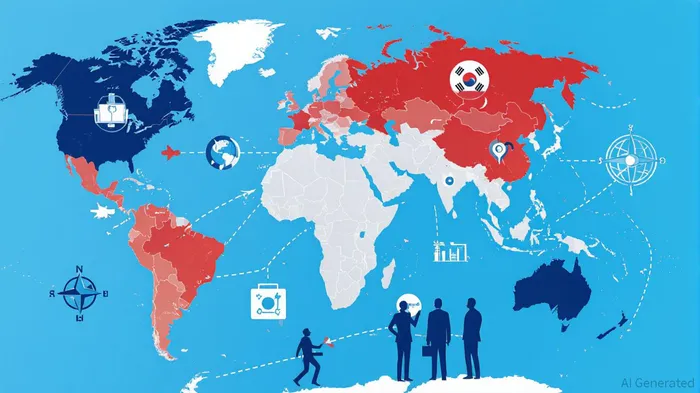
In an era where supply chain resilience and ethical governance are inextricably linked to geopolitical stability, South Korea's position as a critical node in global trade networks demands closer scrutiny. While recent data on specific labor rights issues in South Korea remains sparse, the broader geopolitical landscape—shaped by U.S. strategic priorities, shifting supply chain dynamics, and regional tensions—provides a framework to assess risks and opportunities for investors.
Geopolitical Context and Supply Chain Interdependence
The U.S.-South Korea alliance has long been a cornerstone of stability in East Asia, but recent years have seen this relationship evolve beyond security to encompass economic resilience. According to a report by the Geopolitical Monitor, supply chain policies are increasingly influenced by geopolitical factors, including strategic competition with China and the need to mitigate disruptions[1]. South Korea's dominance in semiconductors, automotive manufacturing, and advanced technology positions it as a linchpin for U.S. efforts to decouple from high-risk regions. However, this interdependence also exposes vulnerabilities, particularly if labor rights concerns—such as worker protections, unionization challenges, or wage disparities—erode trust or trigger regulatory pushback.
Labor Rights and Investment Risks: A Glimpse into the Unknown
While no recent U.S. government or international labor organization reports explicitly link South Korea's labor practices to supply chain policies in 2024–2025, historical patterns suggest that labor rights remain a latent risk. For instance, South Korea's labor market has faced criticism for its rigid corporate hierarchies, limited union representation, and systemic underpayment in certain sectors. These issues, though not newly emerged, could gain traction in U.S. policy debates as domestic pressure grows for stricter human rights due diligence in global supply chains. As stated by geopolitical analysts, economic dependencies are often scrutinized through a moral lens, especially when aligning with partners in volatile regions[2].
Investors must also consider how geopolitical risks—such as North Korean provocations or China's economic leverage—might amplify sensitivities around labor governance. A supply chain disruption in South Korea, whether due to political instability or labor unrest, could ripple across U.S. manufacturing and technology sectors, which rely heavily on Korean components.
Opportunities in Resilience-Driven Innovation
Despite these risks, South Korea's strategic alignment with U.S. interests creates openings for investment. The country's push to modernize its labor laws, coupled with U.S. incentives for nearshoring and friendshoring, could spur reforms that enhance both productivity and ethical standards. For example, U.S. corporations diversifying away from China may find South Korea an attractive partner if it addresses labor concerns proactively.
A data visualization query could illuminate this trend:
Strategic Recommendations for Investors
- Diversify Exposure: Prioritize companies with transparent supply chain practices and contingency plans for geopolitical shocks. South Korean firms investing in automation or ethical labor certifications may mitigate risks.
- Monitor Policy Shifts: Track U.S. trade policy updates and South Korea's labor reforms. A tightening of U.S. import regulations tied to human rights could reshape trade flows.
- Leverage Regional Stability: South Korea's geopolitical buffer role against China and North Korea makes it a strategic asset. Investors should weigh this stability against potential labor-related reputational risks.
Conclusion
South Korea's human rights landscape, while not yet a focal point of U.S. trade policy, cannot be ignored in an era where ethics and economics are increasingly intertwined. The absence of recent, detailed reports on labor issues does not negate their potential to disrupt trade or influence investment. Instead, it underscores the need for proactive due diligence. By aligning with partners that prioritize both resilience and responsibility, investors can navigate the complex interplay of geopolitics and labor governance to secure long-term value.







Comentarios
Aún no hay comentarios