
South Korea's Housing Market and BOK Policy Dilemma: Implications for Investors
Housing Market: A Tale of Two Cities
The South Korean housing market remains deeply polarized. According to the Korea Housing Market Institute, the national house price index in Q2 2025 edged up to 142.39, a marginal increase from 142.34 in Q1. However, this modest growth masks stark regional disparities. 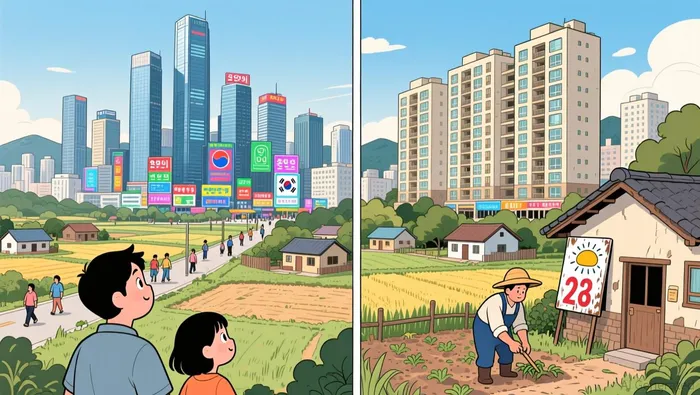 . The Seoul metropolitan area, which accounts for a significant share of the country's economic activity, saw a 1.68% year-on-year rise in housing prices as of February 2025, with Seoul itself surging 3.63%. In contrast, regions outside the capital have experienced a three-year decline, projected to worsen in 2025, with nationwide prices expected to fall by 0.5% due to a 1.4% drop in non-metropolitan areas.
This divergence reflects structural challenges: supply constraints in Seoul and its suburbs, coupled with speculative demand, have outpaced regulatory efforts. Despite stricter mortgage loan limits expanded to all 25 districts of Seoul and 12 areas in Gyeonggi Province in Q3 2025, housing prices and transaction volumes accelerated in central Seoul, suggesting that cooling measures may take time to materialize.
Household Debt: A Lingering Risk
While housing prices have stabilized, household debt remains a critical concern. As of Q3 2025, total household debt reached 1,968.3 trillion won, growing by 14.9 trillion won from Q2 2025. The debt-to-GDP ratio, though declining slightly to 89.5% in Q1 2025, remains elevated. Kim Min-su of the BOK noted that the 0.8% growth rate in Q3 2025-slower than previous quarters-suggests a potential decline in the debt-to-GDP ratio, assuming real GDP growth of 1.7%.
The BOK has repeatedly emphasized that unchecked household debt could undermine financial stability. With housing inflation concentrated in Seoul, policymakers face a dilemma: tightening monetary policy risks exacerbating debt burdens, while inaction could fuel speculative bubbles.
BOK Policy: A Pause Amid Uncertainty
The BOK's Q3 2025 policy meeting reaffirmed its cautious stance. The central bank maintained the benchmark interest rate at 2.5%, a pause since May 2025. This decision was influenced by dual pressures: housing inflation in Seoul and the unresolved U.S.-South Korea trade negotiations, which involve a stalled $350 billion investment deal. The BOK also highlighted the need to monitor U.S. tariff hikes on exports and their potential to slow economic growth. Forward guidance from the BOK underscores this caution. While inflation is projected to remain stable at 2%-supported by subdued demand and stable oil prices-the central bank emphasized a "data-dependent" approach to future rate adjustments. No concrete timelines were provided for rate hikes, with the board stating it would "preserve the current rate while closely monitoring domestic and international economic conditions". This ambiguity reflects the BOK's prioritization of financial stability over aggressive tightening, particularly given the uneven housing market recovery.
Implications for Investors
For investors, the BOK's policy trajectory hinges on three key factors:
1. Regional Housing Market Divergence: Opportunities in Seoul's resilient market must be weighed against risks in non-metropolitan areas, where price declines could persist.
2. Policy Sensitivity: The BOK's focus on household debt and housing inflation suggests that any rate hikes will be gradual and contingent on trade negotiations and inflation trends.
3. Trade Uncertainty: The stalled U.S. investment deal and U.S.-China tensions could delay policy normalization, prolonging the pause in rate hikes.
Investors should also consider the BOK's emphasis on exchange rate volatility and financial stability. A prolonged pause in rate hikes could support equities and real estate in Seoul, but risks persist if trade disputes escalate or housing inflation accelerates.
Conclusion
South Korea's housing market and BOK policy dilemma highlight the challenges of balancing growth, stability, and debt. While the BOK has opted for a pause in Q3 2025, the path forward remains uncertain. For investors, the key takeaway is to monitor regional housing trends, trade developments, and the BOK's data-dependent approach. In a market where policy and fundamentals are tightly linked, agility and caution will be paramount.







Comentarios
Aún no hay comentarios