
South Korea Flags Economic Risks as Political Turmoil Rumbles On
Generado por agente de IAWesley Park
miércoles, 11 de diciembre de 2024, 9:31 am ET1 min de lectura
South Korea, a major Asian economy known for its thriving industrial sector and electronics exports, is facing economic challenges amidst ongoing political turmoil. The country's economic outlook, once characterized by solid growth rates, has slowed in recent years, with GDP growth dropping to +2.6% in 2022 and +1.3% in 2023. Inflation, though lower than the OECD average, has risen from 2.5% in 2021 to 5.1% in 2022, easing to an estimated 3.8% in 2023. The Bank of Korea (BoK) is expected to embark on a gradual monetary easing cycle by mid-2024, as inflation is projected to decline further to below 2%.
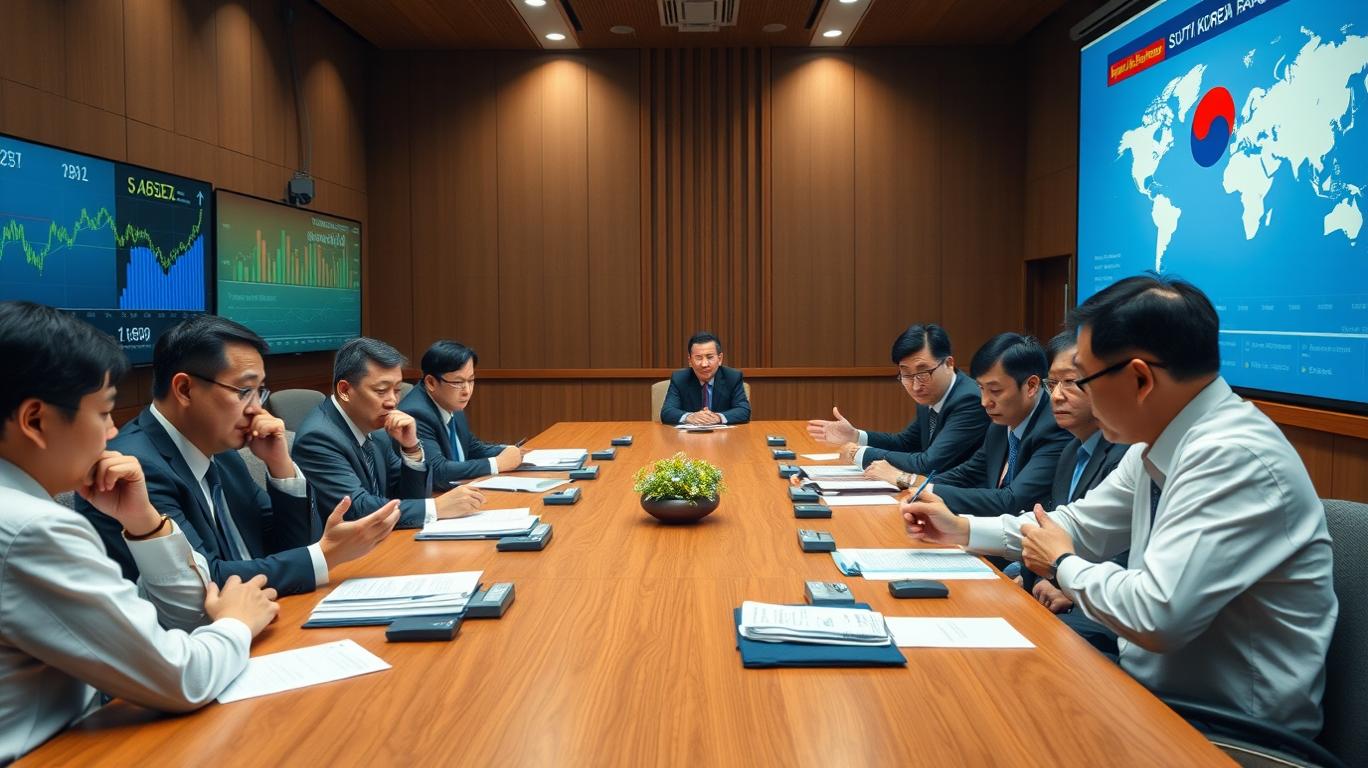
Despite solid public and external finances, household debt, at 105% of GDP in 2023, remains a concern. The aging population and low fertility rate pose structural threats to the economy. South Korea's export-oriented economy, with a concentration in electronics sectors and China and the US as dominant destinations, faces medium-term challenges due to geopolitical tensions. Investor confidence has been shaken by the political turmoil, with the KOSPI index fluctuating and the won depreciating.
South Korea's economic outlook faces significant long-term risks, primarily household debt and an aging population. As of 2023, household debt reached 105% of GDP, with mortgages being the primary component. This high debt level, coupled with potential wage inflation and labor market dynamics, could strain household finances and hinder consumption, a key driver of South Korea's economy. Additionally, South Korea has the world's lowest fertility rate, with the median age of the population rapidly rising to 44.5 years in 2023. This demographic shift will put pressure on pensions and healthcare requirements, potentially leading to harsh labor reforms and impacting economic growth.
In conclusion, South Korea's economic risks are exacerbated by political turmoil, with household debt and an aging population posing significant long-term challenges. Investors should closely monitor these factors and consider the potential impact on the country's financial sector and export-dependent industries. Despite these concerns, South Korea's strong business environment and robust financial system offer some reassurance. As the country navigates these challenges, maintaining a balanced portfolio and careful asset allocation will be crucial for investors seeking to capitalize on long-term growth prospects.



Divulgación editorial y transparencia de la IA: Ainvest News utiliza tecnología avanzada de Modelos de Lenguaje Largo (LLM) para sintetizar y analizar datos de mercado en tiempo real. Para garantizar los más altos estándares de integridad, cada artículo se somete a un riguroso proceso de verificación con participación humana.
Mientras la IA asiste en el procesamiento de datos y la redacción inicial, un miembro editorial profesional de Ainvest revisa, verifica y aprueba de forma independiente todo el contenido para garantizar su precisión y cumplimiento con los estándares editoriales de Ainvest Fintech Inc. Esta supervisión humana está diseñada para mitigar las alucinaciones de la IA y garantizar el contexto financiero.
Advertencia sobre inversiones: Este contenido se proporciona únicamente con fines informativos y no constituye asesoramiento profesional de inversión, legal o financiero. Los mercados conllevan riesgos inherentes. Se recomienda a los usuarios que realicen una investigación independiente o consulten a un asesor financiero certificado antes de tomar cualquier decisión. Ainvest Fintech Inc. se exime de toda responsabilidad por las acciones tomadas con base en esta información. ¿Encontró un error? Reportar un problema


SOBRE NOSOTROS
Nuestra historiaAutores de noticiasBase de conocimientosPolítica de privacidadTérmino de usoDescargo de responsabilidad de corretaje de tercerosTérminos de uso de AIMEDivulgaciones de riesgos de AInvest AICarrerasCONTÁCTENOS
Email: support@ainvest.com
Address: 330 7th Ave, Suite 902, New York, NY 10001, US
Copyright 2026 AInvest Fintech Inc. All rights reserved.


Comentarios
Aún no hay comentarios