
South Korea’s Export Prices Edge Higher Amid Tariff Battles: What Investors Need to Know
South Korea’s export prices rose 0.3% in March 2025, marking a modest rebound against the backdrop of escalating U.S. trade tensions. While this uptick reflects resilience in key sectors like automotive and shipbuilding, the broader narrative remains fraught with uncertainty. The U.S. imposition of 25% tariffs on South Korean steel, aluminum, and automobiles—effective since April 2025—has reshaped export dynamics, pricing strategies, and geopolitical alliances. Here’s how investors should parse this complex landscape.
The Tariff Paradox: Pricing Power vs. Profit Erosion
The 0.3% rise in export prices masks deeper struggles. U.S. tariffs on automobiles and parts—applied to companies like Hyundai (HYMTF) and Kia—have forced a painful trade-off: either absorb costs or pass them to consumers. Industry estimates suggest Hyundai’s U.S. sales could drop 15–20% this year, squeezing margins even as prices inch upward.
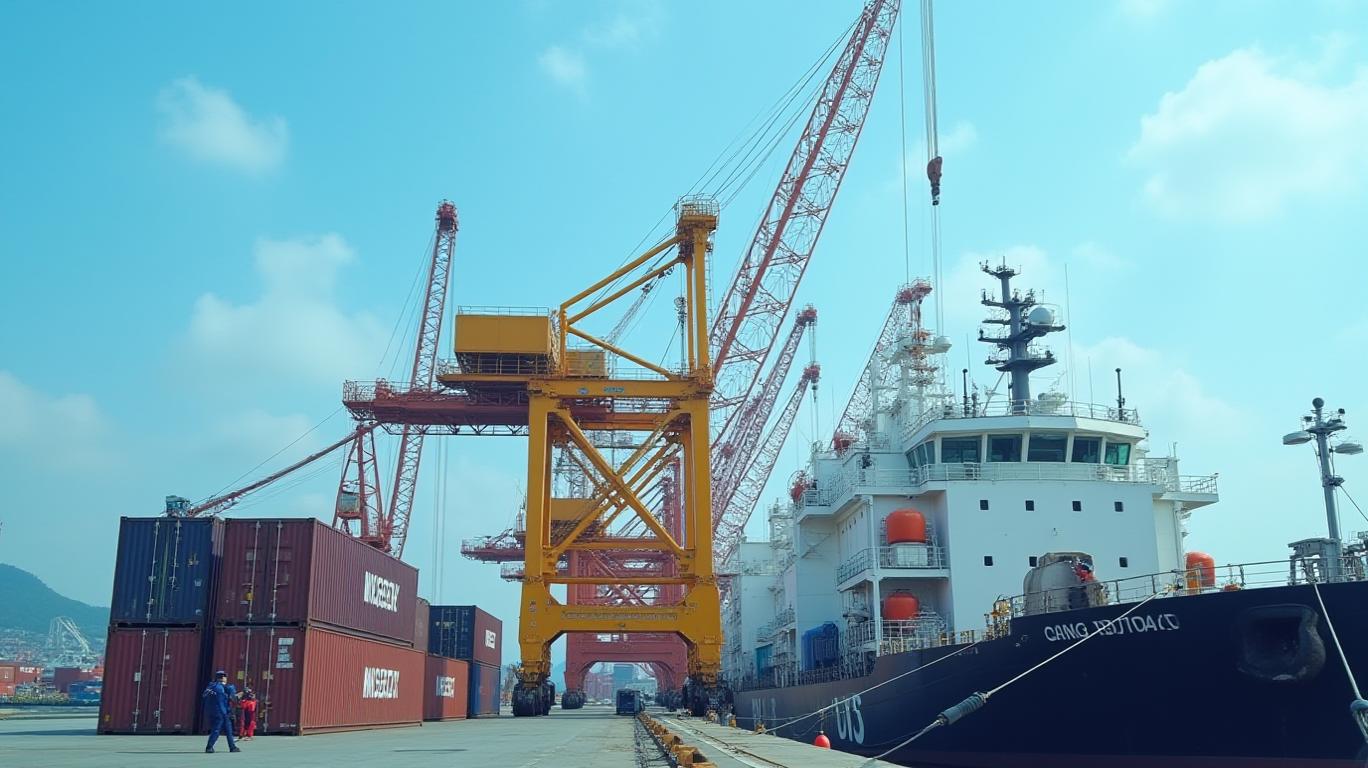
Meanwhile, South Korea’s shipbuilding sector—a $15 billion industry—remains a critical bargaining chip. Trade officials have leveraged its global competitiveness to negotiate tariff relief, but this has yet to materialize.
The automotive sector’s volatility is clear: Hyundai’s shares fell 12% in April alone amid tariff fears, even as export prices edged up.
Currency Depreciation: A Double-Edged Sword
The South Korean won’s 10% depreciation in early 2025—hitting a five-year low of 1,467.8 per dollar—has both helped and hurt exporters. While a weaker currency makes Korean goods cheaper abroad, the tariffs negate much of this benefit. Analysts estimate the won’s decline will cost the economy $15 billion in lost trade competitiveness this year.
The currency’s sharp decline since early 2025 underscores the fragility of South Korea’s export pricing strategy.
Tech Sector Risks and Regional Realignment
The automotive sector isn’t the only concern. U.S. threats to expand tariffs to tech products—such as semiconductors—could destabilize giants like Samsung (SSNLF) and SK Hynix (SKHNF). While these firms remain tariff-exempt for now, their global supply chains face disruptions as South Korea seeks to diversify markets.
Regional alliances are also shifting. South Korea’s push to revive trilateral free trade talks with Japan and China—a potential $200 billion market—could offset U.S. protectionism but risks antagonizing Washington.
Investor Watchlist: Key Metrics to Monitor
- Tariff Exemptions: Track negotiations over automotive and steel tariffs. A 25% rollback could stabilize Hyundai’s margins and export volumes.
- Won Stability: A further 5% depreciation could erase any pricing gains, pushing companies like POSCOPKX-- (PKX) deeper into the red.
- Trilateral FTA Progress: Successful talks could unlock new markets for exporters like Samsung, reducing reliance on the U.S.
Conclusion: A Fragile Equilibrium
South Korea’s 0.3% export price rise in March is a flicker of hope in a stormy sea. While shipbuilding and LNG deals with the U.S. offer temporary relief, the broader economy remains hostage to trade tensions, currency swings, and geopolitical maneuvering.
Investors should note:
- Automotive firms like Hyundai face a knife’s edge between absorbing tariffs or losing market share.
- Tech giants Samsung and SK Hynix have geographic diversification (40% of revenue comes from North America) to thank for relative stability.
- Currency risks loom large, with every 1% won depreciation costing exporters $1.5 billion annually.
The path forward hinges on resolving U.S. tariffs and stabilizing the won. Until then, South Korea’s export-driven engine will sputter—a cautionary tale for global supply chains in an era of protectionism.
The chart shows a fragile recovery in prices despite declining volumes, underscoring the need for lasting trade solutions.





Comentarios
Aún no hay comentarios