
South Korea's EV Industry in the Crosshairs: Geopolitical Risks and Supply Chain Vulnerabilities in the U.S.
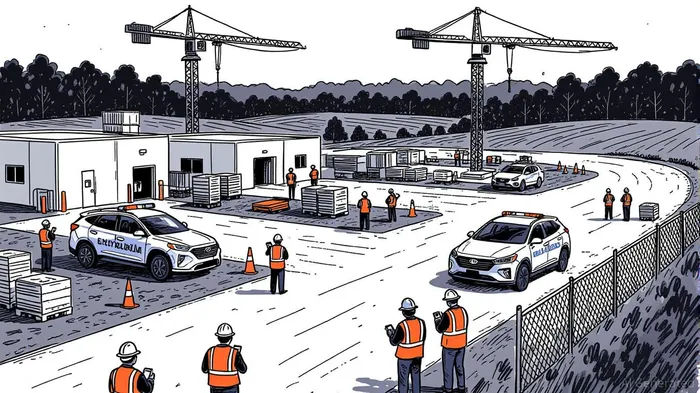
, including 300 South Korean nationals—has exposed a critical fault line in global tech manufacturing. This operation, dubbed “Operation Low Voltage,” was the largest single-site immigration enforcement action in U.S. history. While framed by U.S. authorities as a crackdown on “unfair labor practices,” the incident has sent shockwaves through South Korea's EV sector, revealing how geopolitical tensions and regulatory volatility can destabilize even the most ambitious cross-border industrial projects.
A Perfect Storm of Geopolitics and Labor Policy
The Georgia plant, , . investment pledge under the recent U.S.-South Korea trade pact. The raid, however, has cast doubt on the viability of such large-scale foreign manufacturing in the U.S., particularly for industries reliant on technical labor. South Korean workers, many of whom were subcontractors operating under visitor visas, were abruptly detained, forcing the companies to halt construction and suspend U.S. business travel. , while Hyundai issued a stark warning: “The U.S. visaV-- system is not aligned with the urgent needs of infrastructure development.”
The incident underscores a growing tension between U.S. immigration enforcement and the Trump administration's push to attract foreign investment. While the U.S. seeks to secure domestic supply chains for EVs and semiconductors, its immigration policies—particularly strict visa restrictions and aggressive raids—create operational risks for foreign firms. For South Korean companies, which often deploy skilled labor for complex construction and technical work, the U.S. has become a double-edged sword: a market of opportunity and a regulatory minefield.
Investor Sentiment and Market Reactions
Financial markets initially responded with caution. , . However, analysts noted that the decline was muted compared to the broader Kospi index, . This resilience reflects prior expectations of delays at the Georgia plant, but it also highlights the sector's reliance on U.S. demand. The Inflation Reduction Act (IRA) has made the U.S. a critical market for EV battery producers, and South Korean firms cannot afford to abandon it entirely.
Yet the raid has amplified concerns about political risk. . This uncertainty has prompted investors to scrutinize South Korean EV firms' exposure to U.S. regulatory shifts. For example, companies like Samsung and SK Hynix—already expanding chip manufacturing in Texas and Arizona—are now accelerating investments in Southeast Asia and India to hedge against U.S. policy volatility.
Supply Chain Diversification and Strategic Reassessment
The Georgia incident has forced South Korean EV firms to rethink their supply chain strategies. Hyundai and LG Energy Solution have launched internal audits of subcontractors to ensure compliance with U.S. labor laws, while also exploring automation and local workforce training programs. Meanwhile, companies like SK Innovation and Samsung SDI are diversifying their manufacturing hubs, with new battery plants in Vietnam and India.
This shift reflects a broader trend: the U.S. is no longer the sole destination for South Korean tech manufacturing. China, despite its geopolitical risks, remains a critical supplier of raw materials for EV batteries, . South Korean firms are now navigating a delicate balancing act—aligning with U.S. decoupling efforts while maintaining access to Chinese resources.
Geopolitical Implications and Diplomatic Fallout
The raid has also strained U.S.-South Korea relations. South Korea's Foreign Ministry expressed “concern and regret,” while lawmakers demanded guarantees for the safety of South Korean workers. President 's recent White House meeting with Donald Trump had emphasized the importance of stable investment environments, but the Georgia incident has exposed the fragility of such assurances.
U.S. President Trump, in a Truth Social post, framed the raid as a “necessary enforcement action” to protect American workers. However, critics argue that the operation's optics—detained workers shackled and led away in chains—risk deterring foreign investment. The incident has become a case study in how domestic policy can disrupt international partnerships, with South Korean firms now prioritizing geopolitical agility in their investment decisions.
Investment Advice: Navigating the New Normal
For investors, the Georgia raid underscores the need to assess geopolitical and regulatory risks alongside traditional financial metrics. Here are key considerations:
- Diversify Exposure: Avoid overconcentration in U.S.-centric EV supply chains. Companies with diversified manufacturing hubs (e.g., Vietnam, India) may offer more resilience.
- Monitor Compliance Costs: Firms investing heavily in U.S. labor audits and compliance programs (e.g., E-Verify adoption) may face short-term costs but could mitigate long-term risks.
- Track Geopolitical Developments: Closely follow U.S.-South Korea diplomatic dialogues and potential visa policy reforms. A resolution to the Georgia incident could signal improved conditions for foreign firms.
- Evaluate Regional Contenders: Consider emerging markets with stable labor policies and growing EV demand, such as India and Southeast Asia.
Conclusion
The Georgia raid is a wake-up call for South Korean EV firms and their investors. While the U.S. remains a vital market, the incident highlights the fragility of cross-border industrial ecosystems in an era of heightened geopolitical and regulatory risks. Companies that adapt by diversifying supply chains, investing in local talent, and prioritizing compliance will be best positioned to thrive. For investors, the lesson is clear: in the EV race, resilience is as important as innovation.







Comentarios
Aún no hay comentarios