
South Korea's Corporate Crypto Thaw and Its Strategic Implications for Institutional Investors
South Korea's crypto market is undergoing a seismic shift. After a nine-year ban on corporate crypto investing, the country has taken a bold step to integrate digital assets into its traditional financial system. This regulatory thaw, part of the 2026 Economic Growth Strategy, allows public companies and professional investors to allocate up to 5% of their equity capital to the top 20 cryptocurrencies by market capitalization, as listed on Korea's five licensed exchanges according to Nasdaq. For institutional investors, this marks a pivotal moment: a high-growth corridor is opening in a market long known for its tech-savvy population and speculative trading culture. But what does this mean for capital allocation, risk management, and the broader digital asset ecosystem?
A Cautious but Calculated Opening
South Korea's approach is deliberate. By restricting investments to the largest cryptocurrencies and regulated exchanges, the Financial Services Commission (FSC) is balancing innovation with risk mitigation. This contrasts sharply with Japan and Hong Kong, where regulatory frameworks are tightening or imposing stricter corporate exposure limits. The policy's narrow scope-focused on top-tier assets-suggests a desire to avoid the volatility of smaller tokens while still capturing the upside of BitcoinBTC-- and EthereumETH--.
The first real-world test came in early 2026, when World Vision Korea sold Ethereum through Upbit to convert crypto donations into cash as reported. This transaction demonstrated the feasibility of institutional-grade crypto operations under the new rules. Meanwhile, on-chain data reveals that South Korea's crypto activity is dominated by professional traders, with a significant portion of transactions falling in the $10,000 to $1 million range. This maturity in trading behavior positions the country as a potential hub for institutional-grade crypto liquidity.
Market Dynamics: Growth, Contraction, and Resilience
Despite the regulatory optimism, South Korea's crypto market has faced headwinds. Trading volume plummeted by 80% year-over-year in early 2026, with major exchanges like Upbit and Bithumb experiencing declines of 82% and 74%, respectively according to MEXC. This contraction is attributed to global market consolidation post-2024–2025 bull cycles, macroeconomic factors like higher interest rates, and lingering regulatory uncertainty. However, the market's historical trajectory tells a different story.
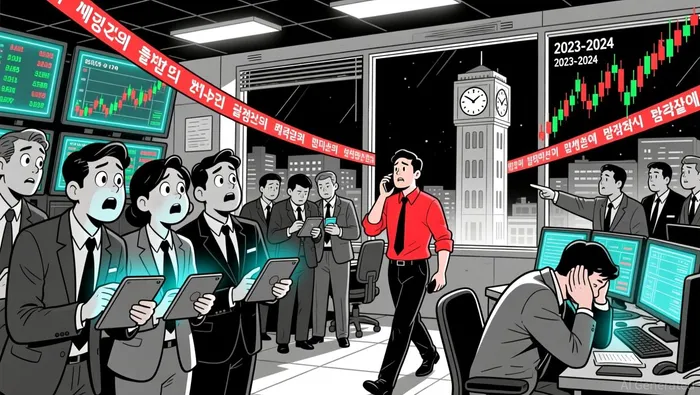
Between 2023 and 2024, South Korea was one of Asia's fastest-growing crypto markets, with the South Korean won becoming the most actively traded currency in global cryptocurrency markets. The exchange platform market generated $2.1 billion in revenue in 2023 and is projected to reach $13.8 billion by 2030, growing at a 30.6% CAGR. This resilience underscores the market's long-term potential, even as short-term volatility persists.
Strategic Implications for Institutional Investors
For institutional investors, South Korea's regulatory shift creates a unique opportunity: a regulated, high-growth market with a clear framework for participation. The 5% equity allocation limit is modest but significant, as it legitimizes crypto as a strategic asset class rather than a speculative fringe play. This could catalyze a wave of capital inflows, particularly as the Korea Exchange (KRX) prepares to launch spot Bitcoin ETFs in 2026.
However, timing is critical. The recent 80% drop in trading volume highlights the risks of entering a market still grappling with global macroeconomic pressures. Institutions must weigh the potential rewards of early adoption against the volatility of a sector that remains sensitive to interest rates and regulatory shifts. For example, South Korea's stablecoin legislation-part of its 2026 strategy-could further stabilize the ecosystem by introducing KRW-backed stablecoins, but its implementation is still in the legislative pipeline.
A Global Perspective: South Korea vs. Asia's Crypto Landscape
South Korea's approach diverges from its neighbors. While Japan and Hong Kong are adopting stricter frameworks, South Korea is positioning itself as a crypto-friendly jurisdiction. This divergence could attract foreign capital seeking regulatory clarity, especially as the country aims to extend onshore foreign exchange trading to 24-hour operations by July 2026. The FSC's phase-two digital asset legislation, which includes a comprehensive stablecoin framework, is another differentiator according to Fireblocks.
Comparatively, South Korea's market is more mature than many Asian peers. Its 6.45 million active crypto users by late 2023 and a young, tech-savvy demographic provide a fertile ground for institutional adoption. Yet, the recent volume contraction serves as a cautionary tale: even the most promising markets require careful navigation of global trends.
Conclusion: A Window of Opportunity
South Korea's corporate crypto thaw is a strategic masterstroke. By cautiously opening its markets, the country is positioning itself as a bridge between traditional finance and digital assets. For institutional investors, the key lies in timing-capitalizing on the regulatory clarity while navigating the short-term volatility. The launch of Bitcoin ETFs and stablecoin frameworks could further solidify South Korea's role as a global crypto hub.
As the FSC continues to refine its policies, the next 12–18 months will be critical. Institutions that act now, while the market is still in its early stages of adoption, may secure a first-mover advantage in a sector poised for exponential growth.






Comentarios
Aún no hay comentarios