
South Korea’s Consumer Confidence Falls Amid Hormuz Tensions
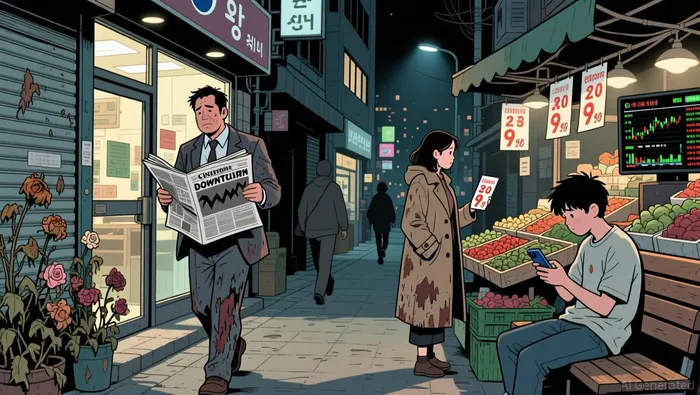
South Korea’s Consumer Confidence Index fell to 107.0 in March 2026, down from 112.1 in the previous period. This drop is significant for a market known for its sophisticated consumer behavior and high standards according to market analysis.
The decline, though without a forecast reference point, could signal shifting consumer sentiment amid global uncertainties such as the U.S.-Iran tensions over the Strait of Hormuz, which caused sharp market sell-offs in the region as reported by CNBC. South Korea’s Kospi index dropped by 6.5% in one day, reflecting heightened volatility and risk-off behavior according to market data.
Consumer confidence often reflects broader macroeconomic health and can be a precursor to changes in retail sales and investment flows. South Korea’s consumer-driven economy places a premium on consistent product quality and trust in brands—especially in sectors like food861035-- and technology according to market analysis. A slowdown in confidence may hint at tighter household budgets or reduced optimism about economic stability.
The market’s sensitivity is also tied to its relatively closed supply chain structure, where most imported goods go directly to retail chains. This creates stability for producers but limits price elasticity and makes market adjustments slower according to supply chain data. The recent drop in confidence may put further pressure on businesses to deliver consistent quality and value.
Looking ahead, investors should closely monitor the new Bank of Korea Governor, Shin Hyun-song, who is known for his insights into global financial crises and macroeconomic resilience. His leadership will be critical in managing inflation risks and stabilizing market sentiment amid geopolitical and economic pressures as noted by economic observers.
In addition, private equity activity in the Asia Pacific region is showing signs of recovery, with increased investor confidence and a focus on mid-market deals in sectors like technology and healthcare861075-- according to KPMG research. South Korea’s evolving role in this ecosystem—particularly as a premium market for exports like Chilean cherries—may offer opportunities for long-term value creation.
Given South Korea’s role as a high-standard consumer market, the drop in confidence may also have ripple effects on global exporters, particularly in agriculture and consumer goods. The country’s demand for high-quality products is a key driver of global trade flows, and any signs of softness may affect supply chains beyond its borders.
Investors should also keep an eye on the interplay between global energy prices and consumer sentiment. Rising crude oil prices, which have been volatile due to Hormuz-related tensions, can impact household budgets and further erode confidence. South Korea’s energy import dependence makes it particularly sensitive to these shifts according to market analysis.
Lastly, digital tools such as Stripe-enabled invoicing are showing promise in improving cash flow for small businesses, which may help buffer against consumer sentiment declines. However, broader macroeconomic conditions may still limit the impact of such innovations in the near term according to a recent study.







Comentarios
Aún no hay comentarios