
South African Investment Governance and Regulatory Risk: Assessing the Impact of Leadership Misconduct on Institutional Investor Confidence and Market Stability
South Africa's investment landscape has been profoundly shaped by governance failures and leadership misconduct over the past five years. From the lingering shadows of the "State Capture" scandal to recent high-profile corruption allegations against political and corporate leaders, the erosion of institutional trust has directly impacted investor confidence and market stability. This analysis examines the interplay between leadership misconduct, regulatory risk, and investment behavior, drawing on recent data and institutional reports to quantify the consequences of these challenges.
The Legacy of Governance Failures
The "State Capture" scandal, which dominated South Africa's political and economic discourse from 2012 to 2018, remains a cornerstone of the country's governance crisis. The collusion between government officials and private entities, epitomized by the Gupta family's influence, resulted in billions of rand in state losses and a profound loss of public trust. As highlighted by the Zondo Commission report, this period of "wasted years" left a lasting imprint on institutional credibility, with over 60% of South Africans expressing skepticism toward government accountability mechanisms.
Recent years have seen a continuation of these challenges. In 2024 and 2025, high-profile cases such as the R500,000 "loan" scandal involving Thembi Simelane, the Phala Phala allegations against President Cyril Ramaphosa, and the R27 million tender fraud linked to Pule Mabe underscored systemic vulnerabilities. The Department of Justice and Constitutional Development's disciplinary crackdown, which dismissed 54 officials in 2024/25, further highlighted the scale of misconduct, according to an IOL report. These incidents have reinforced perceptions of a political and corporate environment where accountability is inconsistent, deterring both domestic and foreign capital.
Quantifying the Impact on Foreign Direct Investment
Foreign direct investment (FDI) in South Africa has experienced a dramatic reversal since 2020. According to Trading Economics, net FDI inflows plummeted from ZAR 3.15 billion in 2020 to a historic outflow of ZAR 73.5 billion in Q2 2025, the largest since records began in 1985. This decline is attributed to governance risks, policy uncertainty, and the government's emphasis on land expropriation without market-rate compensation under the 2024 Expropriation Act. The loss of South Africa's investment-grade credit rating in 2020 and its FATF greylisting in 2023 further compounded investor hesitancy, with the rand's volatility and weakened property rights frameworks discouraging long-term commitments, as noted in a U.S. State Department report.
A 2025 U.S. Department of State report noted that South Africa's FDI inflows remain concentrated in natural resource sectors, with institutional reforms failing to offset broader governance concerns. The government's coalition government of national unity, formed in July 2024, has yet to deliver market-driven reforms, exacerbating uncertainties around regulatory enforcement and economic stability.
Stock Market Volatility and Investor Sentiment
South Africa's stock market has mirrored the turbulence of its governance environment. The JSE Top40 index's 3-month realized volatility surged from 10.69% in January 2025 to 21.51% by April 2025, reflecting heightened sensitivity to policy shifts and political instability, as noted in Kotzé's analysis. Central bank reports, including the South African Reserve Bank's (SARB) annual report, acknowledge that governance-linked uncertainties-such as the politicization of mergers and acquisitions and inconsistent regulatory frameworks-have contributed to market fragility.
The SARB's efforts to stabilize the financial system, including stress tests and deposit insurance initiatives, have provided some resilience. However, the central bank's potential expansion into developmental objectives, proposed by the African National Congress (ANC), has raised concerns about its independence and adherence to inflation-targeting frameworks, according to a Bloomberg report. These developments highlight the delicate balance between macroeconomic stability and political interference, further complicating investor risk assessments.
Institutional Investor Behavior and ESG Considerations
Institutional investor confidence surveys reveal a cautious optimism amid persistent governance challenges. The SAVCA 2025 survey noted that 50% of Southern African private equity firms anticipate elevated dealmaking in 2025, driven by a renewed focus on ESG (Environmental, Social, and Governance) metrics and transformation strategies. Investors are increasingly prioritizing transparency, with 64% of firms employing dedicated ESG professionals to evaluate leadership integrity and corporate accountability.
However, the Harvard Law School survey emphasized that leadership misconduct remains a critical factor in investment decisions. Over 90% of respondents indicated a willingness to vote against directors to drive governance reforms, underscoring the growing influence of institutional investors in shaping corporate and political accountability. This trend aligns with broader global shifts toward ESG reporting standards, such as the Task Force on Climate-related Financial Disclosures (TCFD), which South African firms are increasingly adopting to mitigate regulatory risks.
Pathways to Recovery
Efforts to restore investor confidence include the establishment of anti-corruption bodies like the proposed Office of Public Integrity and Anti-Corruption, recommended by the NACAC recommendation in 2022. Additionally, the South African Institute of Chartered Accountants (SAICA) has reinforced governance protocols, suspending executives under investigation to signal a commitment to transparency, as noted in a SAICA statement.
Despite these steps, the road to recovery remains fraught. The government's ability to implement structural reforms-particularly in energy, infrastructure, and labor policies-will be pivotal in attracting FDI and stabilizing markets. As noted by Fitch Ratings, South Africa's creditworthiness hinges on its capacity to address low GDP growth, high inequality, and public debt while maintaining credible institutions, a point reflected in the government's response to rating actions.
Conclusion
South Africa's investment governance and regulatory risks are inextricably linked to leadership misconduct and institutional fragility. While recent reforms and ESG-driven investor strategies offer hope, the legacy of corruption and policy uncertainty continues to weigh on market stability. For institutional investors, the path forward requires a nuanced assessment of both systemic risks and the potential for governance-driven recovery.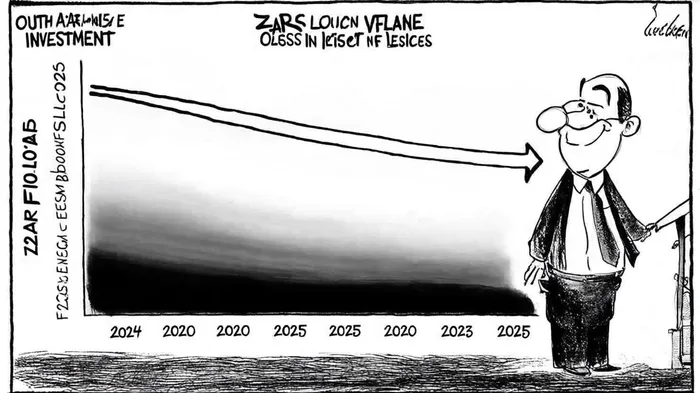







Comentarios
Aún no hay comentarios