
South African Agribusiness Sector's Strategic Turnaround and Investment Potential
The South African agribusiness sector is undergoing a strategic transformation, marked by a near-term rebound in performance and the emergence of structural resilience factors that position it as a compelling investment opportunity. Despite persistent challenges such as energy shortages, logistical bottlenecks, and global trade uncertainties, the sector has demonstrated remarkable adaptability, driven by policy reforms, technological adoption, and a shift toward sustainable practices.
Near-Term Rebound: Policy Reforms and Export Resilience
South Africa's agribusiness sector in the fourth quarter of 2024, . This rebound is underpinned by the (AAMP), a government initiative launched in 2024–2025 to modernize infrastructure and streamline regulatory frameworks. Key reforms include upgrading rail and port facilities to reduce transportation costs, . These measures aim to enhance efficiency, particularly for high-value commodities like citrus and macadamia nuts, which have seen strong international demand despite trade headwinds.
The sector's export performance further underscores its resilience. , with citrus exports benefiting from favorable weather and strategic market diversification according to recent analysis. However, external risks loom large, including U.S. tariffs on South African goods and potential losses of AGOA trade benefits, which could disrupt key export markets.
Structural Resilience: Sustainability and Infrastructure
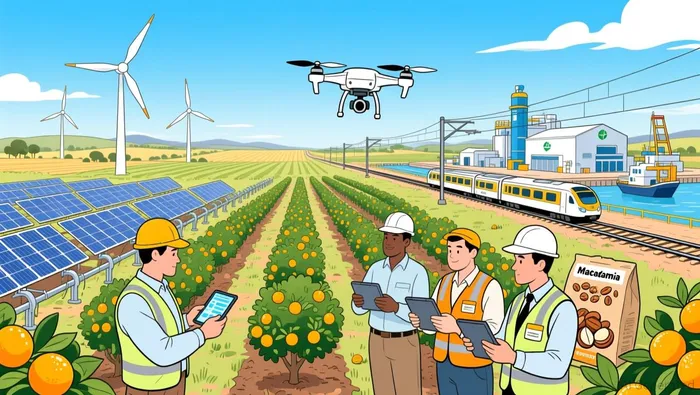 Structural resilience in the sector is being bolstered by investments in and infrastructure modernization. Farmers are increasingly adopting regenerative practices such as cover cropping, minimal tillage, and water-efficient irrigation systems to mitigate climate risks and improve long-term productivity according to industry reports. These efforts align with global trends highlighted in the 2025–2034, which over the next decade, driven by productivity gains in middle-income countries.
Infrastructure upgrades under the AAMP are equally critical. The plan emphasizes expanding grain and oilseed storage capacity, upgrading port facilities like Richards Bay and Agri Port, and improving rural connectivity through roads, electricity, and water supply. These interventions not only reduce post-harvest losses but also enhance the sector's competitiveness in regional and global markets.
Market Dynamics and Risks
While the sector's resilience is evident, investors must navigate complex market dynamics. The 2025 notes that U.S. tariffs on South African imports could constrain export growth, particularly for commodities like wine and citrus. To counter this, the industry is prioritizing market diversification, with a focus on emerging markets in Asia and the Middle East as highlighted in industry reports.
Additionally, biosecurity and disease management in the livestock sector remain critical challenges, as highlighted in the AgriTrends Spring 2025 report. Strengthening veterinary infrastructure and supply chain transparency will be essential to maintaining export standards and investor confidence.
Investment Potential: A Forward-Looking Perspective
South Africa's agribusiness sector offers a unique confluence of near-term growth and long-term structural strength. The AAMP's emphasis on public-private partnerships and digital reforms-such as expediting agricultural application processing-creates an investment-friendly environment. Meanwhile, the World Bank's active portfolio has already supported food security for 201 million people globally, underscoring the sector's potential to align with sustainable development goals according to the World Bank.
For investors, the key opportunities lie in value-added agro-processing, climate-resilient crop technologies, and logistics infrastructure. These areas are expected to drive productivity gains and reduce reliance on volatile input costs, as noted in the . However, success will depend on continued policy support and private-sector collaboration to address bottlenecks in energy, water, and trade access.
Conclusion
South Africa's agribusiness sector is at a strategic inflection point, balancing immediate growth with long-term resilience. While external risks persist, the combination of policy-driven reforms, sustainable practices, and infrastructure investments positions the sector as a cornerstone of the country's economic recovery. For investors, the path forward requires a nuanced understanding of both the sector's vulnerabilities and its transformative potential.







Comentarios
Aún no hay comentarios