
South Africa's Strategic Response to the New U.S. Trade Proposal: Navigating Volatility and Unlocking Long-Term Opportunities
The imposition of a 30% unilateral tariff by the U.S. on South African exports in August 2025 has triggered immediate market turbulence, particularly in mining, agriculture, and energy sectors. However, South Africa's multifaceted response—ranging from revised trade proposals to strategic LNG imports and market diversification—signals a calculated effort to mitigate short-term shocks while positioning for long-term resilience. This analysis evaluates the interplay between current volatility and emerging opportunities, drawing on recent developments and policy shifts.
Short-Term Volatility: Tariffs and Sectoral Impacts
The U.S. tariff hike has disproportionately affected South Africa's agricultural and mining exports. Citrus and wine industries, which rely heavily on duty-free access under the African Growth and Opportunity Act (AGOA), face a 30% price disadvantage in a market that accounted for 4% of South Africa's $13.7 billion agricultural exports in 2024 [1]. A Global Trade Analysis Project (GTAP) simulation estimates a $20.8 million decline in economic welfare for South Africa under this tariff regime, with a 1.3% contraction in agricultural output and reduced labor demand [1].
In mining, the tariffs on diamonds, iron ore, and metal jewelry have already disrupted operations. Petra Diamonds, for instance, delayed its Cullinan Mine tender due to price uncertainty, causing a 6.1% drop in its share price [2]. The Minerals Council South Africa warns of broader investor hesitancy, particularly in platinum group metals (PGMs), which are critical for U.S. automotive supply chains but face indirect pressures from concurrent vehicle tariffs [2].
Strategic Rebalancing: Trade Proposals and Market Diversification
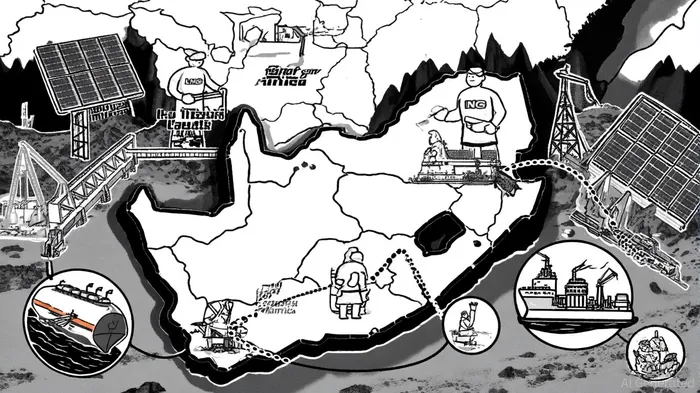
South Africa's revised trade proposal, submitted in August 2025, seeks to address U.S. concerns while safeguarding its industrial base. The offer includes easing sanitary and phytosanitary barriers for poultry and pork exports to the U.S., alongside a bold LNG import commitment of 75–100 million cubic meters annually over a decade [3]. This "energy-for-industry" gambit aims to secure duty-free quotas for vehicles, steel, and aluminum, sectors vital to South Africa's manufacturing competitiveness.
Simultaneously, the government is accelerating market diversification. Agricultural exports to the U.S. surged by 26% in Q2 2025, reaching $161 million, as producers capitalized on a 90-day tariff pause [4]. New markets in China, India, and the Middle East are being targeted for avocados, maize, and table grapes, with the African Continental Free Trade Area (AfCFTA) offering a $1.4 billion regional market [4].
Long-Term Opportunities: Renewable Energy and Critical Minerals
While short-term pain persists, South Africa's energy transition strategy presents compelling long-term opportunities. The proposed LNG imports are not merely a concession but a bridge to decarbonization, aligning with President Cyril Ramaphosa's emphasis on renewable energy and green hydrogen [5]. U.S. firms are being courted for partnerships in solar, wind, and hydrogen projects, with South Africa positioning itself as a gateway to Africa's 1.4 billion consumers [5].
The mining sector, despite current headwinds, retains strategic value. South Africa's dominance in PGMs (73% of global platinum, 81% of rhodium) and critical minerals like manganese underscores its role in the green energy transition [6]. The government's push for local beneficiation—processing raw materials into higher-value products—could attract U.S. investment in battery manufacturing and clean steel production, provided regulatory clarity improves [6].
Political and Policy Risks
Progress hinges on resolving political tensions, including U.S. criticism of South Africa's affirmative action policies and delays in AGOA renewal. Additionally, the withdrawal of U.S. funding from the Just Energy Transition Partnership (JETP) has shifted reliance to European partners, complicating capital flows for renewable projects [7]. Regulatory bottlenecks in grid infrastructure and mining licensing also pose risks to investor confidence [6].
Conclusion: A Calculated Path Forward
South Africa's response to the U.S. trade proposal reflects a blend of pragmatism and strategic vision. While short-term volatility is inevitable, the nation's focus on energy transition, market diversification, and critical mineral value chains offers a roadmap for long-term growth. Investors should monitor the AGOA renewal process, LNG deal negotiations, and AfCFTA implementation, as these will shape the trajectory of South Africa's trade resilience.







Comentarios
Aún no hay comentarios