
South Africa's Strategic Position in US Trade Negotiations: Emerging Market Equities and Commodity Sectors Poised for Near-Term Gains
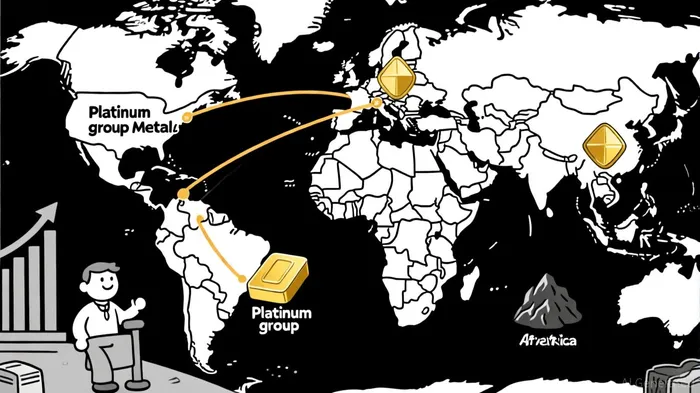
The 2025 U.S.-South Africa trade negotiations have introduced significant volatility into global markets, with tariffs reshaping trade dynamics and investor sentiment. While a 30% universal tariff and a 25% specific tariff on vehicles and automotive parts have disrupted South Africa's export-driven economy, key commodity-linked sectors—particularly platinum group metals (PGMs), gold, coal, and manganese—remain exempt, offering a critical buffer[1]. This strategic exemption underscores the U.S. reliance on South African minerals for manufacturing and energy transition technologies, positioning the country's commodity-linked equities for near-term gains despite broader trade tensions.
Commodity-Linked Sectors: Resilience Amid Tariff Pressures
South Africa's mining sector, a cornerstone of its economy, has demonstrated resilience in the face of U.S. tariffs. PGMs, essential for autocatalysts and hydrogen fuel cells, have seen production rebound by 10.4% month-on-month in May 2025, despite a 6.4% annual decline earlier in the year[5]. Major producers like Sibanye-Stillwater (ZAR 92.39 billion market cap) and Impala Platinum (ZAR 145.14 billion market cap) have maintained strong positions, supported by their critical role in global supply chains[5]. Gold, another key export, has also been tariff-exempt, with AngloGold AshantiAU-- benefiting from elevated prices and improved productivity[5].
However, the automotive sector—South Africa's largest export category to the U.S.—faces headwinds. A 25% tariff on vehicles and parts threatens $1.34 billion in annual exports, prompting companies to explore alternative markets in Asia and the Middle East[1]. This shift highlights the importance of diversification, with the African Continental Free Trade Area (AfCFTA) playing a pivotal role. By 2025, AfCFTA is projected to increase intra-African trade by 81% by 2035, driven by reduced tariffs and streamlined logistics[5]. For South African miners, this means expanded access to regional markets and opportunities for value-added processing, mitigating reliance on the U.S.
Emerging Market Equities: Investor Sentiment and Strategic Reforms
Despite short-term volatility, South African equities have attracted renewed investor interest. The MSCIMSCI-- Emerging Markets Index outperformed U.S. benchmarks in H1 2025, fueled by a weaker dollar and South Africa's favorable macroeconomic conditions, including low inflation and high bond yields[3]. Institutional investors are increasingly targeting sustainability-linked projects, such as green hydrogen and renewable energy, where South Africa's mineral reserves provide a competitive edge[1].
Yet, foreign outflows of $3.7 billion since October 2024 highlight lingering uncertainties, including political standoffs and regulatory delays[2]. To counter this, the South African government has launched initiatives like the Export Support Desk and Localisation Fund, aiming to bolster competitiveness and absorb tariff shocks[1]. These measures, coupled with infrastructure reforms to reduce load-shedding and logistics bottlenecks, are critical to sustaining investor confidence[1].
AfCFTA and Trade Diversification: A Path to Long-Term Stability
The AfCFTA's impact on South Africa's trade strategy is becoming increasingly evident. By harmonizing regulations and reducing non-tariff barriers, the agreement is fostering regional value chains that align with South Africa's industrial base. For example, the mining sector's shift toward beneficiation—processing raw materials into higher-value goods—has gained momentum, supported by AfCFTA's emphasis on local manufacturing[5]. This transition not only reduces dependency on commodity exports but also creates opportunities for downstream industries, such as battery production and electric vehicle components[3].
Data from the World Bank suggests that AfCFTA could increase intra-African exports by over 81% by 2035, with South Africa positioned to lead in mineral processing and technology transfer[5]. However, challenges such as infrastructure deficits and skills shortages remain, requiring sustained investment to unlock the agreement's full potential[5].
Conclusion: Strategic Opportunities in a Shifting Landscape
South Africa's strategic position in U.S. trade negotiations is defined by its dual role as a critical supplier of industrial minerals and a resilient emerging market. While tariffs have disrupted traditional export sectors, the exemption of PGMs, gold, and other critical minerals has insulated key industries from the worst impacts. Coupled with AfCFTA-driven diversification and investor appetite for sustainability-linked equities, South Africa is well-positioned to navigate trade tensions and capitalize on long-term growth opportunities.
For investors, the focus should remain on sectors with strong commodity demand, such as PGMs and gold, as well as companies leveraging AfCFTA to expand regional footprints. As global supply chains evolve, South Africa's ability to adapt—through innovation, infrastructure, and strategic partnerships—will determine its success in the post-tariff era.





Comentarios
Aún no hay comentarios