
South Africa's Manufacturing Sector: A Cautionary Tale for Emerging Market Investors in 2026
South Africa's manufacturing sector, a cornerstone of its economic transformation, has entered a period of profound uncertainty in 2026. While the country's recent credit rating upgrade and modest capital inflows offer glimmers of optimism, deteriorating PMI data, U.S. trade barriers, and weak domestic demand paint a complex picture for investors. This analysis examines the sustainability of capital flows into the sector, weighing structural challenges against nascent opportunities.
Deteriorating PMI Data: A Sector in Retreat
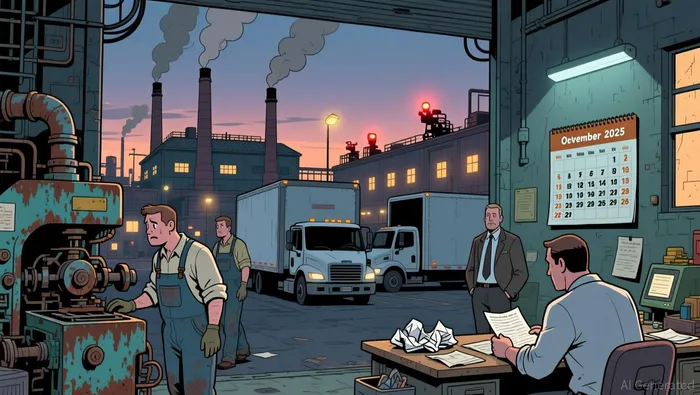
The Absa Purchasing Managers' Index (PMI) for South Africa's manufacturing sector has plunged to its lowest level since the early days of the COVID-19 lockdowns, hitting 42.0 in November 2025. This contraction, down sharply from 49.2 in October, underscores a sector grappling with weak domestic and export demand. The business activity sub-index fell to 36.7, reflecting a lack of traction in production and new orders. While input cost pressures have eased-driven by a stronger rand and lower oil prices-the broader trend remains dire, with output declining 1.5% year-to-date.
This contraction is not an isolated event. The PMI has remained below the 50-growth threshold since October 2025, signaling a persistent downturn. Logistical bottlenecks, including delays in export paperwork and port inefficiencies, further exacerbate the sector's fragility. For investors, the PMI data serves as a stark warning: even as the country's credit rating improves, the manufacturing sector's fundamentals remain fragile.
U.S. Tariffs: A Double-Edged Sword
In August 2025, the U.S. imposed a 30% tariff on South African exports, targeting manufactured goods, metals, and agricultural products like citrus crops. While this measure has raised costs for exporters, it has not curtailed demand entirely. South African exports to the U.S. surged by 37% in the first ten months of 2025, driven by strong global appetite for gold, diamonds, and raw aluminum. This resilience highlights the sector's reliance on commodity exports, which are less affected by tariffs than value-added manufactured goods.
However, the tariffs have compounded challenges for industries such as automotive and chemicals, which depend on U.S. markets. These sectors now face reduced competitiveness, with margins squeezed by both higher export costs and domestic energy prices. For investors, the U.S. trade barriers underscore a critical risk: South Africa's manufacturing base is increasingly exposed to external shocks, limiting its ability to diversify and innovate.
Credit Rating Upgrade: A Glimmer of Hope
S&P Global Ratings upgraded South Africa's foreign currency sovereign credit rating to 'BB' from 'BB-' in November 2025, marking the country's first upgrade in nearly two decades. This move was attributed to improved fiscal discipline, stronger commodity price trends, and performance gains at state-owned utility Eskom. The ANC government hailed the upgrade as validation of its economic stabilization efforts.
The rating change is expected to lower borrowing costs and attract a broader investor base. However, the benefits may be unevenly distributed. While the credit upgrade could bolster confidence in the broader economy, the manufacturing sector's contraction suggests that structural reforms-such as addressing energy shortages and labor constraints- remain incomplete. For now, the upgrade acts as a partial offset to the sector's challenges, but not a panacea.
Capital Flows: Mixed Signals Amid UncertaintyForeign direct investment (FDI) into South Africa's manufacturing sector has shown mixed trends. In Q4 2024, inflows reached ZAR 7.5 billion, reversing outflows in the previous quarter. However, Q2 2025 saw a sharp reversal, with net outflows of ZAR 73.5 billion driven by Anglo American's divestment of its platinum unit. Portfolio investments in Q4 2024 totaled ZAR 33.4 billion, though this figure declined from ZAR 45.6 billion in Q3.
The sector's attractiveness is further clouded by persistent challenges. Load-shedding, high electricity costs, and a shortage of skilled labor continue to deter long-term commitments. While the credit upgrade may attract some capital, the PMI contraction and U.S. tariffs suggest that inflows will remain volatile. Investors must weigh the potential for lower borrowing costs against the sector's operational risks.
Conclusion: A Cautionary Path Forward
South Africa's manufacturing sector in 2026 presents a paradox: a credit upgrade and modest capital inflows coexist with a PMI contraction and trade barriers. For emerging market investors, the sector offers both opportunity and risk. The upgrade may stabilize macroeconomic conditions, but it does not address the root causes of the manufacturing slump-weak domestic demand, energy insecurity, and global trade tensions.
Capital flows into the sector will likely remain conditional, dependent on short-term fiscal gains rather than long-term structural reforms. Investors should approach with caution, prioritizing sectors less exposed to U.S. tariffs and energy constraints, such as commodity-linked industries. For now, South Africa's manufacturing sector remains a cautionary tale-a reminder that even in the face of positive macroeconomic signals, structural fragility can undermine sustainability.







Comentarios
Aún no hay comentarios