
South Africa's FMD Vaccination Strategy and Its Impact on the Red Meat Sector
A Shift to National Vaccination: A Strategic Pivot
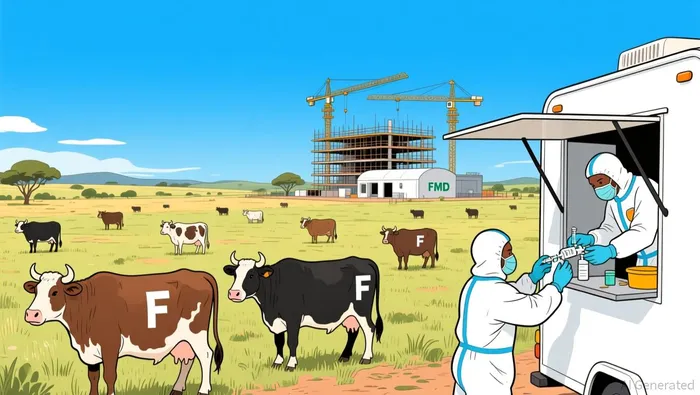
South Africa has transitioned from localized FMD vaccination efforts to a nationwide program targeting its entire cattle herd of over 7 million animals. This marks a significant policy shift, with Agriculture Minister John Steenhuisen announcing full herd inoculation as a priority to curb the disease's spread and rebuild export credibility. By February 2026, the government plans to procure 2 million vaccine doses, prioritizing dairy farms, while also advancing a domestic production facility to generate an additional 1.5 million doses by 2026. This dual approach aims to reduce reliance on imports and ensure a stable supply for long-term vaccination campaigns.
However, challenges persist. The use of unregistered vaccines, such as those from Kenya, threatens both animal health and export eligibility due to strain mismatches and regulatory violations. Such practices underscore the need for stringent oversight to maintain the integrity of the vaccination program.
The Road to WOAH Certification: A Hurdle for Export Reactivation
A key objective of South Africa's strategy is securing "freedom with vaccination" status from the World Organisation for Animal Health (WOAH), a prerequisite for regaining access to international markets. As of 2025, South Africa has not yet received this certification, despite ongoing efforts. The absence of recent WOAH recognition highlights the complexity of meeting global standards, which require not only high vaccination coverage but also robust surveillance and traceability systems.
Data from broader African studies suggests that FMD vaccines can reduce infection risk by approximately 69.3% when properly implemented. However, South Africa's effectiveness metrics remain unclear, with no specific coverage rates or outbreak suppression data reported. This lack of transparency could delay WOAH approval and prolong export restrictions, particularly for beef and dairy products.
Supply Chain Adaptations: Public-Private Partnerships and Logistical Challenges
South Africa's agribusiness sector is adapting to the realities of FMD management through a combination of public-private collaboration and logistical innovations. The National Department of Agriculture (NDA) maintains a centralized vaccine distribution system, procuring doses from the Botswana Vaccine Institute and administering them under strict regulatory control. Vaccinated animals are marked with an "F" for identification, a measure designed to enhance traceability.
Public-private partnerships are also emerging as a critical component of the strategy. For instance, the Milk Producers' Organisation has purchased 50,000 vaccines for KwaZulu-Natal dairies, reflecting localized urgency. Such collaborations are essential for scaling up efforts, particularly in hotspot provinces like KwaZulu-Natal, Mpumalanga, and Gauteng, where outbreaks remain active.
Despite these efforts, supply chain bottlenecks persist. Financial constraints in vaccine procurement, coupled with illegal livestock movements and weak biosecurity at auctions, have exacerbated outbreak risks. The Department of Agriculture is addressing these issues through a "whole-of-government" approach, including cooperation with traffic departments and law enforcement to enforce compliance.
Investment Opportunities in Agribusiness and Logistics
The evolving FMD landscape presents several investment opportunities:
1. Vaccine Production and Distribution: Domestic vaccine manufacturing, such as the proposed facility aiming for 1.5 million doses by 2026, could attract capital seeking long-term stability in South Africa's agribusiness sector.
2. Logistics and Cold Chain Infrastructure: Enhanced vaccine storage and transportation networks will be critical to maintaining efficacy, particularly in remote areas.
3. Biosecurity Technology: Innovations in traceability systems, such as digital tagging and real-time monitoring, could address gaps in current surveillance frameworks.
4. Export Market Diversification: As South Africa seeks to rebuild its export portfolio, investments in value-added processing and alternative markets (e.g., Asia, the Middle East) may yield returns once WOAH certification is secured.
Conclusion: A Delicate Balance of Risk and Reward
South Africa's FMD vaccination strategy represents a pivotal investment opportunity, but its success hinges on overcoming regulatory, logistical, and operational challenges. While the government's commitment to national vaccination and domestic production is commendable, the absence of WOAH certification and ongoing outbreaks underscore the need for sustained investment in surveillance and compliance. For investors, the red meat sector's reactivation will depend not only on the effectiveness of vaccines but also on the resilience of supply chains and the ability to navigate a complex regulatory environment.







Comentarios
Aún no hay comentarios