
South Africa's Economic Revival: Can Private Sector Investment Turn Around Johannesburg?
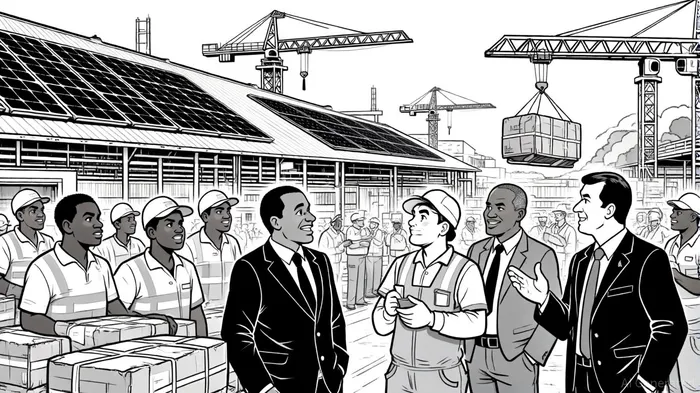
South Africa's economic trajectory in 2025 is marked by cautious optimism, driven by strategic public-private partnerships (PPPs) in the manufacturing sector. As the country grapples with infrastructure deficits, energy crises, and fiscal constraints, the Johannesburg manufacturing hub has emerged as a testing ground for innovative collaborations between the public and private sectors. Recent regulatory reforms, private sector investments, and policy shifts suggest that PPPs could catalyze a revival, but challenges such as governance gaps and political instability remain critical hurdles.
Regulatory Reforms and Policy Shifts: A New Framework for Collaboration
The South African government has overhauled its PPP regulatory framework to attract private sector participation. In February 2025, amendments to National Treasury Regulation 16 streamlined approvals for smaller PPP projects (under ZAR 2 billion) and introduced a PPP Advisory Unit to provide technical support and accelerate project planning [1]. These changes aim to reduce bureaucratic delays and create a transparent environment for unsolicited proposals (USPs), particularly in energy and infrastructure. For instance, the removal of renewable energy generation caps in 2022 led to a 99-fold increase in private sector project registrations by 2023, unlocking over $20 billion in energy sector investments [2].
The Government of National Unity (GNU) has further bolstered investor confidence by prioritizing infrastructure development through initiatives like Operation Vulindlela and the National Energy Crisis Committee (Necom). These efforts culminated in the suspension of loadshedding in March 2024, a critical win for manufacturers reliant on stable energy supplies [3].
Case Studies: Manufacturing Revival in Action
Johannesburg's manufacturing sector is witnessing a shift in how PPPs address infrastructure bottlenecks. The Gautrain rapid rail system, a flagship PPP, has enhanced logistics connectivity, reducing transportation costs for manufacturers and improving access to markets [4]. Similarly, Pele Energy Group has leveraged PPPs to drive industrialization in rural areas, using energy projects as anchors for community development. For example, in the Northern Cape, Pele's initiatives have combined renewable energy generation with job creation, demonstrating how PPPs can align economic growth with social equity [5].
In the energy sector, private firms are now permitted to generate electricity, a policy shift that has spurred 4,530 megawatts of private power generation in 2023—a stark contrast to the 46 megawatts averaged between 2018 and 2021 [6]. This surge in private participation is critical for Johannesburg's manufacturers, which require reliable energy to remain competitive.
Challenges: Governance, Risk, and Political Will
Despite progress, challenges persist. A Duja Consulting paper highlights weaknesses in public-sector capacity and governance, noting that inconsistent project delivery erodes trust in PPPs [7]. For instance, state-owned enterprises like Eskom face leadership crises that delay infrastructure upgrades, undermining private sector confidence. Additionally, while the Public Procurement Act No. 28 of 2024 aims to prioritize local manufacturers, implementation bottlenecks and corruption risks remain [8].
Political stability is another concern. The GNU's collaborative governance model has improved investor sentiment, but long-term success hinges on sustained political will to enforce PPP frameworks. As one industry leader notes, “PPPs thrive on shared goals and transparency, but without disciplined leadership, even the best policies falter” [9].
The Road Ahead: Data-Driven Opportunities
The manufacturing sector's contribution to South Africa's GDP (13%) and its projected 5.7% annual growth over the next decade underscore its potential [10]. To realize this, stakeholders must prioritize:
1. Digital Transformation: Adopting Industry 4.0 tools to enhance efficiency and sustainability.
2. Workforce Reskilling: Addressing labor shortages in advanced manufacturing.
3. Circular Economy Practices: Mitigating the impact of global carbon policies like the EU's Carbon Border Adjustment Mechanism (CBAM).
Conclusion: A Delicate Balance
South Africa's economic revival hinges on the delicate balance between regulatory innovation and effective governance. While PPPs in Johannesburg's manufacturing sector have shown promise—through energy diversification, infrastructure upgrades, and job creation—their long-term success depends on addressing systemic challenges. As the country navigates fiscal constraints and global economic shifts, strategic PPPs offer a viable path to sustainable growth, provided stakeholders remain committed to transparency, accountability, and shared value creation.







Comentarios
Aún no hay comentarios