
Somalia's Fight Against al Shabaab: A Turning Point for Investment Opportunities?
The Somali government’s recent report of killing dozens of al Shabaab fighters in coordinated airstrikes and army operations marks a critical moment in the nation’s decades-long struggle against extremism. While these military successes are a tactical victory, their broader implications for Somalia’s economic and geopolitical stability could reshape the country’s investment climate. For investors weighing opportunities in this fragile but resource-rich nation, the calculus hinges on balancing short-term risks with long-term potential.
Security Gains and the Path to Stability
The government’s claims of weakening al Shabaab’s operational capacity—particularly along critical transit routes like the Shabelle River highway—are significant. This highway, a lifeline for regional trade between Ethiopia and the port of Mogadishu, has long been a target for militant disruptions. Its reclamation could reduce supply chain bottlenecks and lower the risks for businesses operating in logistics, agriculture, and mining.
However, al Shabaab’s enduring support zones in central Somalia, as noted by the Critical Threats Project, underscore the fragility of these gains. Persistent instability could still deter foreign direct investment (FDI) in sectors reliant on stable infrastructure. Investors must remain vigilant to the group’s capacity for resurgence, especially in rural areas critical to agriculture and mineral extraction.
Economic Sectors: Potential and Pitfalls
1. Agriculture and Livestock
Somalia’s agricultural sector, accounting for 60% of GDP, has shown growth potential, driven by reforms like the 2015 Investment Law, which offers tax incentives for foreign firms. However, progress remains hampered by clan conflicts, poor irrigation systems, and al Shabaab’s sabotage of rural infrastructure.
Recent security improvements could unlock opportunities in livestock exports—Somalia’s largest export—by stabilizing grazing lands and improving access to ports. Yet, the sector’s vulnerability to droughts and corruption (Somalia ranks 180/180 on Transparency International’s Corruption Index) remains a barrier.
2. Mining and Minerals
Somalia sits atop untapped reserves of uranium, rare earth metals, and hydrocarbons. The government’s 2019 offshore hydrocarbon licensing round signaled ambition, but weak legal frameworks and unresolved land disputes have stalled large-scale projects.
Reduced militant activity could ease risks for exploratory ventures, but foreign firms must navigate opaque property rights and a lack of enforceable contracts.
3. Infrastructure Development
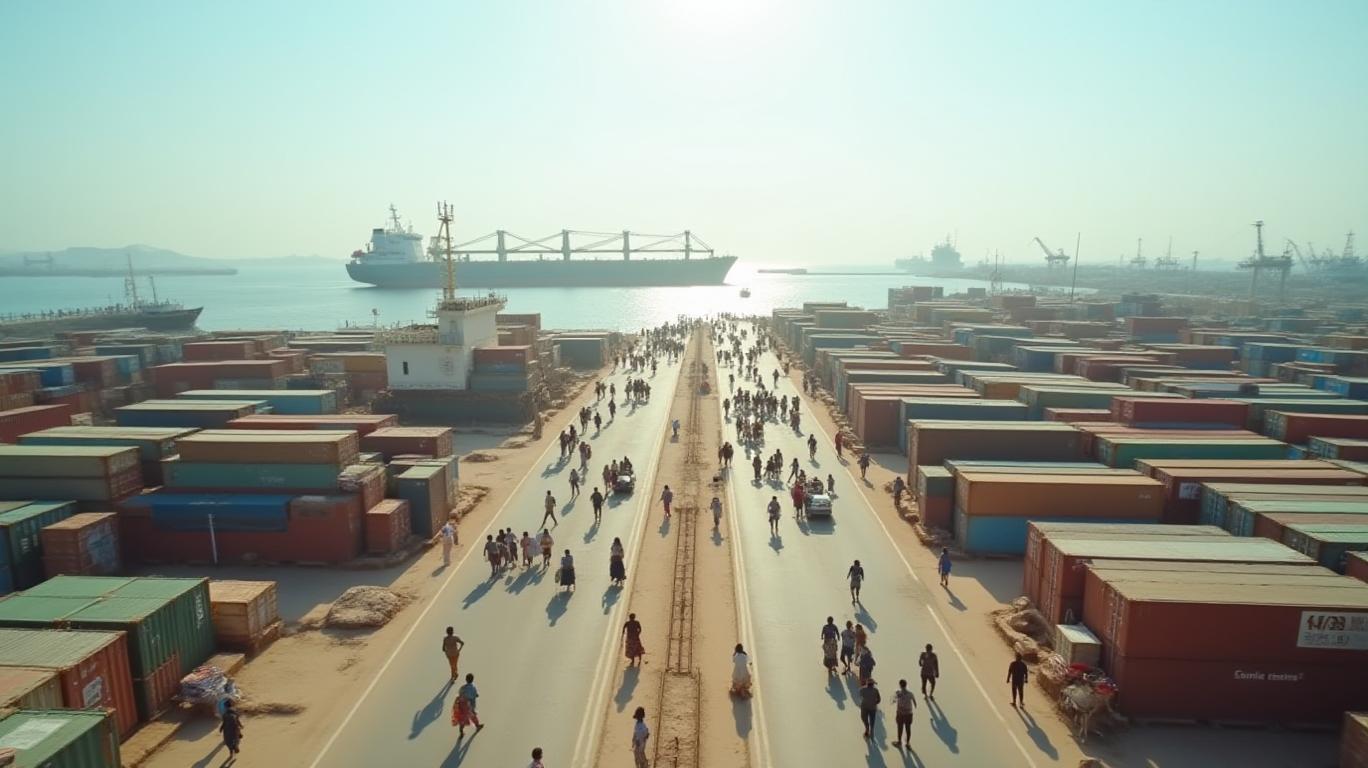
Ports like Berbera (managed by DP World) and roads connecting to landlocked Ethiopia offer high-return opportunities. However, sabotage by al Shabaab and funding gaps for the African Union Support Mission in Somalia (AUSSOM) threaten these projects.
The $409 million FDI stock in Somalia (2018)—representing 8.6% of GDP—hints at the nation’s untapped potential. Yet, without a functional judiciary or bankruptcy laws, investors face contractual risks.
Geopolitical Crosscurrents
Somalia’s strategic location in the Horn of Africa has drawn rival foreign powers. The UAE funds the Puntland Maritime Police Force at €48 million annually, while Turkey trains Somali troops through Camp Turksom. These bilateral partnerships, though bolstering security, risk fragmenting governance and creating dependency.
Meanwhile, the U.S.—a key counterterrorism ally—faces challenges in its dual roles as a security provider and a proponent of multilateral solutions like AUSSOM. The mission’s funding shortfall (€96 million deficit inherited from its predecessor) underscores the precariousness of international support.
The Bottom Line for Investors
While recent military successes could tip the scales toward stability, Somalia’s investment climate remains a high-risk, high-reward proposition. Key sectors like agriculture and infrastructure could thrive if security gains endure, but investors must account for:
- Geopolitical fragmentation: Rivalries among UAE, Turkey, and the U.S. could destabilize security frameworks.
- Institutional weaknesses: Corruption and weak legal systems persist despite reforms.
- Climate volatility: Droughts and famine remain existential threats to agriculture and livestock.
Conclusion
Somalia’s progress against al Shabaab offers a flicker of hope for investors, but the path to sustainable growth is fraught with obstacles. Sectors like mining and infrastructure could see modest gains if security improves and international funding for AUSSOM materializes. However, systemic challenges—corruption, legal gaps, and clan divisions—demand patience and risk mitigation strategies. For now, Somalia’s investment narrative remains a story of “what could be,” contingent on stability that has yet to be fully secured.
As the region’s $230 million annual domestic revenue (2019) and $409 million FDI stock demonstrate, the foundations exist—but the roof remains unfinished. Investors should proceed with caution, leveraging security wins while hedging against the Somali paradox: a land of vast resources, yet still a prisoner of its past.







Comentarios
Aún no hay comentarios