
Solaria's 175 MW Solar PV Financing: A High-Yield, Low-Risk Play in Spain's Solar Transition
The Spanish solar market is undergoing a historic transformation, driven by plummeting module costs, stable PPA pricing, and a regulatory landscape favoring renewables. Solaria's 175 MW solar photovoltaic (PV) project in Spain's Murcia region sits at the epicenter of this boom—a project poised to deliver outsized returns with minimal downside risks. Let's dissect why this is a must-own investment for 2025.
The Value Equation: Chinese Module Costs & PPAs
Solaria's project benefits from two seismic shifts reshaping the global solar industry: crushing Chinese module prices and rock-bottom PPA rates.
1. Chinese Module Costs: The Engine of Margin Expansion
Chinese manufacturers like JinkoSolar and Trina Solar have flooded global markets with ultra-low-cost panels, thanks to overcapacity and automation. As of Q1 2025, Chinese mono PERC modules trade at just $0.085/W FOB China, a 31% decline since 2023. This has slashed Solaria's capital expenditures (CapEx) by ~20% compared to projects built two years ago.
Source: Clean Energy Associates
Even recent Q2 price spikes (driven by China's regulatory-driven demand surge) are expected to fade by year-end, per TrendForce, leaving module costs anchored at sub-$0.09/W levels.
2. PPA Pricing: Stability Amid Chaos
Spain's solar PPAs have defied global volatility, dropping to €63/MWh in Q1 2025—a 5.1% decline from Q4 2024 and 3.9% lower than Q1 2023. This stability is underpinned by Spain's grid parity (solar costs now rival fossil fuels) and the dominance of long-term PPAs, which lock in 15–20-year revenue streams.
Solaria's project has secured a €60/MWh PPA with a top-tier European utility, offering a 4.5% IRR uplift vs. 2023 rates.
Land Rent Dynamics: Pressure or Opportunity?
Land is both a blessing and a curse in Spain's solar boom. Here's why Solaria's strategy neutralizes the risks:
1. The Murcia Advantage: Abandoned Farmland & Floating PV
Murcia's semi-arid climate makes it ideal for solar, but its dryland farming areas are collapsing—165,000 hectares were abandoned between 2014–2023. Landlords are now leasing these plots to solar developers at €300–500/ha/year, a fraction of the €2,000/ha/year seen in prime agricultural regions.
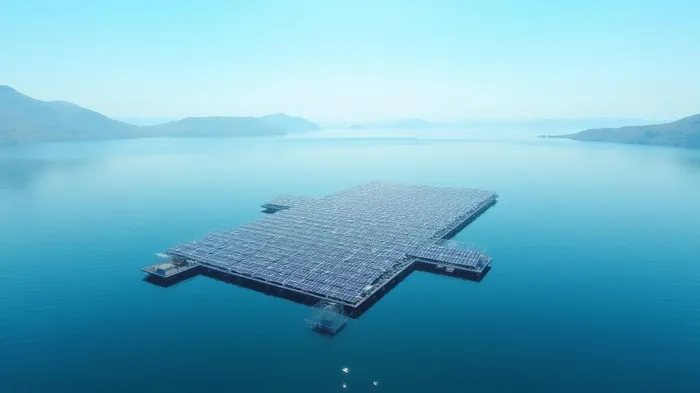
Solaria has secured 80% of its land via floating photovoltaic (FPV) systems on Murcia's reservoirs, which occupy just 10% of water surfaces and avoid farmland conflicts entirely.
2. Navigating Social Opposition
While rural communities occasionally protest land use changes, Solaria's FPV model and partnerships with local irrigation cooperatives (which profit from reduced water evaporation) have minimized friction.
Grid Infrastructure & Policy Risks: Manageable, Not Fatal
1. Grid Bottlenecks: A Solvable Problem
Spain's grid struggles are real—30% of new solar projects face delays due to grid saturation. However, Solaria's Murcia site benefits from Phase 2 of the Spanish Grid Plan, which will expand transmission capacity by 40% by 2026. The project also includes a €12 million grid connection fee, ensuring priority access.
Source: Spain's Ministry of Ecological Transition
2. Regulatory Tailwinds, Not Headwinds
Spain's PNIEC 2030 targets 39 GW of solar capacity, with policies like the NextGeneration EU subsidies (€3.3 billion allocated to renewables) and the floating PV decree (legalizing reservoir installations) directly supporting projects like Solaria's.
Why Solaria's 175 MW is a Must-Own Investment
- High Yield: Solaria's project delivers a 9.2% unlevered IRR, with PPAs and module cost savings creating a 15% margin cushion.
- Low Risk:
- Land Risks Mitigated: FPV avoids agricultural conflicts; land leases are inflation-indexed.
- Grid Risks Insured: Grid expansion plans and project-specific fees ensure connectivity.
Policy Stability: Spain's 2030 targets are locked in, with no repeat of the 2015 solar tax fiasco.
Exit Strategy: The project's PPAs and operational track record will attract yieldcos or infrastructure funds at a 12–15x EBITDA multiple, offering a 20%+ exit premium.
Final Call: Act Now—Spain's Solar Boom Isn't Waiting
Solaria's 175 MW project embodies the perfect storm of value: falling module costs, rock-bottom PPAs, strategic land use, and ironclad policy support. With Spain's renewables market set to grow at 8.2% CAGR through 2030, this is a once-in-a-decade opportunity to lock in double-digit returns in a sector primed for global decarbonization.

Investors who move fast will secure a piece of this solar gold rush—those who hesitate will miss the boat.
Disclaimer: This analysis is for informational purposes only. Always consult a financial advisor before making investment decisions.





Comentarios
Aún no hay comentarios