
The Solar Tax Credit Expiration: A Market Dislocation and Investment Opportunity
Policy-Driven Dislocation and the Race to Deadline
The OBBB's acceleration of the ITC's expiration has disrupted long-standing investment patterns. Residential solar projects must now be fully installed by year-end 2025 to qualify for the 30% tax credit, while commercial projects have until July 2026 under Section 48E. This compressed timeline has intensified competition for resources, with developers racing to finalize projects before incentives vanish. According to a report by Greenlancer, the abrupt termination of the residential ITC has already led to a surge in last-minute installations, creating bottlenecks in supply chains and interconnection processes.
The policy shift also reflects broader political dynamics. The OBBB, which replaced the Inflation Reduction Act's gradual phase-down of the ITC, signals a recalibration of federal priorities. As stated by the IRS, the new framework imposes stricter regulations on foreign entity involvement and administrative complexities, further complicating project financing. These changes have contributed to a 36% decline in U.S. renewable energy investment in the first half of 2025 compared to the same period in 2024.
Alternative Financing: Opportunity Zones and Transferable Tax Credits
Amid this dislocation, alternative financing mechanisms are emerging as critical tools for sustaining the renewable energy pipeline. Opportunity Zones (OZs), now permanent and modernized under the OBBB, offer long-term capital for projects in low-income communities. While historically underutilized for renewables, OZs are gaining traction as developers align projects with community impact goals. For instance, LandFund Partners is leveraging OZ incentives for sustainable agriculture and irrigation improvements, while Monllor Capital Partners in Puerto Rico is using the framework to support vertical aquaponics and energy storage.
 Transferable tax credits, preserved under the OBBB, have also become a lifeline for developers. These credits allow projects to monetize incentives through direct sales or government payments, bypassing traditional tax equity arrangements. A recent $100 million production tax credit transfer for wind power projects and a $50 million deal for solar PV manufacturing illustrate the scale of this mechanism. As noted by Crux Climate, transferable credits have enabled smaller developers to access capital previously reserved for large tax equity players.
Regional Shifts and the Rise of Private Credit
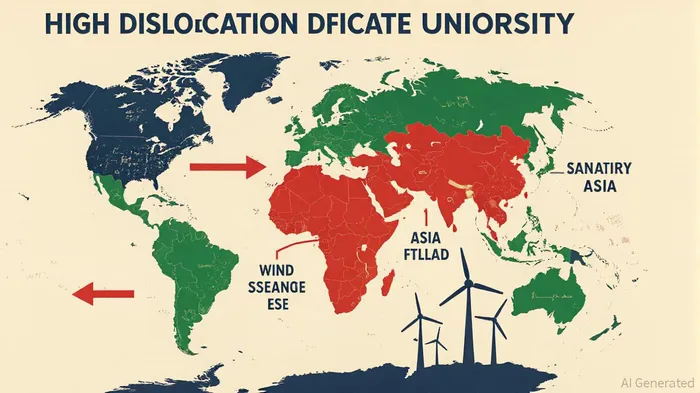
The expiration of the ITC has also triggered a reallocation of capital from the U.S. to Europe and Asia, where supportive policy frameworks continue to drive investment. According to the International Energy Agency, EU-27 renewable energy investment increased by 63% in the first half of 2025, while U.S. investment fell by 36%. This shift is partly driven by adverse U.S. federal actions, such as the stop-work order on offshore wind projects, which have dampened investor confidence.
In response, private credit and infrastructure investors are stepping into the void. Fiduciaries managing 401(K) funds and private equity firms are increasingly viewing renewable energy as a long-term value proposition. Deloitte's 2026 Renewable Energy Industry Outlook highlights the sector's appeal as a hedge against macroeconomic risks, particularly in Europe and Asia, where policy stability and project pipelines remain robust. However, scalability remains a challenge. While private markets offer flexibility, their willingness to commit large sums to renewable projects is still untested at scale.
Navigating the New Normal
For investors, the post-ITC landscape demands a nuanced approach. The 10-year hold period required for maximum OZ tax benefits, for example, conflicts with the typical investment horizons of renewable projects, which often involve early refinancing or sales. Similarly, local barriers such as zoning restrictions and interconnection delays persist, particularly in distributed generation projects. According to Novoco, these constraints continue to challenge project timelines.
Yet, the opportunities are undeniable. Technologies like battery storage and geothermal, which remain eligible for strong tax credit support, are attracting capital. Developers who can integrate OZs with transferable credits-such as through twinning or sidecar financing-stand to maximize both financial returns and community impact. According to Novoco's podcast, such integrations are emerging as strategic differentiators.
Conclusion
The expiration of the Solar ITC is not merely a policy event but a catalyst for structural change in renewable energy finance. While the immediate dislocation is evident, the emergence of alternative financing models and regional reallocation of capital suggest a sector in transition rather than decline. For investors, the key lies in balancing short-term urgency with long-term vision-a challenge that, if navigated wisely, could yield substantial rewards.







Comentarios
Aún no hay comentarios