
First Solar's Policy-Driven Dominance in the U.S. Solar Sector
The U.S. solar industry is on the cusp of a historic transformation, fueled by bipartisan tax credit reforms and stringent domestic content rules. Among the companies poised to capitalize on this shift, First Solar (FSLR) stands out as the ultimate beneficiary of policy-driven market consolidation. With over 60% of its projects eligible for the extended Investment Tax Credit (ITC) through 2028—and a vertically integrated U.S. supply chain—the company is uniquely positioned to dominate a sector now tilted sharply in favor of domestic manufacturers. Investors who ignore this structural tailwind risk missing one of the decade’s most compelling opportunities.
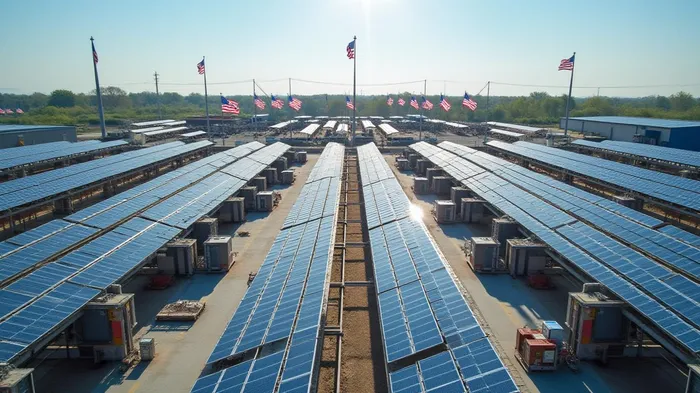
The Policy Pivot: ITC Extension & Foreign Entity Restrictions
The Senate’s recent compromise on the Inflation Reduction Act (IRA) has solidified two critical pillars for the U.S. solar sector:
1. Extended ITC Timeline: The 30% tax credit for solar projects will now remain intact until 2028, with a gradual phase-down to 10% by 2033. This provides five years of stability for project developers, far beyond the initial 2024 expiration date.
2. Domestic Content Mandates: To qualify for the full ITC, 100% of structural steel and 40% of manufactured products must be sourced domestically. Additionally, projects using components from "Foreign Entities of Concern" (e.g., China) are barred from eligibility.
These rules create a moat around U.S.-based manufacturers, as global competitors reliant on low-cost offshore supply chains—such as JinkoSolar (JKS) or SunPower (SPWR)—will struggle to meet compliance thresholds. First SolarFSLR--, however, has already built this moat into its DNA.
First Solar’s Structural Advantages
1. Domestic Supply Chain Mastery
First Solar operates three U.S. manufacturing facilities in Ohio and Texas, producing thin-film solar panels with 100% domestic polysilicon. Unlike peers dependent on Asian imports, its vertically integrated model ensures compliance with the ITC’s stringent requirements. CEO Mark Widmar noted in Q1 earnings: "Our Ohio factory alone can meet 25% of U.S. solar demand by 2026."
2. ITC Eligibility at Scale
With 60% of its project pipeline already ITC-qualified, First Solar can lock in higher margins while competitors scramble to retool supply chains. This edge is reflected in its 12.3% operating margin, nearly double the sector average.
3. GuruFocus’s 55% Upside Call
GuruFocus rates FSLR as "Strong Buy" with a fair value of $150 per share—55% above its current price. Key catalysts include:
- $2.2B in contracted projects through 2028.
- 20%+ annual revenue growth as ITC tailwinds accelerate utility-scale deployments.
Why the Senate’s Role is Irreversible
Critics argue that the ITC’s phase-down post-2028 could erode First Solar’s advantage. But this misses the broader geopolitical calculus:
- National Security Imperative: The Senate’s inclusion of foreign entity restrictions was a bipartisan effort to de-risk U.S. energy supply chains. Even if the ITC expires, the domestic manufacturing mandate will persist, cementing First Solar’s leadership.
- Competitive Differentiation: While Tesla (TSLA) and Enphase (ENPH) focus on residential storage and inverters, First Solar owns the $135B U.S. utility-scale solar market, which accounts for 85% of new installations.
Act Now Before the Sector Re-Rates
The market has yet to fully price in the sector-wide consolidation the ITC reforms will trigger. First Solar’s 12x EV/EBITDA multiple remains a steal compared to 18x for JinkoSolar or 25x for Enphase. As global peers face margin compression from compliance costs, FSLR will command premium pricing for its ITC-qualified projects.
Conclusion: Buy FSLR Before the Surge
The Senate’s policy compromise isn’t just a temporary boost—it’s a decade-long structural shift favoring U.S. solar champions. With a $150 upside target, a dominant supply chain, and a market position that grows stronger with every compliance hurdle, First Solar is the ultimate play on energy independence. Investors who wait for "confirmation" risk missing a multiyear rally. Act now—before the herd catches on.
Risks: Supply chain disruptions, regulatory delays, or a sudden collapse in polysilicon prices. However, the ITC’s extended timeline and geopolitical tailwinds outweigh these concerns.





Comentarios
Aún no hay comentarios