
Solana's Strategic Supply Restructuring: Accelerated Disinflation and the Path to Scarcity-Driven Value
The Mechanics of Supply Restructuring
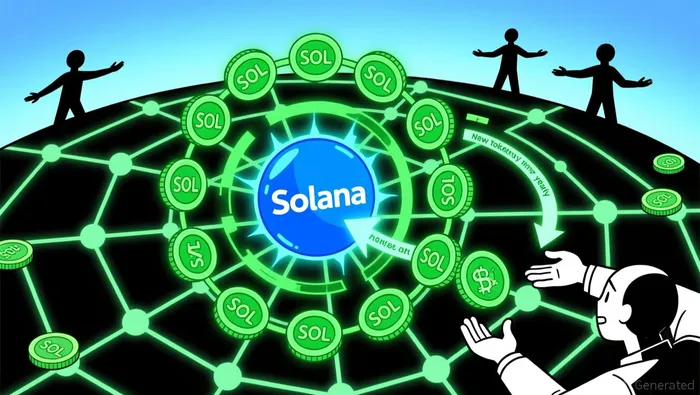
Solana's current inflation rate stands at 8%, but the proposed changes aim to halve the time it takes to reach the terminal inflation target of 1.5%. By accelerating disinflation, the network will introduce fewer new tokens into circulation annually, creating a more controlled supply environment. According to a report by , this adjustment is designed to "strengthen economic discipline" and align with broader market trends favoring scarcity-driven asset models. The removal of 22 million SOL from emissions-equivalent to roughly 1.5% of the current circulating supply-signals a deliberate effort to curb inflationary dilution while enhancing the network's appeal to long-term holders according to the same report.
Scarcity as a Value Catalyst
The reduction in new token issuance directly enhances SOL's scarcity profile. With fewer tokens entering the market, the supply-demand imbalance becomes more pronounced, particularly as staking rewards and validator incentives remain tied to a shrinking pool of newly minted tokens. CryptoFrontNews highlights that this tightening could amplify staking incentives, as validators and delegators compete for a fixed pool of rewards, potentially driving up the value of existing holdings. Additionally, the accelerated disinflation schedule positions Solana as a blockchain with one of the most disciplined supply structures, a trait historically associated with sustained price appreciation in digital assets according to analysis from CryptoFrontNews.
Market Reactions and Expert Perspectives
Analysts have largely welcomed the proposal, viewing it as a strategic step toward aligning Solana's tokenomics with its ambition to become a high-throughput, low-cost blockchain. Proponents argue that the reduced inflation rate will mitigate sell pressure from staking rewards, which have historically been a drag on price performance. However, critics caution that the move could inadvertently impact validator participation. As noted by , lower staking rewards might reduce the economic incentive for validators to secure the network, potentially threatening decentralization. This tension between scarcity and security underscores the delicate balance Solana must maintain as it transitions to a disinflationary model.
Long-Term Implications for Investors
For $SOL holders, the restructured supply model offers a dual benefit: enhanced scarcity and a more predictable inflationary path. By reducing the rate at which new tokens dilute existing holdings, the proposal supports a narrative of long-term value accrual. Technical analysts have also pointed to key price levels, such as the $95.26 support threshold, as indicators of how market sentiment might evolve during this transition according to CryptoFrontNews analysis. While the immediate impact remains speculative, the broader trend of supply tightening-mirroring Bitcoin's halving events-could position Solana for stronger investor confidence in a market increasingly prioritizing economic clarity.
Conclusion
Solana's strategic supply restructuring reflects a forward-looking approach to tokenomics, prioritizing scarcity and economic discipline in a competitive blockchain landscape. By accelerating disinflation and reducing future emissions, the network aims to create a more sustainable value proposition for holders while addressing concerns around sell pressure and inflationary dilution. However, the success of this strategy will depend on its ability to balance scarcity with validator incentives, ensuring the network remains both secure and attractive to long-term investors. As the 2025 implementation date approaches, the market will closely watch how these dynamics unfold, with the potential to redefine Solana's role in the evolving crypto ecosystem.







Comentarios
Aún no hay comentarios