
Solana's Rapidly Expanding Stablecoin Ecosystem: The Blockchain's Dual Appeal to Institutional and Retail Capital Flows
Solana's stablecoin ecosystem has emerged as a defining force in 2025, driven by a confluence of technical innovation, institutional partnerships, and retail adoption. As the blockchain's total value locked (TVL) in DeFi surged to $9.5 billion by early 2025- peaking at $10.2 billion in late 2025-the stablecoin segment alone saw a 36.5% growth in Q3 2025, reaching an all-time high of $14.1 billion. This trajectory underscores Solana's transformation into a critical infrastructure layer for both institutional and retail capital flows, a shift fueled by its unique combination of scalability, low costs, and strategic integrations.
Technical Advantages: The Foundation for Scalability
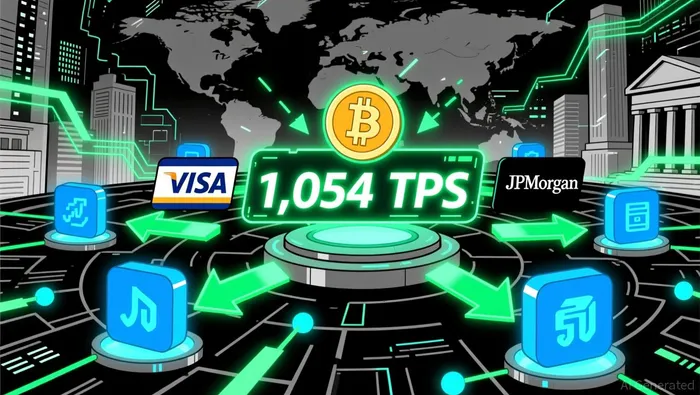
Solana's technical architecture has positioned it as a high-performance blockchain capable of handling institutional-grade workloads. By 2025, the network processed 33 billion non-vote transactions, averaging 1,054 transactions per second. This throughput, paired with an average transaction fee of just $0.004 for stablecoin swaps, has made SolanaSOL-- an attractive settlement rail for institutions seeking efficiency. For instance, VisaV-- and JPMorganJPM-- leveraged Solana's infrastructure for stablecoin settlements and tokenized commercial paper, while Morgan Stanley explored its use for exchange-traded products (ETPs).
The launch of the Firedancer validator client further diversified Solana's infrastructure, mitigating risks associated with client monoculture and enhancing network resilience. Meanwhile, the Alpenglow upgrade reduced transaction finality from 12.8 seconds to 150 milliseconds.
Institutional Adoption: From Settlement Rails to Real-World Assets
Institutional confidence in Solana has translated into tangible use cases. By mid-2025, the blockchain's real-world asset (RWA) market had grown to $871.4 million in distributed asset value, capturing 4.5% of the broader RWA market. This expansion reflects Solana's role in tokenizing traditional assets, such as commercial paper and ETFs, which require fast, low-cost settlement. For example, Solana's integration with Western Union's blockchain-based remittance pilot highlights its potential to disrupt cross-border payments.
Moreover, Solana's validator count dropped by 64% since early 2023, signaling a leaner, more efficient network capable of supporting institutional workloads. This optimization, combined with its ability to handle 1.4 trillion decentralized exchange (DEX) volume and 4.5 trillion stablecoin transfers in 2025, has solidified its reputation as a reliable infrastructure layer.
Retail Adoption: Low Costs and Frictionless On-Ramps
Retail users have also flocked to Solana, driven by its accessibility and user-friendly tools. In 2025, 725 million new wallets recorded at least one transaction, with the average fee declining to $0.017 (median $0.0011). Platforms like Pump.fun democratized token creation, enabling non-technical users to launch projects instantly and contributing to over $1.4 trillion in DEX volume. Phantom, Solana's leading wallet, further lowered barriers to entry, boasting 3 million monthly active users.
Geographically, countries like India, the United States, and Brazil-leading in crypto adoption-have amplified Solana's retail traction. By January 2025, the network processed 264 million stablecoin transfers worth $59.2 billion, reflecting its growing utility for everyday transactions. The launch of US-listed spot Solana ETFs in 2025 further bridged the gap between institutional and retail markets, attracting a new wave of capital.
Conclusion: A Dual-Track Growth Story
Solana's stablecoin ecosystem exemplifies a dual-track growth model: institutions are adopting it as a scalable settlement rail, while retail users are drawn to its low costs and innovation-friendly environment. With stablecoin supply doubling to $11.2 billion by mid-2025 and daily users reaching 4.4 million, the blockchain is poised to cement its dominance in 2026. As the line between traditional finance and decentralized infrastructure blurs, Solana's ability to serve both capital tiers will likely define its next phase of growth.





Comentarios
Aún no hay comentarios