
Solana News Today: Traditional Investors Get Regulated Altcoin Access via Franklin's Solana ETF
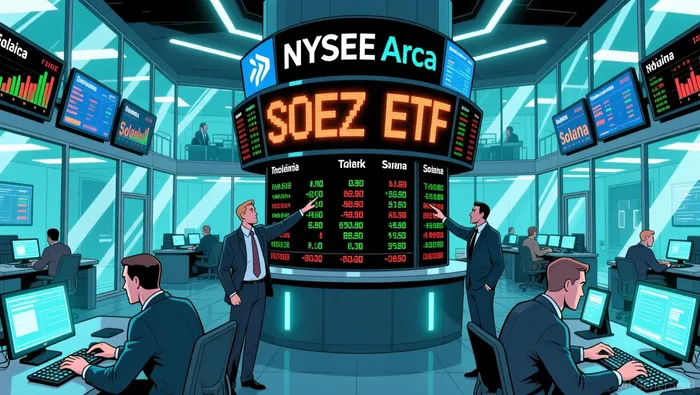
Franklin Templeton has submitted the final regulatory paperwork for its SolanaSOL-- spot ETF, signaling an imminent market debut as the firm seeks to capitalize on growing institutional demand for altcoin exposure. The ETF, to be listed as SOEZ on NYSE Arca, filed a Form 8-A with the SEC, a move often interpreted as a regulatory green light for trading to commence within days. The fund will charge a 0.19% fee, with sponsor fees waived on the first $5 billion in assets until May 2026, a structure designed to attract early inflows. This follows Franklin's successful launch of an XRPXRP-- ETF in November, which saw $164 million in inflows on its first day, highlighting the firm's strategy to expand its crypto ETF lineup.
The Solana ETF's filing aligns with a broader industry trend of institutional adoption, as major asset managers like Fidelity, VanEck, and Bitwise have also launched Solana-focused products in recent weeks. The new fund will hold actual SOL tokens and track the CF Benchmarks Solana Index, offering investors direct exposure to the asset without the complexities of managing private keys or crypto wallets. This structure mirrors traditional commodity ETFs, distinguishing it from futures-based alternatives and appealing to traditional investors seeking regulated access to digital assets.
Regulatory clarity has played a pivotal role in enabling these launches. In 2025, the SEC approved generic guidelines for commodity-based crypto ETFs, expediting the approval process for altcoin products. This shift has catalyzed a surge in Solana ETF activity, with six U.S. funds now active, including Bitwise's BSOL, which dominates the market with $478 million in assets. Grayscale's GSOL and Fidelity's FSOL, launched in November, have also attracted significant inflows, reflecting strong institutional interest. Meanwhile, XRP ETFs have outpaced Solana in short-term performance, with cumulative inflows exceeding $587 million since late October, driven by aggressive fee waivers from providers like Franklin and Grayscale.
The potential market impact of Franklin's Solana ETF is substantial. By providing liquidity through traditional brokerage platforms, the fund could accelerate Solana's adoption among both institutional and retail investors. Analysts note that ETFs often act as demand sinks, absorbing sell pressure from legacy holders and stabilizing price dynamics. However, volatility remains a key risk, as crypto markets remain susceptible to regulatory shifts and macroeconomic factors. The ETF's success could also incentivize other asset managers to accelerate their altcoin product filings, intensifying competition in the space.
As the crypto-ETF landscape matures, the interplay between product innovation and market dynamics will be critical. Franklin's entry into the Solana space underscores the growing acceptance of altcoins in traditional finance, with the firm positioning itself at the forefront of a sector poised for expansion.






Comentarios
Aún no hay comentarios