
Solana's Institutional Adoption and Security Risks: Lessons from the $75M Coinbase Incident
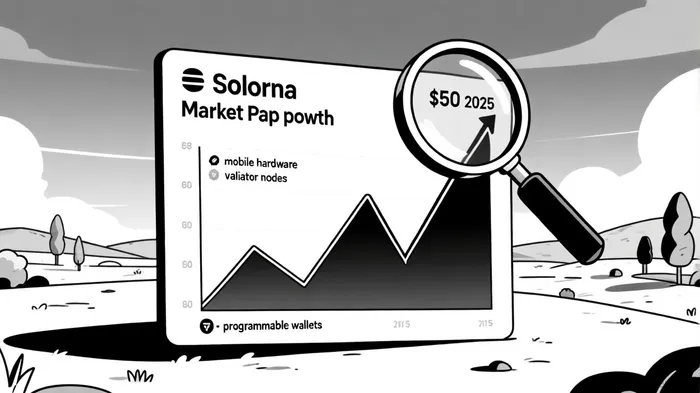
In the fast-moving world of crypto, SolanaSOL-- has emerged as a standout player. By 2025, it accounts for 81% of all decentralized exchange (DEX) transactions, driven by its high throughput and low fees[1]. Institutions are taking notice: the platform's mobile-first strategy, including the launch of 150,000+ Solana-branded smartphones, signals a bold push into mainstream adoption[1]. Yet, as the hypothetical $75M CoinbaseCOIN-- incident illustrates, rapid growth and institutional trust are fragile things—especially when operational risks outpace infrastructure readiness.
The Allure of Solana: Speed, Scale, and Innovation
Solana's appeal lies in its ability to balance scalability with developer flexibility. Its programmable wallets, such as those supporting Transfer Hooks and Confidential Transfers, offer compliance tools and privacy features that resonate with institutional clients[2]. Meanwhile, the Solana Mobile initiative—embedding blockchain capabilities directly into hardware—lowers the barrier to entry for retail users[1]. These innovations have made Solana a darling of the crypto ecosystem, but they also introduce new attack surfaces.
Consider the Solana Seeker phone: while its Seed Vault key storage aims to enhance security, hardware vulnerabilities or misconfigured software could expose private keys to exploitation. Similarly, the programmable nature of Solana's wallets, while powerful, requires meticulous implementation to avoid bugs that could be weaponized by malicious actors[2].
Operational Risks in the Shadows of Growth
The $75M Coinbase incident—though details remain opaque—serves as a cautionary tale. In crypto, operational risks often stem from misaligned incentives, overreliance on untested infrastructure, or underestimating the complexity of hybrid systems (e.g., hardware-software integrations). For Solana, three vulnerabilities stand out:
- Validator Node Centralization: While thousands of nodes theoretically ensure decentralization, a small number of validators could dominate the network. Collusion or hardware failures among these actors could disrupt consensus[1].
- Mobile Ecosystem Complexity: The Seeker phone's integration of blockchain features adds layers of complexity. A single flaw in the device's firmware or app store could compromise user funds[1].
- Developer Velocity vs. Security: Solana's rapid growth has attracted 81% of new DEX builders[1], but speed often comes at the cost of rigorous testing. A critical smart contract vulnerability could erode trust overnight.
Lessons for Institutional Adoption
Institutions evaluating Solana must ask: Can the platform's operational risks be contained without stifling innovation? The answer hinges on three factors:
- Auditable Infrastructure: Institutions demand transparency. Solana's validator nodes and mobile hardware must undergo third-party audits to verify resilience against attacks.
- Insurance and Compliance Frameworks: Features like Confidential Transfers[2] are valuable, but they need to be paired with insurance products and regulatory guardrails to mitigate losses.
- Validator Diversity: A healthy validator ecosystem requires geographic and technical diversity to prevent single points of failure.
The hypothetical Coinbase incident underscores that even the most promising platforms are not immune to operational missteps. For institutions, the key is to balance Solana's innovation with robust risk management.
Conclusion
Solana's trajectory is a microcosm of crypto's broader promise and peril. Its institutional adoption hinges on whether it can scale without compromising security—a challenge that the $75M Coinbase incident, real or hypothetical, brings into sharp focus. For investors, the lesson is clear: innovation must be paired with operational discipline. As Solana races toward mainstream adoption, the question isn't if it can succeed—it's how it will avoid becoming the next cautionary tale.





Comentarios
Aún no hay comentarios