
Solana's Emerging Financial Infrastructure: A New Era for DeFi and Institutional Adoption
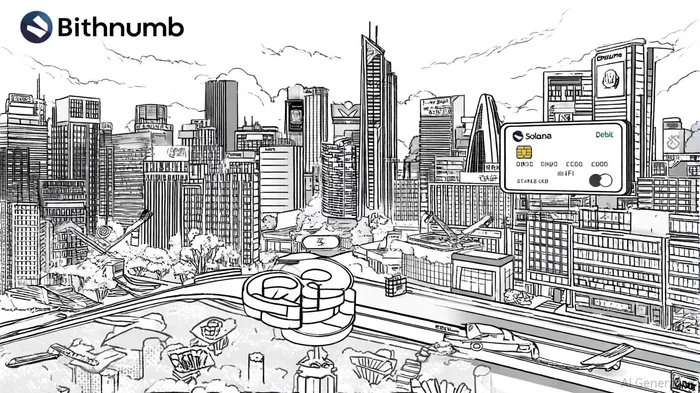
The SolanaSOL-- ecosystem is undergoing a transformative phase, driven by two groundbreaking developments: World Liberty Financial's (WLFI) consumer-focused debit card and South Korea's first Solana Digital Asset Treasury (DAT). These initiatives signal a strategic shift toward mainstream adoption and institutional credibility, positioning Solana as a cornerstone of the next-generation financial infrastructure.
WLFI's Debit Card: Bridging Crypto and Everyday Finance
World Liberty Financial, a project with high-profile backing, has announced a debit card linked to its USD1USD1-- stablecoin, compatible with AppleAAPL-- Pay and designed to facilitate daily transactions[1]. This card, unveiled during Korea Blockchain Week 2025, is part of a broader retail app that merges peer-to-peer payments with trading functionality—often described as a hybrid of Venmo and Robinhood[2]. By enabling users to spend stablecoins seamlessly, WLFIWLFI-- is addressing a critical barrier to crypto adoption: utility in real-world commerce.
The strategic implications are profound. First, the integration with Apple Pay—a platform with over 1 billion active users—positions USD1 to reach a global audience accustomed to traditional payment systems[3]. Second, WLFI's partnership with Bithumb, South Korea's leading crypto exchange, underscores its ambition to tap into the region's $72 billion crypto market[4]. Notably, WLFI has opted for a technology-agnostic approach, avoiding the development of its own blockchain to ensure compatibility with multiple ecosystems[5]. This decision reduces friction for users and developers, fostering broader adoption.
However, challenges remain. The WLFI token has experienced significant volatility, dropping 37% since its 2024 launch[6]. While co-founder Zak Folkman emphasizes a “decade-long vision,” the success of the debit card will depend on user adoption and the app's ability to retain users in a competitive market.
Korea's First SOL Treasury: Institutionalizing DeFi
South Korea's first Solana Digital Asset Treasury, launched in late September 2025, represents a pivotal step in institutionalizing DeFi. Spearheaded by DeFi Development Corp. (DFDV), a Nasdaq-listed firm, and Fragmetric Labs, a Solana-based liquidity restaking platform, the initiative involves acquiring a publicly listed Korean company to manage and accumulate SOL tokens[7]. DFDV, already holding over 2 million SOL, added 62,745 tokens to its holdings, signaling confidence in Solana's long-term potential[8].
This move aligns with DFDV's Treasury Accelerator program, which aims to expand digital asset treasuries globally[9]. By leveraging South Korea's regulatory clarity and active crypto market, the partnership seeks to attract institutional investors and corporations to Solana. Fragmetric's Normalized Token Program further enhances this effort by improving token efficiency and liquidity across the network[10].
The strategic goals are clear: strengthen Solana's financial infrastructure, increase institutional exposure to SOL, and solidify the network's dominance in the Asia-Pacific region[11]. Analysts suggest that such treasuries could drive Solana's market value higher by generating staking yields and fostering corporate adoption[12].
Synergies and the Road Ahead
The convergence of WLFI's consumer-focused tools and Korea's institutional-grade infrastructure creates a powerful narrative for Solana. On one hand, the debit card democratizes access to crypto, making stablecoins a viable alternative to fiat. On the other, the DAT initiative legitimizes Solana as a platform for institutional investment, bridging the gap between DeFi and traditional finance.
For investors, these developments highlight Solana's dual potential: as a utility layer for everyday transactions and as a hub for institutional-grade DeFi. However, risks persist, including regulatory scrutiny of stablecoins and the volatility of crypto assets. The success of these initiatives will hinge on execution—whether WLFI can scale its app, and whether Korea's DAT can attract sustained institutional participation.
Conclusion
Solana's emerging financial infrastructure is no longer confined to speculative hype. With WLFI's debit card and Korea's DAT, the network is building a foundation for sustainable growth, blending consumer accessibility with institutional credibility. For investors, this represents a compelling case for long-term exposure to a blockchain ecosystem poised to redefine finance.





Comentarios
Aún no hay comentarios