
Solana DEX Liquidity Challenges and the Path to Recovery
The SolanaSOL-- decentralized exchange (DEX) ecosystem has emerged as a cornerstone of blockchain-based trading, leveraging the network's high throughput and low fees to attract both retail and institutional participants. However, 2025 has exposed critical structural vulnerabilities in its liquidity infrastructure, from depegging events to oracle failures during market stress. This analysis evaluates the risks and opportunities shaping Solana's DEX landscape, focusing on technical, governance, and market dynamics.
Structural Risks in Solana DEX Liquidity
1. Liquidity Fragmentation and Depegging Vulnerabilities
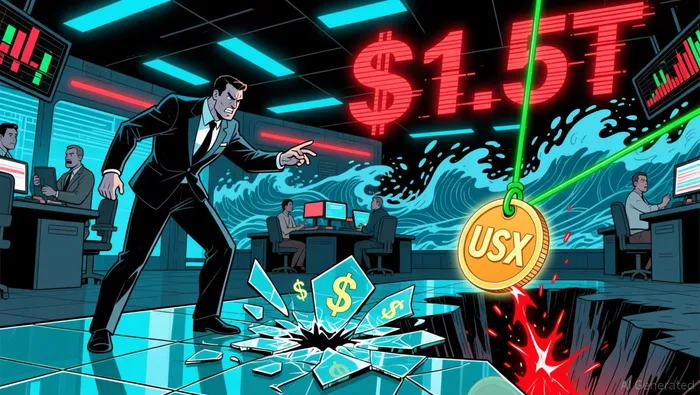
Solana's DEX volume surged to $1.5 trillion in 2025, a 57% annual increase, but this growth has been accompanied by liquidity fragmentation. For example, the USX stablecoin temporarily lost its $1 peg in late 2025 due to a sudden liquidity drain on platforms like OrcaORCA-- and RaydiumRAY--. During this crisis, USX's price plummeted to as low as $0.1 on secondary markets before Solstice, its issuer, intervened to stabilize it near $0.94. This incident underscores the fragility of decentralized liquidity pools during periods of high volatility, particularly when liquidity is concentrated in a few protocols.
2. Oracle Failures and Cascading Liquidations
The October 11, 2025, crypto "black swan" crash revealed systemic risks in Solana's oracle infrastructure. ChainlinkLINK-- and PythPYTH-- oracles propagated corrupted price data from a failing exchange, triggering cascading liquidations across interconnected platforms. Compounding this, a vulnerability in the Solana Foundation's ZK ElGamal Proof program could have allowed attackers to forge proofs and mint tokens illicitly. These failures highlight the reliance on centralized data feeds and the lack of robust fail-safes in critical smart contracts.
3. Cross-Chain Interoperability Challenges
Blockchain bridges, which enable cross-chain asset transfers, became prime targets during the 2025 crash. Many bridges rely on weak on-chain validation or off-chain verification, creating single points of failure. For instance, Solana-based projects like Yala faced regulatory scrutiny after a $7.64M exploit in September 2025, leading to a depegging event and a trading advisory from Coinone. Cross-chain interoperability remains a double-edged sword, offering scalability but amplifying systemic risks during crises.
Ecosystem Responses and Innovation
Despite these challenges, Solana's ecosystem has demonstrated resilience through structured recovery efforts and technological innovation.
1. Redemption Plans and Transparency Initiatives
Projects like Yala have prioritized liquidity restoration through 1:1 redemption plans for their stablecoins (e.g., YU). Yala also enhanced security with audits and cross-chain integration on Base and Solana to rebuild trust. Similarly, Solstice pledged to improve transparency and liquidity depth after the USX depegging. These measures reflect a shift toward institutional-grade governance in DeFi.
2. AI-Driven Liquidity Solutions
Innovative protocols are addressing liquidity risks through AI-driven market-making and dynamic fee structures. A cross-chain DEX architecture now integrates automated market makerMKR-- (AMM) pools with AI-powered stop-loss mechanisms to mitigate extreme volatility. These tools preemptively close positions when loss thresholds are breached, protecting liquidity during crashes. Dynamic fee structures, which adjust based on market conditions, are also being tested to optimize trading efficiency.
3. Institutional Partnerships and Infrastructure Resilience
Platforms like dYdXDYDX-- have leveraged partnerships with liquidity providers such as Indiversum and Onramper to enhance market resilience. dYdX's MegaVault, which achieved $79M in TVL, exemplifies how structured liquidity solutions can support decentralized perpetual trading. Meanwhile, projects like AURA DEX are building secure, AI-integrated trading infrastructure to address scalability and execution challenges.
Opportunities and the Path Forward
The Solana DEX ecosystem's recovery hinges on balancing innovation with risk mitigation. Key opportunities include:
- Institutional Adoption: dYdX's "Trade Anything" vision and Solana's low-cost infrastructure position the network to attract institutional capital.
- AI and Algorithmic Governance: AI-driven risk management and dynamic fee models could redefine liquidity provision in DeFi.
- Regulatory Alignment: Projects that prioritize transparency (e.g., Yala's audits) may gain regulatory clarity, fostering mainstream adoption.
However, challenges persist. Governance inefficiencies-such as stalled DAOs and delayed security patches- remain critical weaknesses. Additionally, meme-driven projects like Mumu the Bull (MUMU) highlight the risks of speculative models lacking utility.
Conclusion
Solana's DEX ecosystem is at a crossroads. While liquidity fragmentation and oracle vulnerabilities pose significant risks, the network's technical agility and innovation-particularly in AI-driven solutions and institutional partnerships-offer a viable path to recovery. For investors, the key lies in distinguishing between projects with robust fundamentals (e.g., Yala, dYdX) and speculative assets prone to volatility. As the industry matures, Solana's ability to address structural risks will determine its role in the next phase of decentralized finance.







Comentarios
Aún no hay comentarios