
The Software Sector's AI-Driven Renaissance: Why Microsoft, Oracle, and ServiceNow Are Key Plays
The software sector is undergoing a profound transformation as artificial intelligence (AI) reshapes enterprise workflows, data management, and global infrastructure. By 2025, the integration of AI into core software systems has accelerated, driven by strategic investments, cross-industry partnerships, and a growing emphasis on scalable, secure AI solutions. Among the most compelling plays in this renaissance are MicrosoftMSFT--, OracleORCL--, and ServiceNow-companies that have not only embraced AI but are actively redefining its role in enterprise software.
Oracle: Unifying Data for Enterprise AI Dominance
Oracle has positioned itself as a leader in the AI-driven software market by addressing a critical bottleneck: fragmented data. The company's AI Data Platform, introduced in 2025, aims to unify enterprise data across on-premise and cloud environments, enabling AI models to perform multi-step reasoning while maintaining compliance and security according to Oracle's 2025 strategy. This approach aligns with Larry Ellison's vision of leveraging Oracle's existing strengths in databases and cloud infrastructure to dominate the AI economy.
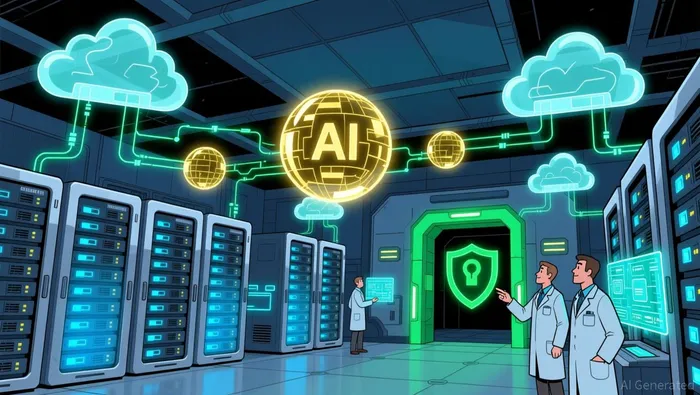
By allowing third-party AI models to access Oracle's unified data layer, the platform reduces the complexity of AI deployment, a key differentiator in an era where data silos hinder innovation. For investors, Oracle's focus on data unification and enterprise-grade AI security represents a strategic bet on long-term market leadership.
ServiceNow: Embedding AI into Everyday Workflows
ServiceNow's 2025 strategy underscores its commitment to making AI an integral part of enterprise operations. The company's partnership with Microsoft has yielded co-innovations such as the ServiceNowNOW-- Now Assist custom engine agent, which integrates seamlessly with Microsoft Agent 365 to automate tasks like password resets and hybrid work scheduling. This collaboration highlights ServiceNow's ability to bridge the gap between AI capabilities and user-friendly workflows, a critical factor in enterprise AI adoption. Additionally, the ServiceNow AI Control Tower, paired with Microsoft Foundry and Copilot Studio, provides a centralized dashboard for managing AI assets, ensuring compliance, and mitigating risks. By prioritizing practical AI integration, ServiceNow is addressing the "AI maturity" gap that many enterprises face, positioning itself as a key enabler of AI-driven productivity.
Microsoft: Scaling AI Infrastructure and Global Partnerships
Microsoft's 2025 investments and partnerships illustrate its ambition to lead the AI infrastructure race. The company's $17.5 billion commitment to India over four years includes expanding hyperscale datacenters and integrating AI into public platforms like e-Shram, a move that aligns with its goal of democratizing AI access for 310 million informal workers. Similarly, Microsoft's $5.42 billion investment in Canada-focusing on cloud capacity and AI startups like Cohere- reflects its strategy to anchor AI growth in high-potential markets.
A cornerstone of Microsoft's AI strategy is its deepening partnership with OpenAI, now valued at $135 billion. This agreement grants Microsoft extended IP rights and exclusive API access for Azure, solidifying its role as the primary cloud platform for OpenAI's innovations. Meanwhile, Microsoft's $80 billion investment in AI-enabled datacenters in FY 2025- more than half in the U.S.-ensures it remains at the forefront of training large-scale AI models. These moves, combined with the expansion of its AI Cloud Partner Program and tools like Dragon Copilot for healthcare, underscore Microsoft's holistic approach to scaling AI adoption across industries.
Global AI Adoption: Opportunities and Challenges
While the Global North continues to lead in AI adoption, the 2025 landscape reveals both progress and disparities. South Korea's success in developing AI models tailored to the Korean language, supported by national policies, highlights the potential for AI to thrive in non-English markets. However, the digital divide persists, with the Global South lagging due to infrastructure gaps and limited access to AI talent. For companies like Microsoft and Oracle, addressing these disparities through localized investments and partnerships- such as Microsoft's ADVANTA(I)GE India initiative-represents both a moral imperative and a strategic opportunity to expand their market reach.
Conclusion: Strategic Positioning for Long-Term Growth
Microsoft, Oracle, and ServiceNow are not merely adapting to the AI revolution-they are architecting its next phase. Oracle's data unification, ServiceNow's workflow integration, and Microsoft's infrastructure dominance collectively address the core challenges of enterprise AI adoption: complexity, scalability, and accessibility. As AI becomes increasingly embedded in software ecosystems, these companies' strategic investments and partnerships position them as indispensable players in the AI-driven renaissance. For investors, the alignment of their roadmaps with global AI trends-from cloud expansion to cross-industry collaboration-makes them compelling long-term bets in a sector poised for exponential growth.







Comentarios
Aún no hay comentarios