
Socially Responsible Investing in the Food and Beverage Sector: Leveraging Events Like Taste of the NFL for Impact and Returns
The food and beverage sector is undergoing a paradigm shift as investors increasingly prioritize companies that align profit with purpose. Purpose-driven partnerships between consumer brands and nonprofits are emerging as a strategic tool to address societal challenges while enhancing brand loyalty, market reach, and ESG (Environmental, Social, and Governance) alignment. PepsiCo's collaboration with GENYOUth and the NFL exemplifies this trend, offering a compelling model for investors seeking long-term value in a sector often scrutinized for its environmental and health impacts.
A Strategic Partnership: PepsiCoPEP--, GENYOUth, and the NFL
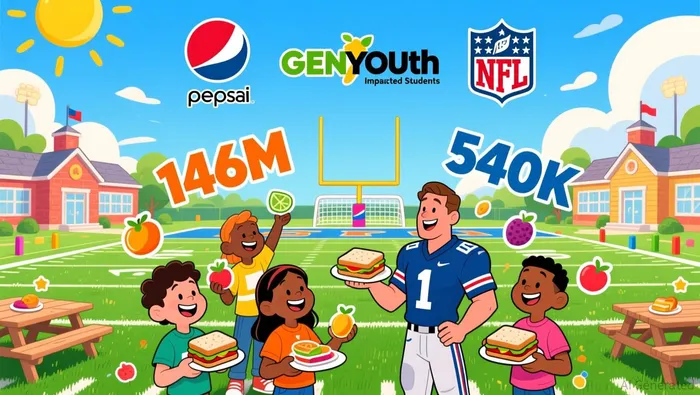
PepsiCo's partnership with GENYOUth and the NFL has centered on initiatives like Taste of the NFL, an annual event that combines culinary experiences with fundraising to combat student hunger. From 2023 to 2025, the event's impact grew significantly: in 2023, it raised $1.8 million to support 385,000 students and 100 million school meals; by 2025, the figure had risen to $2.2 million, benefiting 540,000 students and 146 million meals across 1,000 schools in all 32 NFL markets according to GENYOUth. These efforts are part of PepsiCo's broader pep+ sustainability strategy, which emphasizes nutrition security, regenerative agriculture, and community investment as reported.
The partnership extends beyond fundraising. For instance, the Super School Meals initiative, launched in 2025, provided meal equipment to high-need schools in Louisiana and Nevada, while the Super Schools program in the San Francisco Bay Area equipped 60 schools with nutrition tools and NFL FLAG-In-School kits, impacting over 33,000 students according to Vending Times. Such localized interventions not only address immediate food insecurity but also strengthen PepsiCo's ties to communities where its employees and customers reside, fostering brand loyalty.
Financial and Societal Impact: A Win-Win for Investors
The financial returns of these initiatives are equally compelling. PepsiCo's ESG performance has bolstered its reputation, contributing to its AA rating from MSCI and Strong rating from Sustainalytics as cited by KnowESG. These high ESG scores are increasingly critical for investor confidence, as studies show that companies with robust sustainability practices tend to outperform peers in volatile markets according to Bloomberg. For example, PepsiCo's ROI averaged 24.88% in 2022, declining slightly to 22.41% in 2025's second quarter, but remaining strong amid macroeconomic headwinds as reported by MacroTrends.
The societal impact is equally measurable. By 2025, PepsiCo's collaboration had expanded access to 146 million school meals, aligning with its goal to end student hunger while promoting healthier eating habits. This dual focus on profit and purpose resonates with consumers, particularly younger demographics who prioritize ethical consumption. According to a 2024 report by Bloomberg, 67% of millennials and Gen Z consumers are willing to pay a premium for brands that demonstrate social responsibility as Bloomberg reported.
ESG Alignment and Long-Term Value
PepsiCo's ESG initiatives are not isolated acts of philanthropy but integral to its business strategy. The company has exceeded its 2025 nutrition targets a year early, reducing added sugars and sodium in its products while expanding regenerative agriculture to 3.5 million acres as reported. These efforts have reduced operational risks, such as water scarcity and supply chain disruptions, while enhancing resilience against regulatory pressures. For investors, this translates to a company that is not only addressing global challenges but also future-proofing its business model.
The NFL partnership further amplifies PepsiCo's ESG narrative. By leveraging the NFL's cultural influence, PepsiCo has amplified its message of nutrition security to millions of fans, turning a sports event into a platform for social change. This alignment with a high-profile partner also signals credibility, as the NFL's own ESG goals include reducing carbon emissions and promoting health equity according to the NFL's ESG report.
Conclusion: A Blueprint for Impact-Driven Investing
PepsiCo's collaboration with GENYOUth and the NFL demonstrates that purpose-driven partnerships can generate both societal impact and financial returns. For investors, the key takeaway is clear: companies that integrate ESG goals into their core operations-through strategic alliances with nonprofits and cultural institutions-are better positioned to navigate regulatory, reputational, and market risks. As the food and beverage sector faces growing scrutiny over health and sustainability, PepsiCo's model offers a blueprint for balancing profit with purpose.
In an era where ESG performance is increasingly tied to stock valuations, PepsiCo's initiatives underscore the importance of investing in companies that prioritize long-term value creation over short-term gains. For socially responsible investors, the lesson is simple: align with brands that turn challenges like student hunger into opportunities for growth.





Comentarios
Aún no hay comentarios