
Social Trading Platforms and Their Disruptive Potential in DeFi: Reshaping Crypto Adoption and Utility Through Community-Driven Innovation
The DeFi landscape is undergoing a seismic shift, driven by the rapid rise of social trading platforms that are redefining how users interact with decentralized finance. These platforms, which blend social media's collaborative ethos with financial tools, are not just democratizing access to crypto markets-they are reshaping the very utility of digital assets. By 2025, the global social trading market is projected to reach , growing at a 7.6% CAGR since 2024, as mobile-first platforms and AI-driven tools attract a new generation of investors. This evolution is not merely about convenience; it's about creating a financial ecosystem where community-driven governance and decentralized decision-making become the norm.
The Growth Drivers: Mobile-First Access and AI-Powered Engagement
The surge in adoption is fueled by platforms that prioritize mobile accessibility and gamified user experiences. in 2024 occurred via mobile apps, with Gen-Z investors showing a 68% preference for copy trading over traditional brokers in developed markets. These platforms leverage real-time notifications, simplified interfaces, and AI-powered recommendations to lower entry barriers for novice traders while enhancing efficiency for seasoned investors. For instance, eToro's CopyTrader and Smart Portfolio tools have and generated in 2024 alone.
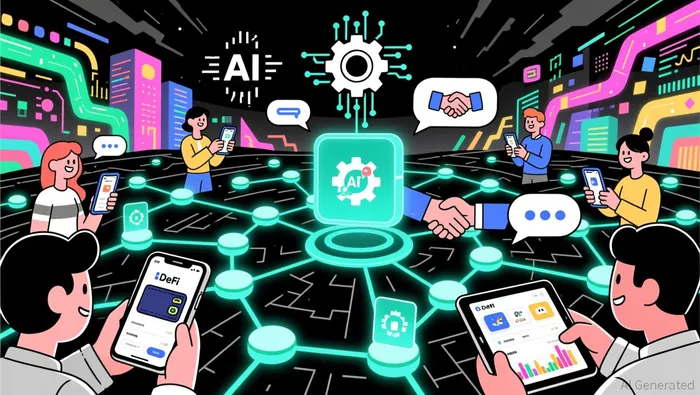
The integration of blockchain-based verification and AI-driven analytics further amplifies trust and transparency. and have pioneered AI-oriented tools that offer personalized trade recommendations and real-time market insights, expanding accessibility to younger demographics. This fusion of social interaction and algorithmic precision is not just a trend-it's a paradigm shift in how financial markets operate.
Regional Dynamics: From North America to Emerging Markets
The geographic footprint of social trading platforms underscores their disruptive potential. North America dominated the market in 2023–2024, accounting for , while Europe held 30%. However, the Asia-Pacific region is emerging as the fastest-growing market, driven by India and China's adoption of low-fee, multi-language platforms. like Nigeria, Pakistan, and Egypt, rising mobile penetration and affordable trading tools are fueling a surge in participation.
This global expansion is not just about numbers-it's about redefining financial inclusion. are tailoring customizable modules for brokers in the Middle East and Southeast Asia, while ZuluTrade and NAGA cater to niche audiences such as forex traders and algorithmic investors. The result is a decentralized financial ecosystem where regional disparities are being bridged through community-driven innovation.
DAOs and DeFi: The Next Frontier of Decentralized Governance
The integration of Decentralized Autonomous Organizations (DAOs) into social trading platforms is the most transformative development in 2025. DAOs enable token holders to govern platform operations, allocate funds, and vote on strategic decisions, creating a transparent and inclusive framework. For example, Aave DAO has expanded its governance model to include , a decentralized stablecoin managed through community votes. Similarly, MakerDAO continues to pioneer decentralized finance by stablecoin's parameters.
Social DAOs like Friends With Benefits (FWB) and Syndicate DAO are redefining how communities collaborate. FWB operates as a decentralized club for web3 creators, granting token holders voting rights and access to exclusive events. Syndicate DAO, on the other hand, enables collective investment in blockchain projects, allowing members to pool capital and vote on funding proposals. These models demonstrate how DAOs can democratize access to financial tools and strategies, fostering a culture of shared ownership and innovation.
The Impact on Crypto Utility and Adoption
The convergence of social trading platforms and DAOs is unlocking new utility for crypto assets. Governance tokens are no longer just voting instruments-they are integral to staking, yield farming, and incentivizing user activity. For instance, Uniswap DAO allows UNI token holders to shape the platform's future, including decisions on blockchain integrations and fee structures. Meanwhile, AI-driven governance is automating decision-making processes, reducing human bias and enhancing efficiency.
This evolution is accelerating crypto adoption in two key ways:
1. Mainstream Accessibility: By simplifying complex financial tools through copy trading and AI recommendations, platforms are attracting non-technical users who previously found crypto intimidating.
2. Institutional Confidence: Clearer regulatory frameworks for stablecoins and digital assets, as outlined in the , are reducing barriers for institutional participation.
Conclusion: A New Era of Decentralized Finance
Social trading platforms are not just tools-they are catalysts for a decentralized financial revolution. By combining mobile-first accessibility, AI-driven analytics, and DAO-based governance, these platforms are redefining how users interact with crypto. The result is a more inclusive, transparent, and innovative ecosystem where community-driven decision-making becomes the norm. As the market grows from $2.43 billion in 2024 to $3.51 billion by 2029, the disruptive potential of these platforms will only intensify. For investors, the message is clear: the future of finance is social, decentralized, and community-driven.







Comentarios
Aún no hay comentarios