
Social Security Payment Timing and Its Ripple Effects on U.S. Consumer Spending and Financial Markets
Consumer Spending: A Double-Edged Sword
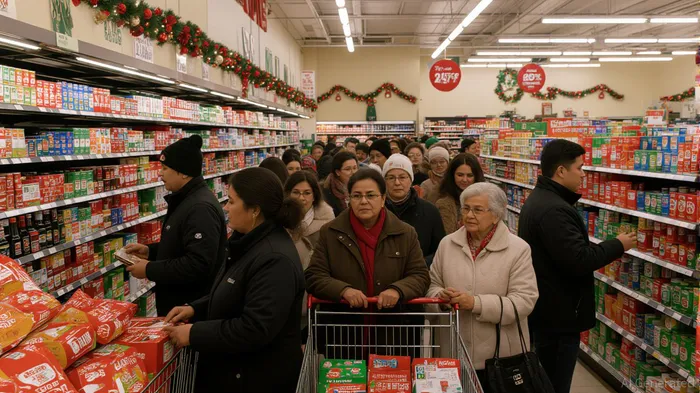
The early release of January 2026 SSI payments on December 31 injected liquidity into the economy during the critical holiday shopping period. For many low-income beneficiaries, this timing likely accelerated spending on essentials like food, housing, and retail goods according to financial analysts. A report by USA Today notes that SSI recipients often allocate a significant portion of their benefits to consumer staples, making this sector particularly sensitive to payment timing according to economic data. However, the same adjustment created a longer-than-usual gap between the December 31 payment and the next scheduled disbursement on January 30, 2026, potentially straining cash flow for some households in early 2026. This duality-boosted December spending versus delayed February liquidity-highlights the uneven impact of payment schedules on consumer behavior.
Financial Market Implications
Retail and Consumer Staples: A Holiday Boost
The December 31 payment, combined with the COLA increase, likely amplified retail sales in late December 2025. , recipients had more disposable income to allocate toward holiday shopping according to SSA data. This aligns with broader trends: Fidelity Investments observed that consumer staples outperformed other sectors in Q4 2025, driven by resilient demand for essential goods amid economic uncertainty according to research. The sector's performance was further supported by the "soft patch" in Q4 2025, caused by trade policy uncertainty and a government shutdown, which pushed investors toward defensive assets according to investment analysis.
Bond Yields and Liquidity Dynamics
The dual-payment structure also influenced bond markets. The influx of cash into the economy around December 1 and 31 temporarily increased liquidity, which could have depressed short-term interest rates. However, the Federal Reserve's ongoing easing cycle and expectations of rate cuts in December 2025 countered this effect, supporting long-term bond yields. Fixed income analysts noted that U.S. , reflecting heightened demand for safe-haven assets amid macroeconomic volatility. The interplay between SSI-driven liquidity and Fed policy underscores the complexity of predicting bond yield movements in response to payment timing changes.
Investor Behavior and Asset Allocation
For investors receiving SSI or managing portfolios for beneficiaries, the December 2025 schedule prompted strategic shifts in asset allocation. The early liquidity from December 31 payments may have encouraged increased allocations to short-term, liquid assets such as money market funds or Treasury bills according to financial guidance. Conversely, the longer cash flow gap in early 2026 could have led to a precautionary increase in bond holdings, particularly inflation-protected securities, to hedge against potential spending pressures according to market analysis. Additionally, the COLA increase and rising Medicare Part B premiums (which offset some of the benefit gains) may have driven investors to rebalance portfolios toward healthcare stocks or dividend-paying equities to offset rising healthcare costs according to advisor insights.
Conclusion: Navigating the Ripple Effects
The December 2025 SSI payment schedule illustrates how even minor adjustments in benefit timing can create cascading effects across consumer spending and financial markets. For investors, the key takeaway lies in anticipating liquidity shifts and sector-specific opportunities. Retail and consumer staples are likely to benefit from accelerated payments during peak spending periods, while bond markets may experience temporary volatility due to liquidity injections. Meanwhile, investors should remain agile, adjusting allocations to align with evolving cash flow patterns and macroeconomic signals. As the Social Security Administration continues to adapt payment schedules to accommodate holidays and policy changes, market participants must stay attuned to these dynamics to optimize short-term strategies.







Comentarios
Aún no hay comentarios