
Social Media Regulation and Tech Sector Valuations: Navigating Regulatory Risk in 2025
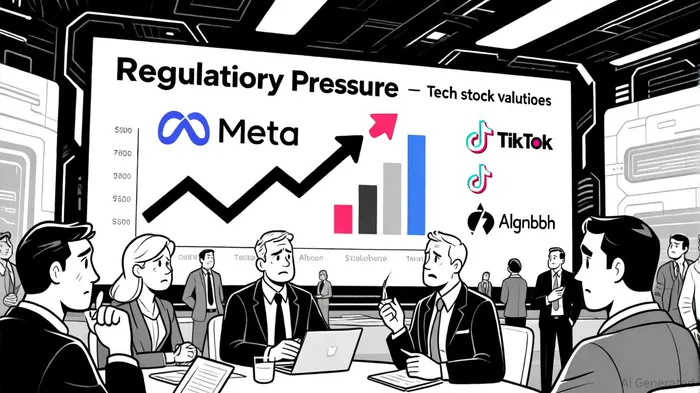
The social media landscape in 2024–2025 has become a battleground for regulatory scrutiny, with profound implications for tech sector valuations. From antitrust lawsuits to data privacy mandates, the sector faces a dual challenge: adapting to evolving rules while maintaining profitability. This analysis examines how regulatory risks are reshaping shareholder value, using specific examples like the TikTok ban and Meta's subscription model to highlight the stakes for investors.
Regulatory Pressures and Shareholder Value: The TikTok Case Study
The potential U.S. ban of TikTok under the 2024 Foreign Adversary Controlled Applications Act has emerged as a defining regulatory risk. According to a report by Forbes, analysts estimate that MetaMETA-- could capture between $2.46 billion and $3.38 billion in additional ad revenue if TikTok is banned, as users and advertisers migrate to platforms like Instagram Reels[2]. This revenue gain could drive a 5% to 9% increase in Meta's earnings per share, though the transition poses challenges for small businesses reliant on TikTok's low-cost advertising model.
The TikTok ban also underscores broader economic risks. A January 2025 shutdown of the platform revealed its deep integration into the U.S. economy, with 28 million workers employed by 7.5 million businesses on the platform in 2024[3]. A forced divestiture or rebranding could disrupt this ecosystem, creating short-term volatility for competitors and users alike.
Meta's Subscription Model: A Strategic Pivot Amid Regulation
Meta's shift toward a no-ad subscription model in the EU and its expansion of monetized tools like WhatsApp Business reflect a proactive response to regulatory pressures. In Q2 2025, the company reported a 49.9% increase in "Other Revenue" from its Family of Apps, driven by paid messaging and subscription-like features. While ad revenue remains dominant—up 21% year-over-year in Q2 2025[2]—Meta's diversification into subscriptions is critical as EU regulations restrict targeted advertising.
However, Meta's Reality Labs segment, which includes VR/AR, still faces an operating loss of $4.5 billion in Q2 2025. This highlights the tension between regulatory compliance and long-term innovation. CFO Susan Li has hinted at future monetization opportunities for Meta AI, including paid recommendations, but these remain in the investment phase[1].
Broader Regulatory Trends and Market Reactions
Regulatory scrutiny extends beyond TikTok and Meta. The U.S. Department of Justice's antitrust victory over Google in 2024 and the EU's Digital Markets Act (DMA) fines against Apple and Meta ($500 million and $200 million, respectively[3]) signal a global trend toward stricter oversight. These actions have introduced stock volatility, as seen in Alphabet's 2025 rally following a favorable antitrust ruling[1], and Nvidia's decline due to AI export restrictions[1].
Investor Implications: Balancing Risk and Opportunity
For investors, the regulatory landscape presents both risks and opportunities. The "Mag 7" tech giants accounted for over 50% of S&P 500 returns from 2020–2025[2], but their dominance raises concerns about overcapacity in AI infrastructure and margin pressures[2]. Morgan Stanley warns that non-tech stocks have lagged, amplifying the sector's concentration risk[2].
Strategic M&A and AI-focused investments are emerging as key growth drivers. Deloitte projects 9.3% global IT spending growth in 2025, particularly in data centers and cloud infrastructure[3]. However, regulatory delays and compliance costs remain hurdles, as noted in a Baker McKenzie report on antitrust complexities[1].
Conclusion
Social media regulation in 2024–2025 is reshaping tech sector valuations through direct financial impacts and strategic pivots. While companies like Meta and Alphabet have shown resilience—driven by AI monetization and subscription models—the path forward remains fraught with regulatory uncertainty. Investors must weigh the potential for innovation against the risks of overregulation, ensuring portfolios are diversified across high-growth tech and resilient non-tech assets.





Comentarios
Aún no hay comentarios