
Société Générale's Strategic Momentum and Shareholder Returns in Q2 2025
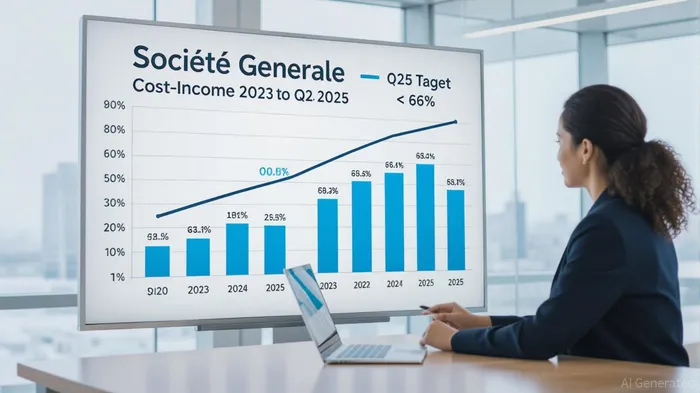
Société Générale's Q2 2025 results underscore a compelling narrative of capital efficiency, profitability execution, and shareholder-centric policies, positioning the bank as a standout performer in the European banking sector. With a cost-income ratio of 63.8% for the quarter—well below its annual target of less than 66% and a marked improvement from 68.4% in Q2 2024—the institution has demonstrated disciplined cost management amid rising operational demands[1]. This metric, a critical barometer of operational efficiency, reflects the bank's strategic focus on streamlining operations and leveraging digital transformation to reduce overheads[2].
Profitability and Capital Strength: A Dual Engine for Growth
The bank's profitability metrics further reinforce its momentum. Q2 2025 net income surged to €1.5 billion, a 31% year-over-year increase, while operating income reached €2.11 billion, up 21.8% compared to Q2 2024[3]. These figures translate to a return on tangible equity (ROTE) of 9.7% for the quarter, with the first half of 2025 already achieving a 10.3% ROTE—prompting an upward revision of the full-year target to ~9% from the initial >8%[1]. Such performance is underpinned by a robust capital position, evidenced by a Group CET1 ratio of 13.5% at the end of Q2 2025, 330 basis points above regulatory requirements[3]. This surplus capital has enabled the bank to initiate a €1 billion share buy-back program and declare an interim dividend of €0.611 per share, both of which are set to be executed by October 2025[1].
Strategic Roadmap: Balancing Sustainability and Profitability
Beyond short-term gains, Société Générale's long-term strategic roadmap aligns profitability with sustainability goals. The bank has committed to reducing upstream oil and gas exposure by 50% by 2025—a target it is on track to meet, having already achieved a 50% reduction from 2019 levels by Q2 2024[2]. Complementing this, a €1 billion transition investment fund is accelerating energy transition projects, while a new sustainable finance target of €500 billion in financing (2024–2030) underscores its ESG leadership[2]. These initiatives not only mitigate regulatory and reputational risks but also position the bank to capitalize on the growing demand for green finance.
The strategic framework also emphasizes operational resilience, with plans to further reduce the cost-income ratio below 60% by 2026 and achieve a CET1 ratio of 13% under Basel IV[1]. Such targets, coupled with a commitment to maintaining best-in-class risk management, suggest a balanced approach to navigating macroeconomic uncertainties while fostering high-performance franchises in digital banking and sustainable finance[2].
Implications for Long-Term Investors
For investors, Société Générale's Q2 2025 results and strategic execution present a dual opportunity. The immediate appeal lies in its aggressive shareholder returns—€1 billion in buybacks and a €0.611 dividend—while the long-term value proposition is anchored in its sustainable growth roadmap. By aligning capital efficiency with ESG priorities, the bank is not only enhancing profitability but also future-proofing its business model against decarbonization trends and regulatory shifts.
However, challenges remain. The absence of detailed updates on oil and gas exposure reductions in recent disclosures[3] highlights the need for continued transparency. Investors should monitor progress on this front, as well as the bank's ability to sustain its cost-income ratio improvements amid potential inflationary pressures.
In conclusion, Société Générale's Q2 2025 performance exemplifies a rare confluence of operational discipline, capital prudence, and strategic foresight. For long-term investors, the bank's trajectory offers a compelling case for inclusion in portfolios seeking both financial returns and alignment with global sustainability imperatives.







Comentarios
Aún no hay comentarios