
Soaring Opportunities: PIA's Regulatory Clearance and Privatization Catalyze Aviation Growth in Pakistan
The lifting of the United Kingdom and European Union's multi-year bans on Pakistan International Airlines (PIA) in late 2024 and early 2025 marks a pivotal turning point for Pakistan's aviation sector. Coupled with ongoing privatization efforts, these regulatory milestones are unlocking strategic investment opportunities in a historically underserved market. With a diaspora of 1.6 million Pakistanis in the UK and trade ties exceeding £4.7 billion, the re-entry into these markets—and the broader reforms driving it—positions PIA and its ecosystem as a compelling growth play. However, investors must weigh this potential against lingering operational and geopolitical risks.
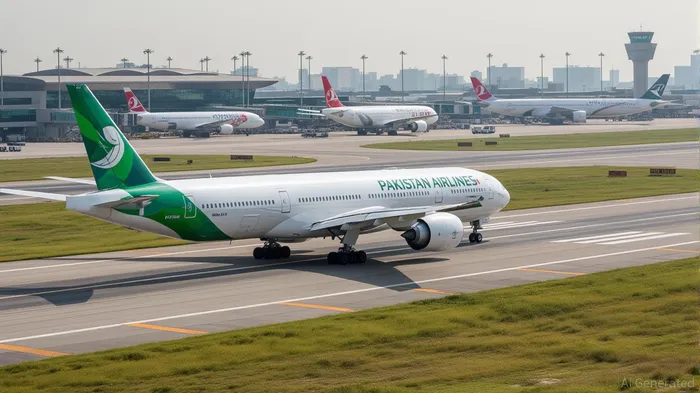
Regulatory Clearance: A Catalyst for Market Access
The EU's reauthorization of PIA in late 2024 and the UK's removal of PIA from its Air Safety List in early 2025 (formalized by July 2025) resolve a ban rooted in safety concerns following a 2020 crash and pilot license fraud. This clears the way for PIA to resume direct flights to London, Manchester, and Birmingham, reconnecting families and businesses severed for nearly five years. The European route restart alone could add ~$120 million annually to PIA's top line, assuming 35 weekly flights with 300 seats each at average fares of $200.
Privatization: A Lifeline for Financial Stability
PIA's privatization—long delayed due to valuation disputes—remains critical to its survival. With annual losses of $144 million during the ban and a fleet aging at 20+ years, the airline needs capital to modernize. A successful privatization could attract investors to recapitalize PIA, upgrade aircraft, and adopt cost-efficient operational practices. Potential buyers, such as Gulf carriers or private equity firms, might also bring expertise to compete with Middle Eastern rivals like Emirates or Qatar Airways.
Demand Drivers: Diaspora and Trade Synergy
The UK-Pakistan diaspora, concentrated in cities like London and Manchester, represents a reliable demand base. Before the ban, PIA carried ~70% of passengers between the two nations; resuming these routes could capture ~$200 million in annual revenue. Meanwhile, rising bilateral trade—bolstered by UK-Pakistan Free Trade Agreement negotiations—could boost cargo revenue, which currently accounts for just 5% of PIA's income versus 15% industry averages.
Investment Plays: Equity, Infrastructure, and Logistics
- PIA Privatization Equity Stake: Investors could bid for a stake in the privatized PIA, benefiting from route expansion and cost savings. However, due diligence is critical—PIA's debt-to-equity ratio remains unsustainable at ~5:1.
- Airport Infrastructure: Pakistan's airports, including Lahore and Karachi, are underdeveloped and undercapitalized. Private investments in terminal expansions or ground-handling services could capitalize on rising passenger traffic.
- Regional Cargo Logistics: Third-party logistics (3PL) firms or cargo carriers partnering with PIA could exploit the trade corridor between the UK and Pakistan, especially in textiles and electronics.
Risks: Operational and Geopolitical Hurdles
- Safety and Compliance: Recent incidents, such as a January 2025 runway mislanding and a March tire detachment, underscore the need for rigorous oversight. A relapse could reignite regulatory scrutiny.
- Geopolitical Tensions: Regional instability in Afghanistan and India-Pakistan relations could disrupt air travel demand.
- Privatization Delays: Valuation disputes or labor union resistance might prolong PIA's financial distress.
Conclusion: A Long-Term Bet on Reforms
While risks persist, the alignment of regulatory clearance, privatization momentum, and pent-up demand positions Pakistan's aviation sector for a multi-year growth cycle. Investors should prioritize infrastructure assets tied to airport modernization and strategic equity stakes in a post-privatization PIA. Monitor the airline's debt restructuring and safety audits closely—success here could turn Pakistan's skies into a high-altitude opportunity.
Investors should proceed cautiously but strategically, leveraging the sector's structural turnaround to capture a piece of Pakistan's airborne renaissance.







Comentarios
Aún no hay comentarios