
SNTI's RMAT Designation and the Strategic Implications for Biotech Investors
The Regenerative Medicine Advanced Therapy (RMAT) designation has emerged as a pivotal catalyst for clinical-stage biotech stocks, offering a regulatory fast track and a signal of therapeutic innovation. For investors, the recent RMAT designation for Sentis Biopharma's SENTI-202-a first-in-class CAR-NK cell therapy targeting acute myeloid leukemia (AML)-represents a compelling case study in catalyst-driven re-rating potential. This analysis explores the strategic implications of SNTI's RMAT designation, contextualized within broader trends in biotech valuation and historical performance data.
SENTI-202: A Novel Approach to AML with RMAT-Eligible Data
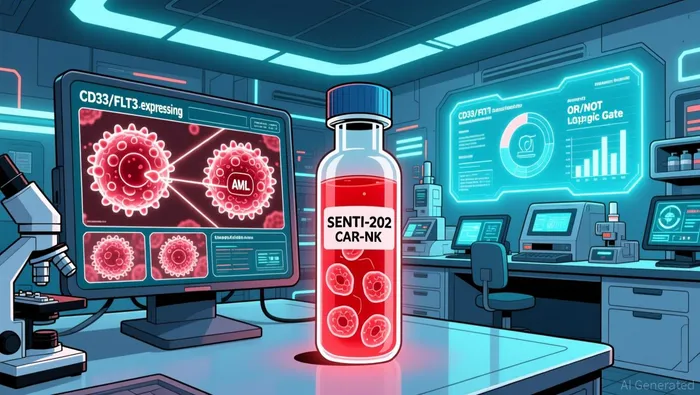
SENTI-202, Senti Bio's off-the-shelf CAR-NK cell therapy, leverages a proprietary OR/NOT Logic Gate mechanism to selectively target CD33/FLT3-expressing AML blasts and leukemic stem cells while sparing healthy hematopoietic cells. Preliminary clinical data from an ongoing multinational trial demonstrated a 50% overall response rate and 42% complete remission (CR) or CR with partial hematologic recovery (CRh) at the recommended Phase 2 dose, with 7.6 months of median duration of composite remission. Notably, 80% of responses were measurable residual disease (MRD)-negative, a critical metric in AML treatment. These results, coupled with the therapy's off-the-shelf nature, position SENTI-202 as a differentiated candidate in a high-unmet-need indication.
 The RMAT designation, granted by the FDA in 2025, underscores the therapy's potential to address serious diseases with preliminary clinical evidence of substantial improvement over existing therapies. This designation provides Senti BioSNTI-- with expedited regulatory pathways, including rolling review and early engagement with the FDA, which could accelerate SENTI-202's journey to market.
Historical Re-Rating Trajectories of RMAT-Designated Therapies
While RMAT designations are not a guarantee of commercial success, historical data suggests they often act as a catalyst for biotech stock re-ratings. On average, companies receiving RMAT designations have seen an 8.11% stock price increase within five days of the announcement. However, variability exists: For example, KB103's stock nearly doubled following its RMAT designation, driven by concurrent positive clinical data. Similarly, Senti Bio's shares surged over 20% in pre-market trading after the RMAT news, reflecting investor optimism about SENTI-202's clinical and commercial potential.
The RMAT designation's value is amplified by its regulatory benefits, including early FDA collaboration and the potential for accelerated approval. This is evident in recent approvals of RMAT-designated therapies, such as Vertex Pharmaceuticals' CASGEVY for sickle cell disease (approved in 2023) and Abeona Therapeutics' ZEVASKYN for RDEB (approved in 2025). These approvals highlight the FDA's willingness to fast-track innovative regenerative therapies, particularly in rare and life-threatening conditions.
Strategic Implications for Biotech Investors
For investors, the RMAT designation represents both opportunity and risk. The key drivers of re-rating potential include:
1. Clinical Differentiation: SENTI-202's Logic Gate mechanism offers a unique approach to AML, a disease with limited treatment options for relapsed/refractory patients. This differentiation could justify a premium valuation if Phase 2 trials confirm the Phase 1 results.
2. Regulatory Momentum: The RMAT designation signals FDA confidence in the therapy's potential, reducing regulatory uncertainty and attracting capital. Historical case studies, such as Autolus' AUCATZYL (approved in 2024) and Adaptimmune's TECELRA (approved in 2024), demonstrate that RMAT-designated therapies often transition to approvals within 12–24 months.
3. Market Readiness: AML's high unmet need and the growing acceptance of cell therapies create a favorable commercial environment. If SENTI-202 achieves regulatory approval, it could capture a significant share of the AML market, which is projected to exceed $5 billion by 2030.
However, risks remain. Clinical-stage biotechs like Senti Bio face the inherent volatility of trial outcomes, and competition from established players (e.g., Novartis' Kymriah, Gilead's CAR-T therapies) could pressure pricing and adoption. Additionally, the RMAT designation does not confer exclusivity, meaning other therapies could enter the AML space with similar mechanisms.
Conclusion: A Catalyst-Driven Re-Rating in the Making
Senti Bio's RMAT designation for SENTI-202 aligns with a broader trend of regenerative medicine therapies gaining regulatory and market traction. While the average 8.11% post-RMAT stock surge provides a baseline for expectations, the therapy's clinical differentiation and the AML market's dynamics suggest a higher re-rating potential. Investors should monitor upcoming Phase 2 data, FDA interactions, and competitor developments to assess whether SENTI-202 can translate its early promise into a transformative therapy-and a significant re-rating for SNTISNTI--.





Comentarios
Aún no hay comentarios