
Smurfit WestRock PLC: A Re-Rating Candidate in the Evolving Sustainable Packaging Sector
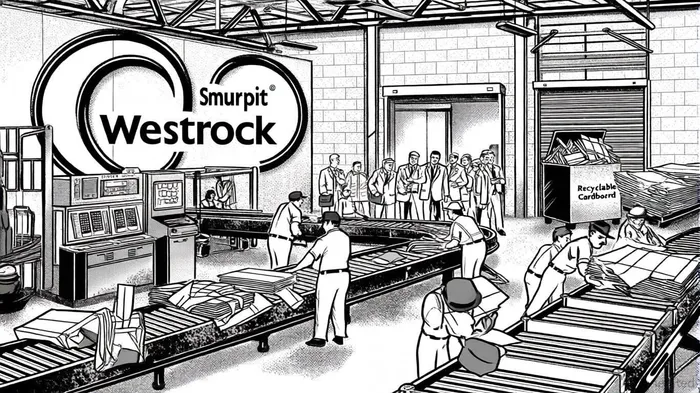
The global packaging industry is undergoing a seismic shift driven by regulatory pressures, consumer demand for sustainability, and technological advancements in supply chain efficiency. At the forefront of this transformation is Smurfit WestRockSW-- PLC (NYSE:SW), a company whose strategic alignment with these trends positions it as a compelling candidate for re-rating in 2025. With a disciplined approach to capital allocation, robust ESG frameworks, and cutting-edge supply chain innovations, Smurfit WestRock is not only navigating sector headwinds but actively reshaping the competitive landscape.
Financial Resilience and Operational Discipline
Smurfit WestRock's Q2 2025 results underscore its operational resilience. The company reported net sales of $7,940 million and Adjusted EBITDA of $1.252 billion, with full-year EBITDA guidance of $5–$5.2 billion supported by capacity reductions of 600,000 tons and synergy realization. Q3 performance further reinforced this trajectory, with a 13.4% EBITDA margin in EMEA and APAC operations, as noted in a McKinsey report. Analysts have responded favorably, with a $53.20 average 12-month price target and a high-end estimate of $61.00 from the same release. Valuation metrics also suggest undervaluation: a P/E ratio of 17.8x, below the sector average of 20.91x, and an EV/EBITDA of 12x, as highlighted by McKinsey. These fundamentals, combined with a $21.86 billion market cap, highlight a stock that may be underappreciated relative to its growth potential.
ESG Leadership and Circular Economy Innovation
Smurfit WestRock's 2025 ESG strategy is a cornerstone of its re-rating potential. The company has embedded circularity into its operations, exemplified by projects such as 16,000 recyclable cardboard bed frames for the Paris 2024 Olympics and a $2 billion Green Finance issuance reported in the Q2 release. Its focus on decarbonization, validated by the Science Based Targets initiative (SBTi), aligns with the EU's Packaging and Packaging Waste Regulation (PPWR) and the UN Global Plastic Treaty, according to a Supply Chain Digital article. Innovations like all-paper stretch wrap-replacing polyethylene in pallet transportation-demonstrate its ability to address regulatory and consumer demands for sustainable alternatives, as described by Supply Chain Digital.
The company's supply chain innovations further strengthen its position. By integrating RFID, BLE, and QR codes, Smurfit WestRock enables real-time tracking and waste reduction, as seen in its collaboration with a quick-service restaurant chain to optimize fresh beef logistics, according to Supply Chain Digital. Additionally, its 32 North American recovery facilities process two-thirds of Walmart's packaging waste into new materials, creating a closed-loop system that supports retail ESG goals, as reported by Supply Chain Digital. These initiatives not only reduce environmental impact but also enhance operational efficiency, a critical differentiator in a sector grappling with raw material shortages and transportation delays, according to a Q1 2025 packaging report.
Sector Trends and Competitive Positioning
The broader packaging industry is being reshaped by Extended Producer Responsibility (EPR) policies, material innovation, and digital transformation. Smurfit WestRock's emphasis on mono-materials, lightweighting, and reusable systems positions it to capitalize on these trends. For instance, its pizza box QR codes educate consumers on recycling, while its 3 billion annual U.S. pizza box production underscores scale advantages, as noted by Supply Chain Digital. Competitors like International Paper and UFP Technologies are also advancing ESG goals, but Smurfit's execution-measured by specific projects and third-party verifications-sets it apart, according to the Q1 2025 packaging report.
Regulatory tailwinds further bolster its case. The EU's PPWR, which mandates 65% recyclability for packaging by 2030, and U.S. EPR laws are accelerating demand for fiber-based solutions. Smurfit's paperization strategy, supported by its renewable resource base, aligns perfectly with these mandates, as McKinsey notes. Meanwhile, AI-driven recycling systems and digital product passports-technologies Smurfit is adopting-enhance compliance and transparency, critical for meeting the Corporate Sustainability Reporting Directive (CSRD), according to Supply Chain Digital.
Re-Rating Catalysts and Risks
Smurfit WestRock's re-rating potential hinges on three catalysts:
1. Margin Expansion: Capacity reductions and operational improvements could drive EBITDA margins above current guidance, particularly in EMEA and APAC, as indicated in the Q2 release.
2. Premium Pricing: As brands prioritize sustainable packaging, Smurfit's innovations may justify higher pricing, supported by consumer willingness to pay for eco-friendly solutions, as shown in Top Packaging Trends 2025.
3. Regulatory Arbitrage: Its alignment with global EPR and carbon regulations positions it to outperform peers in markets with stringent compliance requirements, as McKinsey notes.
Risks include macroeconomic volatility and raw material price swings. However, Smurfit's disciplined capital allocation-evidenced by its 600k-ton capacity cut reported in the Q2 release-suggests a management team capable of navigating these challenges.
Conclusion
Smurfit WestRock is not merely adapting to the sustainable packaging revolution-it is leading it. With a combination of financial discipline, ESG innovation, and supply chain agility, the company is well-positioned to outperform in a sector where sustainability is no longer a differentiator but a necessity. For investors seeking exposure to a re-rating in the packaging industry, Smurfit WestRock offers a compelling case where strategic execution and regulatory tailwinds converge.





Comentarios
Aún no hay comentarios