
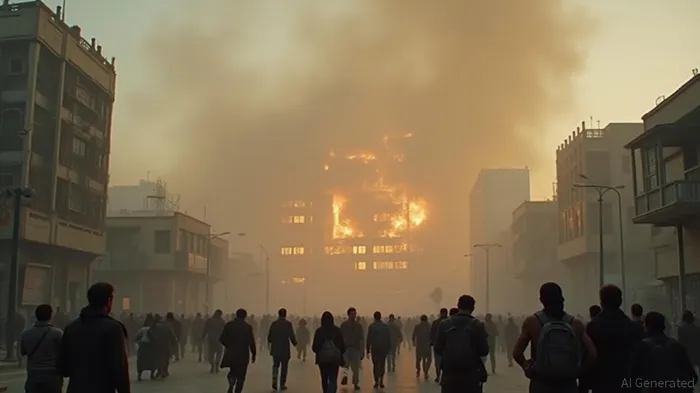
Smoke clouds resulting from rocket strikes in Doha
Smoke clouds resulting from rocket strikes in Doha
Smoke Clouds from Rocket Strikes in Doha Highlight Regional Instability and Economic Risks
Rocket strikes and interception efforts in Doha, Qatar, have generated significant smoke clouds, underscoring escalating regional tensions following a coordinated Iranian retaliation campaign. The Qatari Ministry of Interior reported eight new injuries on Sunday, raising the total casualty count to 16 since the attacks began. Security forces and civil defense teams activated emergency protocols to mitigate damage and ensure public safety, with authorities emphasizing compliance with official instructions to avoid further risks.
The strikes, part of a broader Iranian response to recent U.S.-Israeli military operations, have disrupted critical infrastructure and economic activity across the Gulf. In Doha, intercepted rockets caused localized damage, while similar attacks in Bahrain, the UAE, and Kuwait targeted U.S. military bases and commercial hubs, including Dubai's Palm Jumeirah and Kuwait's international airport. According to reports, these strikes have led to temporary flight suspensions, airspace closures, and panic-driven consumer behavior, such as surge in supermarket stockpiling, though authorities assured adequate supply reserves.
Financial markets remain volatile amid the crisis. Dubai's status as a regional trade and aviation hub has been temporarily strained, with partial closures at its main airport—a global aviation nexus—and disruptions to business operations in the Dubai International Financial Center. As detailed in economic analysis, while Qatar's state media reported limited material damage, the cumulative impact of cross-border strikes risks destabilizing investor confidence in Gulf markets, particularly in sectors reliant on regional stability, such as tourism, logistics, and energy trade.
The Ministry of Interior reiterated that alert systems would remain active as needed, urging residents to avoid incident sites and rely on official updates. With Iran vowing further retaliation and regional air defenses remaining on high alert, financial professionals are monitoring developments for potential spillovers into global markets, including oil price fluctuations and shifts in investment flows to safer assets.
As of March 1, 2026, the situation remains fluid, with authorities in affected nations prioritizing containment efforts amid ongoing geopolitical escalation.






Comentarios
Aún no hay comentarios