
Smith Douglas Homes: Is the Earnings Miss a Buying Opportunity in a Resilient, Undervalued Homebuilder?
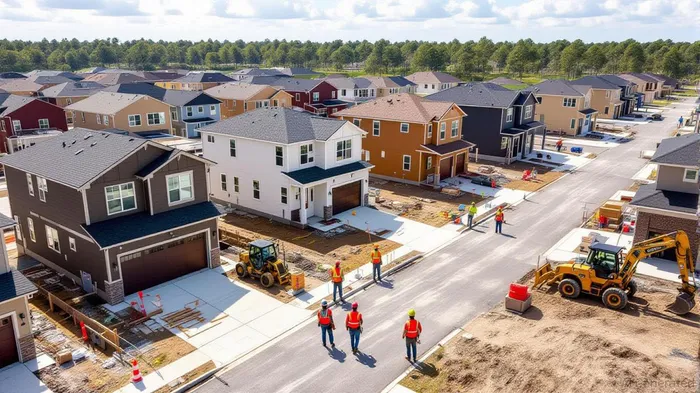
In the shadow of a sluggish U.S. housing market, Smith DouglasSDHC-- Homes (NYSE: SDHC) has navigated a complex landscape of affordability constraints, shifting demand, and macroeconomic headwinds. Its Q2 2025 earnings report—a modest revenue increase but a sharp drop in earnings per share (EPS)—has sparked debate among investors. Is this a warning sign, or a buying opportunity for a homebuilder with a resilient business model and undervalued potential?
Earnings Miss: A Transient Challenge or a Structural Weakness?
Smith Douglas reported Q2 2025 home closing revenue of $223.92 million, a 1% year-over-year increase, but EPS fell to $0.26 from $0.40 in 2024. The decline in gross margin—from 26.7% to 23.2%—reflects broader industry pressures, including elevated material costs and aggressive pricing incentives to stimulate demand. However, the company's operational execution tells a different story.
The homebuilder reduced its average construction cycle time to 54 days (down from 60 in 2024) and expanded its geographic footprint with greenfield projects in Dallas-Fort Worth and Gulf Coast Alabama. These moves, coupled with a 2% increase in home closings to 669 units, suggest disciplined cost management and strategic growth. The balance sheet remains robust, with a net debt-to-capital ratio of 12.1% and a $50 million share repurchase program, signaling confidence in long-term value creation.
Valuation Metrics: A Deep-Value Play in a Stressed Sector
Despite a 12x P/E ratio—well above the 7.3x average of direct competitors—SDHC's intrinsic value analysis paints a compelling picture. A discounted cash flow (DCF) model estimates an intrinsic value of $106.15, a 446% premium to its current price of $19.43. Even the fair value estimate of $43.93 implies a 125% upside. These metrics suggest the market is underappreciating the company's asset-light model, geographic diversification, and pent-up demand in its target markets.
The disconnect between valuation and fundamentals is stark. While analysts project a near-term target price of $17.70 (below the current price), the DCF model assumes a 9.4% overvaluation. This discrepancy highlights the risk of short-term pessimism overshadowing long-term potential.
Strategic Growth: Positioning for a Market Turn
Smith Douglas's expansion into high-growth regions like Atlanta, Nashville, and Charlotte—markets with strong entry-level and empty-nest demand—positions it to capitalize on a potential housing rebound. Its 45% increase in controlled lots (20,442 total) and 24% rise in active communities (87 as of Q1 2025) underscore a disciplined approach to scaling without overleveraging.
The company's asset-light strategy—optioning 18,559 of its 20,442 controlled lots—limits capital intensity while preserving flexibility. This model is particularly advantageous in a high-interest-rate environment, where liquidity is critical. Additionally, SDHC's focus on affordability-conscious buyers aligns with a broader trend: first-time homebuyers now account for 30% of transactions, up from 25% in 2023.
Market Outlook: Navigating a High-Rate Environment
The U.S. housing market remains in a state of adjustment. Mortgage rates are expected to ease to 6.7% by year-end 2025, but demand is constrained by affordability challenges. Total homeownership costs now exceed $4,000 per month, pushing many buyers to rent. For homebuilders like SDHC, this creates a dual challenge: stimulating demand while maintaining margins.
However, SDHC's strategic initiatives—such as financing incentives and price reductions—have proven effective. In Q2 2025, 37% of builders reduced prices by an average of 5%, and 62% offered sales incentives. These tactics, combined with a strong balance sheet, position SDHC to weather near-term volatility while laying the groundwork for growth.
Investment Thesis: A Value Play with Asymmetric Upside
For value investors, SDHC presents an asymmetric opportunity. The stock's current valuation discounts a potential market rebound, regulatory tailwinds (e.g., streamlined zoning policies under a potential Trump administration), and the company's operational strengths. Key risks include prolonged high mortgage rates and competitive pressures, but SDHC's geographic diversification and asset-light model mitigate these.
Recommendation: Investors with a 2–3 year horizon should consider a position in SDHC, using pullbacks to accumulate shares. The intrinsic value analysis suggests a 446% upside if the company meets its DCF assumptions, while the balance sheet provides downside protection. However, monitor mortgage rate trends and housing inventory levels for signs of a market inflection pointIPCX--.
In a sector where resilience is paramountPARA--, Smith Douglas Homes offers a compelling case for long-term value creation. The earnings miss may be the market's mistake, not the company's.





Comentarios
Aún no hay comentarios