
Smart Furniture in Asia-Pacific: A Seat at the Table for Urban Tech Innovators
The Asia-Pacific smart furniture market is on the cusp of a transformative decade, fueled by urbanization, tech integration, and shifting consumer preferences. With a projected compound annual growth rate (CAGR) exceeding 15% between 2025 and 2030—surpassing the global average of 14.5%—this region is poised to become the epicenter of innovation in the sector. Companies like Krini Furniture (India) and Hi-Interiors (Italy/Asia-Pacific) are at the forefront, leveraging strategic partnerships, sustainable design, and urban demand to capture market share.
Urbanization and Space Efficiency: The Catalyst for Growth
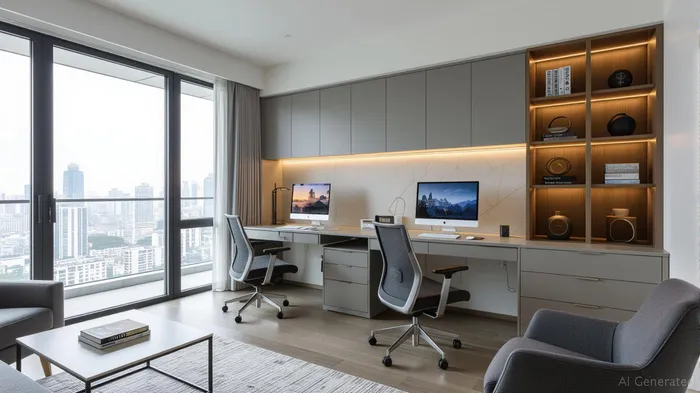
Asia-Pacific's dense urban centers, particularly in India and China, face a dual challenge: shrinking living spaces and rising disposable incomes. The residential segment, which already commands over 53% of the smart furniture market, is driving demand for multifunctional, space-saving products. Adjustable desks, compact smart beds with health monitoring, and IoT-integrated storage systems are becoming staples in cities like Mumbai, Tokyo, and Jakarta.
Tech Integration: The Differentiator for Market Leaders
The IoT and AI revolution is reshaping furniture's role in homes and offices. Smart desks with posture sensors and voice-controlled connectivity, for instance, are no longer niche products but mainstream solutions. Krini Furniture has partnered with Indian tech firms like Wipro to embed AI-driven customization into its desks, while Hi-Interiors collaborates with Samsung to integrate smart home ecosystems into modular furniture systems.
These partnerships are critical: 70% of Asia-Pacific consumers prioritize tech-enabled features when purchasing furniture, per recent surveys. Companies failing to align with tech leaders risk obsolescence.
Sustainability: A Strategic Edge
Environmental concerns are reshaping supply chains. Krini and Hi-Interiors are pivoting to sustainable materials (e.g., bamboo composites, recycled metals) and circular design models, appealing to eco-conscious urbanites. China's “dual carbon” policy and India's push for green manufacturing further incentivize this shift. Investors should prioritize firms with closed-loop production systems and certifications like FSC or LEED.
Why Krini Furniture and Hi-Interiors Outperform?
- Krini Furniture:
- Market Traction: Dominates India's $12B residential smart furniture segment, with a focus on affordable, IoT-enabled products for first-time homebuyers.
- Tech Synergy: Its “SmartDesk Pro” integrates with India's growing 5G infrastructure, offering remote workspace management features.
Supply Chain Resilience: Nearshoring to Vietnam and Malaysia mitigates tariff risks, ensuring cost stability.
Hi-Interiors:
- Premium Niche: Targets Asia's affluent urban centers (e.g., Singapore, Shanghai) with luxury smart furniture, blending Italian design with AI automation.
- Smart City Ties: Partners with governments in Delhi and Bangkok to supply smart office furniture for new “smart city” districts.
- E-commerce Push: Its 2024 acquisition of EcoFurn Solutions expanded its online reach, capturing 20% of India's e-commerce smart furniture sales.
Investment Thesis: Ride the Wave
- Near-Term Plays:
- Krini Furniture: Consider its IPO (expected Q4 2025) or secondary market shares if available. Its valuation multiples (P/S of 2.5x vs. sector average of 1.8x) reflect growth expectations.
Hi-Interiors: Track its stock performance post-Singapore smart city contract wins.
Long-Term Value:
- Sector ETFs: Look into funds tracking Asia-Pacific consumer discretionary or IoT hardware sectors.
- Tech Partnerships: Follow companies like Herman Miller (HMLR) or Steelcase (SCC) for insights into tech integration trends.
Risks and Mitigation
- Supply Chain Volatility: Monitor geopolitical tensions (e.g., U.S.-China trade) and their impact on raw material costs.
- Over-Saturation: Smaller players may struggle as giants like IKEA expand their smart furniture lines. Focus on firms with patented tech or exclusive partnerships.
Conclusion
The Asia-Pacific smart furniture boom is not just about selling desks—it's about redefining urban living through technology and sustainability. Krini and Hi-Interiors exemplify how agility in tech partnerships, urban market penetration, and eco-conscious design can unlock outsized returns. For investors, this is a decade-long bet on cities that never stop growing—and furniture that keeps up.
Act now, or risk being left sitting on the sidelines.







Comentarios
Aún no hay comentarios