
Small Firms Bear Brunt as U.S. Layoffs Mirror 2009 Crisis
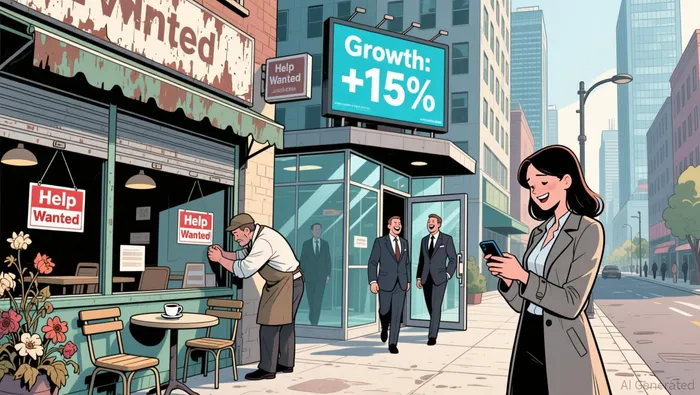
U.S. businesses are shedding jobs at an alarming pace, with the ADP National Employment Report revealing an average of 2,500 weekly layoffs over the four weeks ending November 1, 2025. The data, which highlights a stark divergence between large and small firms, underscores growing fragility in the labor market as economic pressures mount. Small and medium-sized businesses, which account for three-quarters of U.S. workers, have cut 21,000 and 10,000 jobs respectively in October, contrasting with a 73,000 gain at large firms (500+ employees).
Nela Richardson, ADP's chief economist, warned that the struggles of smaller firms are a "concern" for the broader economy. This comes as major corporations have announced sweeping layoffs in recent months, including IBMIBM-- (-8,000), AmazonAMZN-- (-14,000), UPSUPS-- (-48,000), and Target (-1,800) according to data. Challenger, Gray & Christmas reported 153,000 job cuts in October alone, a 79% surge from September and the highest October total since 2003. Year-to-date cuts now exceed 1.1 million, marking 2025 as the worst year for layoffs since 2009.
The labor market's deterioration is further reflected in rising youth unemployment. The U.S. unemployment rate for men aged 20-24 hit 10% in October, the highest level since the pandemic and a troubling leading indicator for broader economic trends. Meanwhile, the U6 unemployment rate (8.1%) remains significantly higher than the U3 rate (4.5%), illustrating hidden labor market strain.
 . Against this backdrop, tech giants are navigating regulatory and financial challenges. Amazon and Microsoft face European Commission probes under the Digital Markets Act (DMA) over alleged anti-competitive practices in cloud computing. The investigation will examine barriers to interoperability, data access restrictions, and bundling strategies, with findings expected within 18 months. Separately, Amazon has raised $15 billion in its first U.S. bond sale since 2022, part of a broader trend of tech firms securing debt to fund AI infrastructure. The offering, which attracted $80 billion in initial demand, follows similar moves by Alphabet, Meta, and Oracle as companies bet on AI-driven growth according to market analysis.
Fitch Ratings reaffirmed Amazon's financial strength with a "AA-" credit rating for its proposed bond offering, citing the company's dominant positions in e-commerce and cloud computing. Despite near-term retail sector headwinds, Fitch highlighted Amazon's $155 billion trailing twelve-month EBITDA and AWS's 25% annual growth as key strengths. The rating agency projected EBITDA growth of 10% in the medium term, driven by AWS expansion and AI investments.
The Fed's next policy moves remain uncertain, but employment data suggests a shift toward easing could begin in 2026. With labor market softness concentrated in smaller firms and youth unemployment spiking, central bankers may face mounting pressure to lower rates to stabilize demand.







Comentarios
Aún no hay comentarios