
Small Crypto Investments, Big Returns: A Historical Perspective on ROI and Speculative Growth
The allure of small cryptocurrency investments yielding outsized returns has captivated investors for over a decade. From Bitcoin's meteoric rise to altcoins like SolanaSOL-- and AvalancheAVAX-- delivering 10,000%+ returns in single years, the crypto market has become a modern-day gold rush. Yet, this narrative is not new. History is littered with speculative frenzies-tulip mania, the dot-com bubble, and the 1929 crash-that share eerie parallels with today's crypto landscape. Understanding these parallels is critical for investors weighing the risks and rewards of small crypto bets.
The Power of Early Entry: BitcoinBTC-- and Ethereum's ROI Story
Bitcoin's journey from near-zero in 2009 to $70,000 in 2025 is a case study in exponential growth. A $20 investment in 2009, assuming the acquisition of over 20,000 BTC, would have been worth $1.4 billion by 2025 according to analysis. Even a $100 investment in 2015 would have grown to $20,000 by 2025-a 20,000% return according to data. EthereumETH--, launched in 2015, followed a similar trajectory. Its introduction of smart contracts and DeFi infrastructure drove a 68.5% return in just one year (August 2024–August 2025).
These returns, however, come with volatility. Bitcoin's price swung from $120,000 in July 2025 to below $20,000 by late 2025 according to market analysis, echoing the boom-and-bust cycles of historical bubbles.
Altcoins: The High-Risk, High-Reward Frontier
While Bitcoin and Ethereum dominate headlines, altcoins have historically offered even more dramatic returns. Solana (SOL), for instance, delivered a 13,000% ROI in 2021, while Avalanche (AVAX) surged 3,000% in the same period according to performance data. Polygon (MATIC) and Fantom (FTM) posted gains of 14,000% and 19,000%, respectively according to analysis.
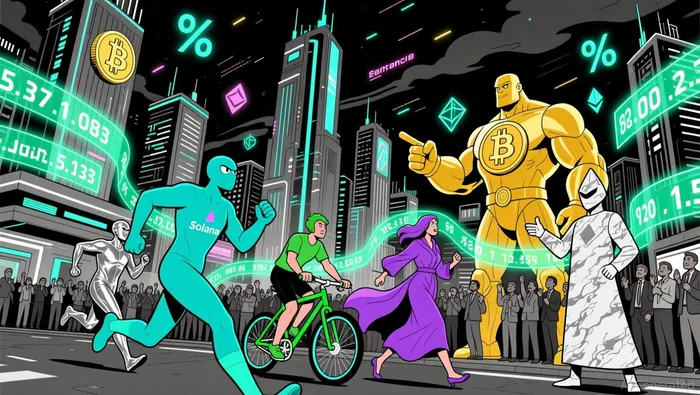
Yet, altcoins are not without peril. TerraLUNA-- (LUNA)'s collapse in 2022-after a 12,000% peak-serves as a stark reminder of the fragility of algorithmic stablecoins. Academic research underscores this risk: portfolios diversified across more cryptocurrencies reduce volatility, but average returns do not always align with traditional risk-return tradeoffs.
Historical Parallels: Tulip Mania, Dot-Com, and the 1929 Crash
The crypto market's speculative nature mirrors historical bubbles. The Dutch Tulip Mania (1634–1637) saw rare tulip bulbs trade for the price of a house before collapsing according to historical analysis. Similarly, the dot-com bubble (1995–2000) inflated tech stock valuations to unsustainable levels, with the NASDAQ peaking at 5,048.62 before a 78% drop by 2002. The 1929 crash was even more devastating, wiping out 90% of the market and triggering the Great Depression according to financial history.
Cryptocurrencies today exhibit similar patterns. The 2025 AI and crypto-driven markets resemble the dot-com era, with companies in quantum computing and eVTOLs valued in the billions despite no revenue according to market analysis. Michael Burry, a noted economist, has likened Bitcoin to tulip mania, warning of speculative overvaluation.
Crypto's Unique Position: Resilience vs. Systemic Risk
Unlike historical bubbles, Bitcoin has shown resilience. Despite sharp corrections, it remains a $1.4 trillion market cap asset, with institutional adoption validating its utility. Ethereum's upgrades and altcoins' focus on scalability and interoperability also suggest long-term value according to market analysis.
However, systemic risks persist. Bitcoin's market dominance (45–60%) means its price swings dictate altcoin movements according to financial research. During bearish periods, liquidity often flows back to Bitcoin, leaving smaller coins vulnerable according to market analysis.
Conclusion: Balancing Hype and Caution
Small crypto investments can yield extraordinary returns, but they require a nuanced understanding of risk. Historical parallels highlight the dangers of speculative excess, yet crypto's technological underpinnings and institutional adoption offer a unique edge. For investors, the key lies in diversification, fundamental analysis, and a long-term perspective. As the market evolves, those who balance ambition with caution may find themselves on the right side of history.







Comentarios
Aún no hay comentarios