
SLYG ETF's Persistent Underperformance: A Cautionary Tale for Narrow Small-Cap Growth Strategies
A Flawed Investment Framework
SLYG's underperformance stems partly from its simplistic investment criteria. The ETF tracks the S&P SmallCap 600 Growth Index, which selects stocks based on historical sales growth and changes in price-to-earnings (P/E) ratios. Critics argue this approach overlooks more nuanced metrics, such as profitability, balance sheet strength, or cash flow sustainability-factors that historically correlate with long-term growth. As a result, SLYG's portfolio is skewed toward companies with weak fundamentals, a vulnerability that has been magnified in 2025's speculative market environment.
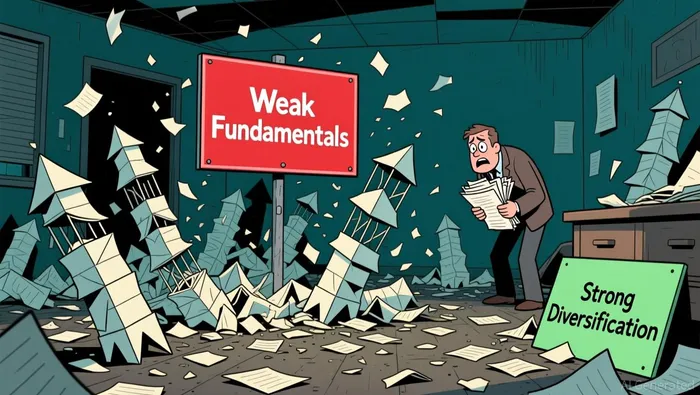
The fund's poor risk-adjusted returns further highlight its inefficiencies. With a Sharpe ratio of 0.05 and an R-squared of 71, SLYG delivers minimal returns relative to its volatility and deviates significantly from its benchmark. These metrics suggest that the ETF's passive strategy fails to capture the full potential of the small-cap growth segment, particularly in a market where quality and diversification are increasingly critical.
Macro Risks and Sector Vulnerabilities
The 2025 market environment has compounded SLYG's challenges. Small-cap growth stocks, by nature, are more sensitive to macroeconomic shifts, including interest rate fluctuations and supply chain disruptions. SLYG's exposure to sectors like manufacturing and trade-sensitive industries has left it particularly vulnerable to U.S. tariff policies and global supply shocks. For instance, analysts note that the ETF's underperformance against the broader S&P 500 (SPY) has accelerated in 2024-2025, as trade-related uncertainties eroded margins for small-cap firms.
Compounding these issues is the Federal Reserve's cautious stance on rate cuts, which has kept borrowing costs elevated for small-cap companies. While rate easing could eventually alleviate pressure, the current environment remains hostile to the speculative, low-quality stocks that dominate SLYG's portfolio according to Seeking Alpha analysis.
The 2025 "Junk Rally" and Its Consequences
A broader structural shift in 2025 has further disadvantaged SLYG. As highlighted by WisdomTree analysts, the market has increasingly favored low-quality, unprofitable companies over those with strong fundamentals. This "junk rally" has been driven by momentum trading and speculative fervor, with unprofitable small-cap stocks doubling the returns of their profitable counterparts. While this trend has benefited certain niche strategies, it has exposed the limitations of passive funds like SLYG, which lack the agility to avoid overvalued, low-quality holdings.
Historically, high-quality companies with robust return on equity (ROE) and solid balance sheets have outperformed during market corrections. However, the current environment has inverted this dynamic, creating a scenario where narrow small-cap growth strategies are more likely to underperform when market conditions normalize.
Implications for Investors
For investors, SLYG's struggles serve as a cautionary tale. Narrow small-cap growth ETFs, while appealing for their low costs, may not deliver the diversification or resilience needed in volatile markets. The ETF's underperformance highlights the importance of scrutinizing a fund's selection criteria and alignment with macroeconomic trends. Investors seeking small-cap exposure might consider alternatives with more rigorous screens for profitability or those that incorporate active management to navigate today's speculative landscape.
Moreover, the 2025 market environment underscores the need for a balanced approach. While small-cap growth stocks can offer growth potential, their inherent risks-particularly in a fragmented, policy-driven market-demand careful consideration. As JPMorgan notes, increased dispersion across stocks and sectors in 2025 makes it harder to identify consistent winners, further complicating the case for narrow strategies.
Conclusion
SLYG's persistent underperformance is not an isolated issue but a symptom of broader challenges facing narrow small-cap growth strategies. Its simplistic investment framework, combined with macroeconomic headwinds and a speculative market environment, has left the ETF lagging behind both its peers and the broader market. For investors, this serves as a reminder that low fees and passive management do not guarantee success-especially in a landscape where fundamentals are increasingly sidelined in favor of momentum and speculation. As the market evolves, a more discerning approach to small-cap investing may be essential to avoid the pitfalls exemplified by SLYG.





Comentarios
Aún no hay comentarios