
Sluggish U.S. Job Growth and Its Implications for Equities and Bonds
The U.S. labor market in Q4 2025 has become a focal point for investors, as signs of deterioration-compounded by data distortions from government shutdowns-raise questions about the resilience of both equities and bonds. With the Federal Reserve prioritizing employment over inflation through aggressive rate cuts, the interplay between wage growth, corporate margins, and asset valuations has created a complex landscape for sector rotation and risk management. This analysis unpacks the implications of a decelerating labor market, drawing on recent data and expert insights to outline strategic considerations for investors.
Labor Market Deterioration and Central Bank Dilemmas
Data from December 2025 reveals a mixed picture: nonfarm payrolls rose by 64,000 in November, but the three-month average of 22,000 new jobs and a 4.6% unemployment rate-the highest since 2021- signal a weakening labor market. The Federal Reserve responded with a 25-basis-point rate cut in December, bringing the federal funds rate to 3.50–3.75%. This dovish move, however, was tempered by hawkish language, emphasizing that further easing would depend on a "further weakening" of employment conditions. Such ambiguity reflects the Fed's balancing act: supporting jobs while avoiding a resurgence of inflation, which remains stubbornly above target.
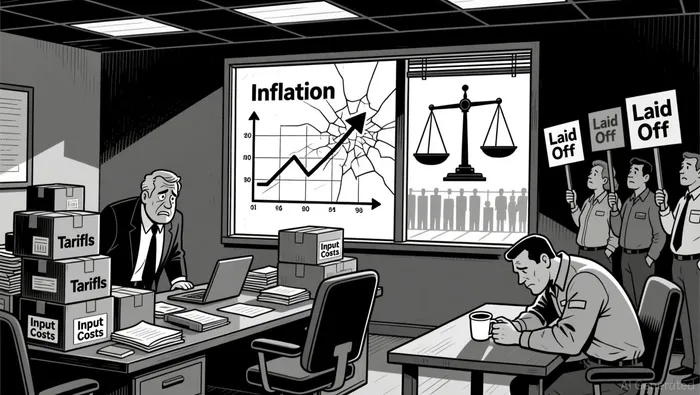
The risk of stagflation-where weak growth coexists with high inflation-has intensified as corporate margins face pressure from tariffs and input costs. According to a report by J.P. Morgan, these structural challenges could erode profit margins and dampen consumer purchasing power, creating a drag on both equities and bonds.
Equities: A Maturing Bull Market and Sector Rotation Opportunities
The S&P 500's 14.81% year-to-date gain through September 2025 was driven by technology and the Magnificent Seven, which accounted for a disproportionate share of market gains. However, recent data suggests a maturing bull market, with broader participation from sectors like Industrials and Communication Services. The Schwab Center for Financial Research upgraded these sectors to "Outperform" in December 2025, citing AI adoption and improving fundamentals. Despite this diversification, valuations remain stretched. The S&P 500's forward P/E ratio of 22.5 exceeds historical averages, raising concerns about overvaluation. For investors, this underscores the need to avoid overconcentration in high-flying tech stocks and instead seek relative value in sectors poised to benefit from macroeconomic shifts.
Bonds: Range-Bound Yields and Policy Uncertainty
The bond market's response to the December 2025 employment data was cautious. Treasury yields rose by 2.9 basis points, with the 10-year rate climbing to 4.18% as investors priced in the Fed's conditional rate-cut path. While yields are expected to remain range-bound in Q4 2025, central bank caution and moderating inflation limit upside potential. This environment favors a defensive fixed-income strategy, with a focus on short-duration bonds and high-quality credits to mitigate interest rate risk.
Strategic Sector Rotation and Risk Management
Expert analyses highlight the importance of tactical sector rotation in navigating a decelerating labor market. The Schwab Center's upgrades to Communication Services and Industrials align with broader trends in AI-driven productivity and infrastructure spending. Meanwhile, downgrades for Consumer Discretionary and Real Estate reflect concerns about consumer debt and housing market fragility. Investors should prioritize sectors with strong cash flows and resilience to macroeconomic shocks, such as Healthcare and Utilities, while avoiding overexposure to cyclical plays.
Risk management in this environment demands a disciplined approach to diversification and rebalancing. Vanguard's Q4 2025 report notes that equity allocations had reached near-peak levels, suggesting a strategic shift toward fixed income in 2026. Thrivent similarly advocates maintaining exposure to large-cap equities but with a close eye on economic data for signs of accelerating weakness.
Conclusion: Navigating a Fragile Recovery
The U.S. labor market's sluggish growth in Q4 2025 presents both challenges and opportunities. While the Fed's dovish pivot supports equities, the risk of stagflation and compressed corporate margins necessitates a cautious, diversified approach. Sector rotation toward AI-linked industries and defensive fixed-income allocations can help investors balance growth and risk. As the Fed's policy path remains uncertain, staying attuned to economic data and maintaining flexibility will be critical in 2026.







Comentarios
Aún no hay comentarios