
Slovakia-US Nuclear Energy Partnership: A Strategic Inflection Point for U.S. Energy Firms
The recent agreement between Slovakia and the United States to construct a new nuclear reactor at the Bohunice plant marks a pivotal moment in the global nuclear energy landscape. For U.S. firms like Westinghouse, this partnership represents not just a commercial opportunity but a strategic repositioning in a world where energy security and geopolitical alignment are increasingly intertwined. As the European Commission weighs regulatory compliance and the Slovak government fast-tracks a €15 billion project, the implications for American nuclear technology and its role in reshaping energy dependencies are profound.
Geopolitical Realignment and Energy Security
Slovakia's decision to bypass traditional public tenders and directly engage Westinghouse underscores a deliberate pivot away from Russian nuclear technology-a move with clear geopolitical undertones. Prime Minister Robert Fico's announcement of the intergovernmental agreement, as reported by World Nuclear News, highlights the urgency of diversifying energy sources in a post-Ukraine war era. 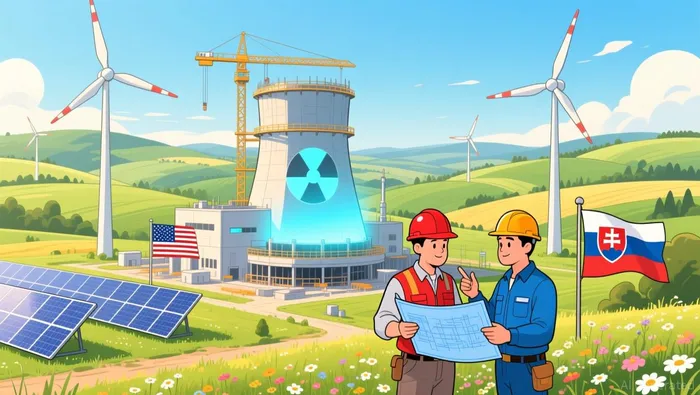 By aligning with U.S. firms, Slovakia is not merely securing a reactor; it is signaling a broader commitment to Western energy systems. This shift mirrors U.S. efforts to counter Russian influence in Central Europe, with nuclear energy serving as both a tool of economic cooperation and a bulwark against geopolitical risk.
Economic Implications for Westinghouse
For Westinghouse, the Bohunice project is a transformative opportunity. The company's 1,250 MW reactor design aligns precisely with Slovakia's energy needs, positioning it to capture a flagship project in a region historically dominated by Russian vendors. The scale of the investment-potentially the largest in Slovakia's history-could provide Westinghouse with a critical revenue stream and a blueprint for replicating such projects globally. However, the absence of a competitive bidding process raises questions about cost efficiency and long-term viability. As Bloomberg noted in its coverage, the expedited timeline prioritizes strategic goals over fiscal caution, a gamble that could pay off if the reactor becomes a symbol of U.S.-Slovak collaboration.
Competitive Landscape and Technological Considerations
While Westinghouse is the primary beneficiary, the Slovak government has also evaluated other U.S. nuclear technologies, including the BWRX-300 small modular reactor (SMR) from GE Hitachi. This signals a broader openness to American innovation, though the Bohunice project's focus on a large-scale reactor suggests a preference for proven capacity over emerging SMR solutions. Competitors like Brookfield and Cameco, which have partnered with Westinghouse on U.S. projects, may also find opportunities in Slovakia's expanded nuclear ambitions. Yet the lack of public tenders could deter other firms, consolidating influence in the hands of a few U.S. players.
Regulatory Hurdles and European Scrutiny
The European Commission's ongoing review of the project introduces a layer of uncertainty. Questions about state aid, procurement rules, and environmental compliance under the Euratom Treaty could delay timelines or force renegotiations. For U.S. firms, navigating these regulatory complexities will be as critical as technical execution. The commission's stance may also set a precedent for future cross-border nuclear projects in Europe, influencing how American companies structure partnerships in the region.
Conclusion: A High-Stakes Bet with Global Ramifications
The Slovakia-US nuclear partnership is more than a bilateral deal; it is a test of whether nuclear energy can serve as a linchpin for geopolitical strategy. For Westinghouse and its allies, the Bohunice reactor offers a chance to redefine their role in a post-pandemic, post-Ukraine world. Yet the project's success will depend on balancing geopolitical aspirations with economic pragmatism and regulatory rigor. As the Slovak government moves toward a 2027 construction timeline, investors and policymakers alike will be watching to see if this strategic inflection point delivers on its promise-or becomes a cautionary tale of haste over due diligence.







Comentarios
Aún no hay comentarios