
Skyfame Realty's Extended Winding-Up Process and Investment Implications: Strategic Risk Assessment and Opportunity Identification in Distressed Real Estate Assets
The winding-up process of Skyfame Realty (Holdings) Ltd has entered a critical phase, with the Supreme Court of Bermuda adjourning its petition to June 20, 2025, according to a Marketscreener notice. This delay, coupled with the company's termination of its restructuring support agreement, as reported by Global Restructuring Review, underscores a grim financial outlook. For investors, the situation presents a complex interplay of strategic risks and potential opportunities in distressed real estate assets.
Strategic Risks: A Deepening Liquidity Crisis
Skyfame's financial distress is stark. As of June 2024, the company reported a trailing twelve-month revenue of $146 million but a net loss of HKD -3.60 billion, per its PitchBook profile. Its total debt exceeds $1.86 billion, while liquidity metrics-such as a current ratio of 0.66 and a negative net cash position of -14.49 billion-highlight severe operational constraints, according to StockAnalysis statistics. The termination of restructuring plans, noted above, signals an abandonment of efforts to reorganize, leaving liquidation as the likely outcome.
The geographic concentration of Skyfame's distressed assets in China's overbuilt real estate market compounds these risks. Tier-2 and tier-3 cities, where the company operates, face declining property prices (3–5% year-over-year) and elevated inventory levels (18–20 months of sales), based on a CBRE report. Office and retail sectors are particularly vulnerable, with vacancy rates exceeding 20% nationally, and these trends suggest that even asset liquidation may yield limited returns, given depressed valuations and weak demand.
Opportunity Identification: Navigating Distressed Assets
Despite the risks, Skyfame's winding-up process could unlock value for opportunistic investors. Distressed real estate markets in China saw valuation declines averaging 43% in 2024, with office and retail properties dropping roughly 53% and 52%, respectively, according to a ConnectCRE analysis. For investors with deep pockets and sector expertise, selectively acquiring undervalued assets-such as commercial properties in tier-1 cities like Guangzhou or serviced apartments in high-growth corridors-could offer long-term upside.
The company's asset portfolio, spanning property development, investment, and management, is outlined in its PitchBook profile and includes a mix of residential, commercial, and hospitality assets. While lower-tier cities pose challenges, tier-1 markets may stabilize as government policies (e.g., mortgage rate cuts) begin to take effect, as highlighted in the CBRE report. Investors must, however, conduct granular due diligence to differentiate between assets with recovery potential and those doomed by structural oversupply.
Investment Implications: Proceeding with Caution
The extended winding-up process introduces regulatory and legal uncertainties. Skyfame's decision to forgo restructuring, noted earlier from Global Restructuring Review, reflects a lack of viable alternatives, but the final court outcome could influence asset distribution timelines and investor access. Shareholders are advised to seek professional guidance, as the company's securities remain highly speculative - a point underscored by the Marketscreener notice.
For those willing to engage, the key lies in balancing risk mitigation with strategic entry points. Distressed assets in China's real estate sector are likely to remain volatile, but selective investments-backed by localized market insights and macroeconomic trends-could yield asymmetric returns.
Conclusion
Skyfame Realty's extended winding-up process epitomizes the broader challenges facing China's real estate sector. While liquidity constraints and market overbuilding pose significant risks, the company's distressed asset portfolio also harbors niche opportunities for resilient investors. Success will depend on rigorous risk assessment, geographic specificity, and a long-term perspective to navigate the sector's transformation.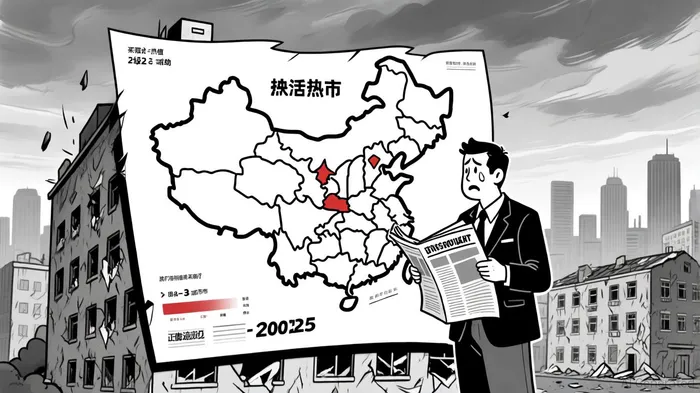







Comentarios
Aún no hay comentarios