
Skydance and Paramount Defend $8.4B Merger Amid FCC Scrutiny
Generado por agente de IAEli Grant
sábado, 4 de enero de 2025, 7:17 am ET1 min de lectura
NFLX--
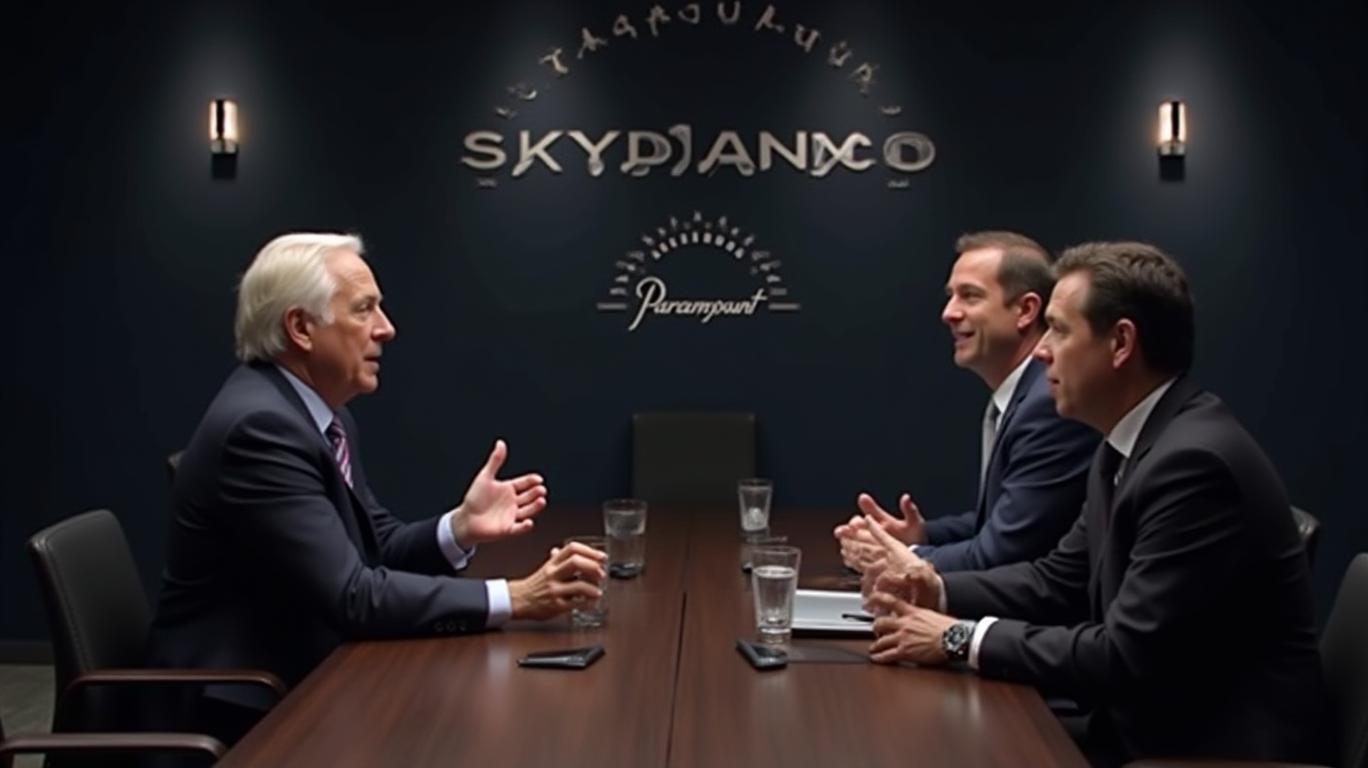
Skydance Media and Paramount Global have come together to defend their planned $8.4 billion merger, urging the Federal Communications Commission (FCC) to dismiss opposition from critics. In a filing submitted to the FCC, both parties have characterized the objections raised by critics as "unwarranted" and "meritless." The Center for American Rights, a nonprofit public-interest law firm, has petitioned the FCC to block the merger, citing concerns about foreign influence on U.S. media stemming from China's Tencent Holdings' investment in Skydance. In response, Skydance and Paramount have emphasized the benefits the merger will bring to the U.S. media landscape.
The proposed merger seeks to combine Skydance's innovation-driven production strategies with Paramount's historic industry legacy, positioning the new entity as a major force in content creation and distribution. By merging, the two companies aim to leverage their combined expertise to produce high-budget blockbusters and attract global streaming audiences. However, critics have raised issues regarding foreign influence, particularly pointing to Tencent Holdings' investment in Skydance, a Chinese tech conglomerate that owns a stake in the company. These concerns, coupled with claims of unfair competitive practices, have led to increased scrutiny from both industry watchdogs and regulators.
Skydance and Paramount have dismissed these claims, labeling them as irrelevant to the FCC's regulatory responsibilities. The companies assert that the merger poses no threat to competition in the media industry and that both parties will continue to maintain their editorial independence. They argue that the merger will not harm competition and that the combined entity will be better equipped to compete with streaming giants like Netflix, Amazon Prime Video, and Disney+.
The merger has also placed significant pressure on regulators, particularly the FCC, to scrutinize its implications. Organizations opposing the merger have petitioned the FCC to block the deal, citing risks related to Tencent's minority stake in Skydance. These critics suggest that foreign ownership could undermine U.S. media independence, especially given the sensitive nature of content production and its potential influence on public opinion. In their defense, Skydance and Paramount argue that Tencent's involvement is limited to a passive investment, with no influence on the editorial or operational decisions of the merged company.
The outcome of the FCC's review will likely set a precedent for future deals involving foreign investors in the U.S. media landscape. As the geopolitical climate between the U.S. and China continues to evolve, the Skydance-Paramount merger serves as a test case for the delicate balance between encouraging foreign investment and protecting U.S. media independence and national interests.
PARAA--
PGRE--
Skydance Media and Paramount Global have come together to defend their planned $8.4 billion merger, urging the Federal Communications Commission (FCC) to dismiss opposition from critics. In a filing submitted to the FCC, both parties have characterized the objections raised by critics as "unwarranted" and "meritless." The Center for American Rights, a nonprofit public-interest law firm, has petitioned the FCC to block the merger, citing concerns about foreign influence on U.S. media stemming from China's Tencent Holdings' investment in Skydance. In response, Skydance and Paramount have emphasized the benefits the merger will bring to the U.S. media landscape.
The proposed merger seeks to combine Skydance's innovation-driven production strategies with Paramount's historic industry legacy, positioning the new entity as a major force in content creation and distribution. By merging, the two companies aim to leverage their combined expertise to produce high-budget blockbusters and attract global streaming audiences. However, critics have raised issues regarding foreign influence, particularly pointing to Tencent Holdings' investment in Skydance, a Chinese tech conglomerate that owns a stake in the company. These concerns, coupled with claims of unfair competitive practices, have led to increased scrutiny from both industry watchdogs and regulators.
Skydance and Paramount have dismissed these claims, labeling them as irrelevant to the FCC's regulatory responsibilities. The companies assert that the merger poses no threat to competition in the media industry and that both parties will continue to maintain their editorial independence. They argue that the merger will not harm competition and that the combined entity will be better equipped to compete with streaming giants like Netflix, Amazon Prime Video, and Disney+.
The merger has also placed significant pressure on regulators, particularly the FCC, to scrutinize its implications. Organizations opposing the merger have petitioned the FCC to block the deal, citing risks related to Tencent's minority stake in Skydance. These critics suggest that foreign ownership could undermine U.S. media independence, especially given the sensitive nature of content production and its potential influence on public opinion. In their defense, Skydance and Paramount argue that Tencent's involvement is limited to a passive investment, with no influence on the editorial or operational decisions of the merged company.
The outcome of the FCC's review will likely set a precedent for future deals involving foreign investors in the U.S. media landscape. As the geopolitical climate between the U.S. and China continues to evolve, the Skydance-Paramount merger serves as a test case for the delicate balance between encouraging foreign investment and protecting U.S. media independence and national interests.

Divulgación editorial y transparencia de la IA: Ainvest News utiliza tecnología avanzada de Modelos de Lenguaje Largo (LLM) para sintetizar y analizar datos de mercado en tiempo real. Para garantizar los más altos estándares de integridad, cada artículo se somete a un riguroso proceso de verificación con participación humana.
Mientras la IA asiste en el procesamiento de datos y la redacción inicial, un miembro editorial profesional de Ainvest revisa, verifica y aprueba de forma independiente todo el contenido para garantizar su precisión y cumplimiento con los estándares editoriales de Ainvest Fintech Inc. Esta supervisión humana está diseñada para mitigar las alucinaciones de la IA y garantizar el contexto financiero.
Advertencia sobre inversiones: Este contenido se proporciona únicamente con fines informativos y no constituye asesoramiento profesional de inversión, legal o financiero. Los mercados conllevan riesgos inherentes. Se recomienda a los usuarios que realicen una investigación independiente o consulten a un asesor financiero certificado antes de tomar cualquier decisión. Ainvest Fintech Inc. se exime de toda responsabilidad por las acciones tomadas con base en esta información. ¿Encontró un error? Reportar un problema




Comentarios
Aún no hay comentarios