
SKNY-1: The Groundbreaking Therapy Poised to Transform Obesity and Addiction Treatment Markets
The global obesity and nicotine addiction markets represent a staggering $200+ billion opportunity by 2030, yet existing therapies fall short of addressing critical unmet needs. Current solutions like GLP-1 agonists (e.g., Ozempic®) and rimonabant are hampered by side effects, delivery limitations, or failed safety profiles. Enter SKNY-1, an oral drug candidate from MIRAMIRA-- Pharmaceuticals, which could redefine treatment paradigms with its novel mechanism of action and preclinical efficacy. Here's why investors should pay attention.
The Broken Status Quo: Why Current Therapies Fail
Obesity and nicotine addiction are intertwined with metabolic dysregulation, compulsive behavior, and emotional imbalance. Current treatments often address only one facet:- GLP-1 Agonists: Effective for weight loss (e.g., up to 17% in trials) but linked to muscle atrophy, gastrointestinal distress, and inconvenient injectable regimens.- Rimonabant: A CB1 antagonist that failed due to severe psychiatric side effects (anxiety, depression), underscoring the need for safer alternatives.- Nicotine Replacement Therapies: Limited by low long-term efficacy and addiction recurrence.
The market demands a therapy that simultaneously tackles weight, cravings, and emotional stability—without compromising safety. SKNY-1 aims to do just that.
The Science Behind SKNY-1: A Precision-Engineered Multi-Target Approach
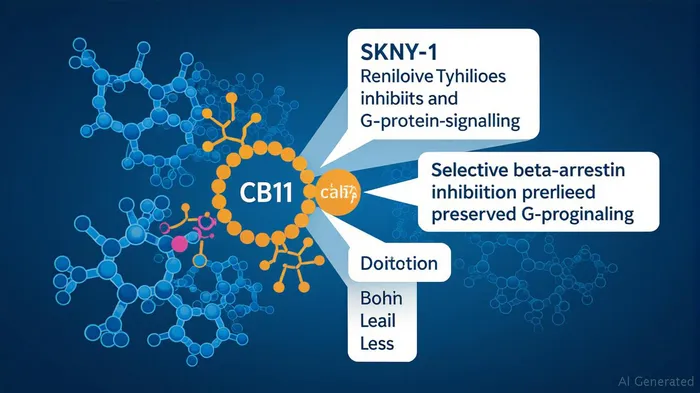
SKNY-1's breakthrough lies in its biased CB1 antagonism, a mechanism that:1. Blocks β-arrestin signaling at the CB1 receptor to suppress cravings and compulsive behavior.2. Preserves G-protein signaling to maintain emotional regulation, avoiding the mood disturbances seen with rimonabant.3. Activates CB2 receptors to reduce neuroinflammation, enhancing metabolic health and cognitive resilience.4. Mildly inhibits MAO-B to boost dopamine levels, improving motivation without affecting MAO-A (a known cause of serotonin syndrome).
Preclinical Results:- 30% weight loss in animal models while preserving muscle mass—surpassing GLP-1 agonists.- Craving reversal: Reduced nicotine and high-calorie food cravings, addressing both addiction and metabolic drivers.- Anxiety modulation: In zebrafish studies, SKNY-1 reversed anxiety induced by CB1 agonists and enhanced calming effects at low doses—contrasting starkly with rimonabant's worsening of anxiety.
Market Opportunity: A $200B+ Prize with Minimal Competition
The obesity drug market is projected to exceed $150 billion by 2030, while nicotine cessation therapies could hit $50 billion. SKNY-1's dual efficacy and safety profile position it to capture significant share:- Obesity: Outperforms GLP-1 agonists in muscle preservation and oral convenience.- Addiction: No approved pharmacotherapy currently addresses nicotine and metabolic disorders concurrently.- Safety: Avoids CNS side effects and MAO-A inhibition, sidestepping the pitfalls of rimonabant and other MAO inhibitors.
GLP-1 leader NVO's success highlights the market's potential—SKNY-1 could replicate or exceed this trajectory if trials succeed.
Why SKNY-1 Could Disrupt the Market
- First-in-Class Dual Efficacy: Combats obesity and addiction with a single oral dose.
- Superior Safety Profile: No psychiatric side effects, a critical differentiator from rimonabant.
- Convenience: Once-daily oral administration vs. weekly injections or restrictive oral GLP-1 regimens.
- Untapped Neurological Benefits: Reduces neuroinflammation, potentially improving cognitive and metabolic outcomes.
Risks and Catalysts to Watch
- Regulatory Hurdles: MIRA's acquisition of SKNY Pharmaceuticals requires shareholder and regulatory approvals.
- Clinical Translation: Preclinical success must hold in human trials (Phase 1 expected post-IND approval).
- Competitor Moves: GLP-1 innovators like RegeneronREGN-- (REGN) may extend their pipelines, but SKNY-1's unique mechanism offers a structural advantage.
Key Catalysts:- Q4 2025: Shareholder vote on MIRA's acquisition of SKNY.- 2026: Phase 1 safety data release.- 2028+: Potential Phase 2 results showing weight loss and craving reduction.
Investment Case: High Reward, Manageable Risk
SKNY-1's preclinical data and unmet need address make it a compelling high-risk, high-reward opportunity. Investors should:- Watch for Regulatory Milestones: A “yes” on the acquisition and IND approval will unlock upside.- Consider Early Exposure: If MIRA is publicly traded, accumulate shares ahead of Phase 1 results. If private, monitor partnerships or licensing deals.- Long-Term Play: Success in Phase 2+ trials could position SKNY-1 as a “best-in-class” therapy, driving MIRA's valuation to $5B+ by 2030.
Conclusion: A Game-Changer in the Making
SKNY-1's precision engineering and dual efficacy represent a paradigm shift in treating metabolic and addictive disorders. With a safety profile that avoids the pitfalls of past therapies and a market ripe for disruption, it's a rare opportunity to invest in a potential blockbuster. Watch for clinical catalysts in 2025-2026—this could be the next big thing in biotech.
Investment recommendation: Speculative buy with a focus on long-term upside, contingent on clinical validation.





Comentarios
Aún no hay comentarios