
SKF's Strategic Transformation: Operational Efficiency and Shareholder Value in the Age of Industrial Innovation
Sweden-based SKF Group has embarked on a transformative journey to redefine its industrial footprint, balancing operational efficiency with long-term shareholder value creation. By restructuring its business model, accelerating innovation, and embedding sustainability into its core operations, SKF is positioning itself as a leader in the evolving industrial landscape. This analysis examines how the company's strategic realignment and technological advancements are driving profitability and resilience in a volatile market.
Strategic Realignment: Separating Automotive to Unlock Value
SKF's decision to spin off its Automotive business into an independent entity is a pivotal step in its transformation. As stated by Rickard Gustafson, President and CEO, this move aims to create two distinct, “fit-for-purpose” businesses: Industrial and Automotive [1]. The separation, expected to be finalized by 2027, will allow the Automotive division to operate with greater agility, responding swiftly to the surging demand for electric vehicles (EVs) and lightweight components. For the Industrial business, the focus will sharpen on high-margin markets such as energy and automation.
The strategic rationale is clear: by isolating the Automotive unit, SKF can allocate capital more effectively and reduce operational complexity. According to the 2024 Annual Report, the company has already initiated a rightsizing program to optimize its workforce, targeting cost savings of approximately BSEK 2 billion by 2027 [1]. This restructuring, while short-term painful, is designed to enhance long-term margins and flexibility.
Operational Efficiency: Regionalization and Cost Discipline
Operational efficiency remains a cornerstone of SKF's strategy. The company has made significant strides in regionalization, increasing local production rates in Asia from 63% to 68% and in the Americas from 66% to 69% since 2024 [1]. This shift reduces logistics costs and supply chain risks while improving responsiveness to regional demand fluctuations.
Cost discipline is further reinforced by SKF's focus on lean manufacturing and digital tools. For instance, the company's investment in ceramic bearing technology—critical for high-speed rotation in EVs and renewable energy systems—has streamlined production cycles and reduced material waste [1]. These efforts are not just operational; they are strategic. By aligning production with market needs, SKF is mitigating exposure to global macroeconomic headwinds.
Innovation as a Growth Engine
SKF's R&D investments underscore its commitment to innovation. In 2024, the company spent SEK 3.33 billion on research and development, with over 90% of projects targeting high-growth markets [2]. Notable innovations include:
- Hub Bearing Units for EVs: 10% lighter and 30% more friction-efficient than conventional models [1].
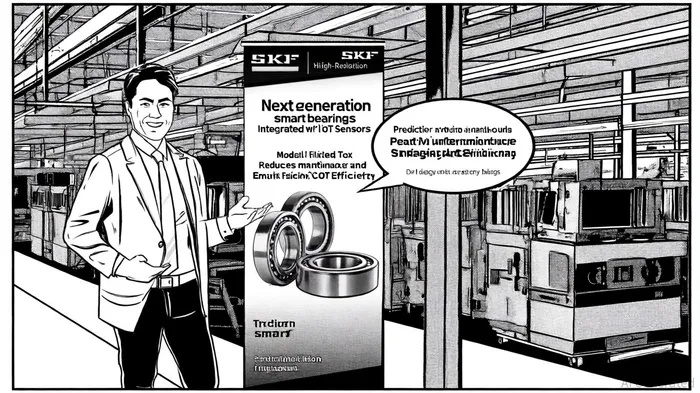
- Smart Bearings with IoT/Artificial Intelligence: Enabling predictive maintenance and reducing unplanned downtime for industrial clients [2].
- Energy-Efficient Deep Groove Ball Bearings: Cutting CO2 emissions by reducing frictional moment by 25% [2].
These advancements are not merely incremental; they redefine SKF's value proposition. By integrating digital technologies into physical products, the company is capturing premium pricing in markets where reliability and sustainability are paramount.
Sustainability as a Profit Center
SKF's sustainability initiatives are increasingly aligned with its financial goals. The company has achieved a 59% reduction in scope 1 and 2 emissions since 2019, surpassing the Science-Based Targets initiative (SBTi) trajectory [2]. This progress is not accidental but strategic: energy-efficient products like its deep groove ball bearings directly reduce clients' operational costs, creating a flywheel of demand.
Moreover, SKF's renewable energy usage has surged to 72% of total electricity consumption in 2024, up from 64% in 2023 [2]. This decarbonization not only mitigates regulatory risks but also enhances brand equity in ESG-focused markets. As data from the 2024 Annual Report indicates, such sustainability milestones are increasingly tied to customer contracts and investor expectations [2].
Financial Targets and Market Outlook
The upcoming Capital Markets Day on 11 November 2025 will provide critical clarity on SKF's financial roadmap. While the company has not yet disclosed post-separation targets, its 2024 performance offers optimism. Despite challenging macroeconomic conditions, SKF reported strong execution in Q2 2025, with margins resilient to inflationary pressures [1]. The separation of the Automotive business is expected to unlock additional value by 2027, with clearer financial metrics for both entities.
Investors should also note SKF's focus on cost reductions and R&D ROI. The company's ability to generate 90% of its innovation projects in high-growth markets suggests a disciplined approach to capital allocation [2]. This, combined with its decarbonization progress, positions SKF to outperform peers in a world increasingly prioritizing both profitability and planetary impact.
Conclusion
SKF's strategic transformation is a masterclass in aligning operational efficiency with long-term value creation. By separating its Automotive business, optimizing regionalization, and investing in cutting-edge technologies, the company is building a dual engine of growth: one rooted in industrial reliability and the other in sustainable innovation. For shareholders, the rewards are twofold: near-term margin expansion and long-term relevance in a decarbonizing global economy. As the November 2025 Capital Markets Day approaches, the market will be watching closely to see how SKF's vision translates into actionable financial targets.







Comentarios
Aún no hay comentarios