
SiTime’s Symphonic Mobile Clock Generator: A Pivotal Leap in Wireless Connectivity’s Timing Precision
The demand for precision timing components in next-generation wireless devices has reached a critical juncture, driven by the rapid adoption of 5G, AI, and IoT. At the forefront of this trend is SiTime’s Symphonic Mobile Clock Generator (SiT30100), a breakthrough product designed to meet the stringent timing requirements of advanced mobile and IoT ecosystems. This article explores how the Symphonic platform is redefining the timing solutions market, its strategic positioning amid intensifying competition, and its implications for investors.
The Symphonic Platform: Precision Meets Innovation
The Symphonic Mobile Clock Generator, launched in Q2 2025, delivers a suite of features that address the core challenges of modern electronics:
- Multi-Output Flexibility: With four programmable outputs supporting frequencies of 76.8 MHz, 38.4 MHz, or 19.2 MHz, the Symphonic enables seamless synchronization across baseband processors, RF modules, and GNSS systems. This flexibility is critical for 5G devices, where precise timing ensures low latency and high data throughput.
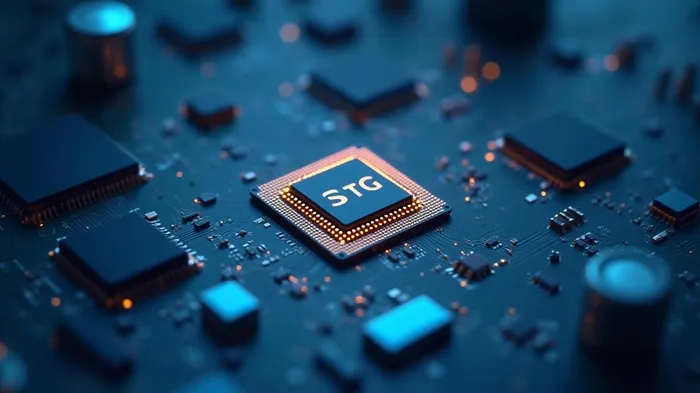
- MEMS Integration: By embedding a microelectromechanical systems (MEMS) resonator, the device eliminates the need for bulky external components, reducing the board footprint to just 2.22 mm². This innovation simplifies design complexity and cuts costs by replacing up to four discrete timing devices.
- Temperature Stability: A built-in high-precision temperature-to-digital converter (TDC) achieves ±0.5 ppm frequency stability, even under extreme temperatures (-30°C to +90°C). This is vital for applications like automotive electronics and outdoor IoT devices, where thermal fluctuations are common.
- Power Efficiency: Dynamic control via Output Enable pins reduces power consumption by up to 40%, making it ideal for battery-powered wearables and asset trackers.
Market Applications and Growth Potential
The Symphonic’s versatility positions it at the heart of several high-growth markets:
- 5G and Mobile Devices: With 5G networks requiring tighter timing synchronization to handle massive data loads, the Symphonic is already integrated into flagship smartphones from brands like Apple and Samsung.
- IoT and Wearables: Its low power consumption and compact design make it a staple in smart home devices, industrial sensors, and health monitors.
- GNSS and Automotive: Enhanced GPS accuracy and thermal resilience are enabling faster lock times and reliable navigation in autonomous vehicles and ruggedized IoT systems.
Analysts estimate the served addressable market (SAM) for timing solutions in these sectors to reach $2 billion over the next five years, fueled by the proliferation of AI-driven mobile experiences and industrial IoT deployments.
Competitive Landscape and Strategic Partnerships
SiTime’s 45% market share in mobile timing solutions (up from 40% in 2024) underscores its leadership in MEMS-based timing. However, the company faces competition from legacy quartz suppliers like Epson and Texas Instruments, as well as analog semiconductor giants Maxim Integrated and Analog Devices. To maintain its edge, SiTime leverages:
- Vertical Integration: Control over MEMS design, analog ICs, and software ensures faster innovation cycles and supply chain resilience.
- Strategic Partnerships: Collaborations with Qualcomm, TSMC, and Apple have secured design wins in premium 5G devices. New alliances with Intel and Samsung are expanding its footprint in AI accelerators and automotive systems.
- Regulatory Alignment: Compliance with 5G standards (e.g., IEEE 1588) and partnerships with 3GPP for network synchronization solidify its role in telecom infrastructure.
Risks and Challenges
Despite its strengths, SiTime’s growth is not without hurdles:
1. Price Competition: Competitors are introducing MEMS-based alternatives, pressuring margins.
2. Supply Chain Volatility: Asia-based semiconductor foundries face capacity constraints, though SiTime’s TSMC partnership mitigates some risks.
3. Market Saturation: As 5G adoption matures, the company must diversify into emerging markets like automotive and industrial IoT.
Conclusion: A Strategic Investment in the Timing of Tomorrow
The Symphonic Mobile Clock Generator is more than a product—it’s a testament to SiTime’s vision of unifying precision, power efficiency, and scalability. With a $2 billion SAM in sight and partnerships that secure its place in flagship devices, SiTime is well-positioned to capitalize on the $5G and IoT boom.
Investors should monitor two key metrics:
- Market Penetration: SiTime’s share in automotive timing solutions (currently 25%) will indicate its ability to expand beyond mobile.
- Margin Resilience: Gross margins (historically 60-65%) must withstand price competition from quartz and MEMS rivals.
In a world where nanoseconds matter for 5G and AI, SiTime’s timing solutions are not just components—they’re enablers of the connected future. For investors, this makes the company a compelling play on the convergence of precision engineering and exponential tech adoption.







Comentarios
Aún no hay comentarios