
Sipping Success: Jakarta's Mobile Coffee Revolution
Generado por agente de IAEli Grant
miércoles, 4 de diciembre de 2024, 10:30 pm ET3 min de lectura
EARN--
In the bustling streets of Jakarta, a unique phenomenon is brewing: the rise of mobile coffee sellers, or "Starlings," who pedal their way to success on bicycles laden with instant coffee and other packaged drinks. This article delves into the factors driving the popularity of these bicycle coffee sellers and their impact on Jakarta's evolving coffee culture.
The demand for instant coffee and convenience has significantly contributed to the growth of mobile coffee sellers in Jakarta. According to Snapcart, an Indonesian research agency, 79% of Indonesians are coffee drinkers, with most having at least one cup a day. The uneven distribution of coffee culture, where richer customers prefer upscale coffee shops and poorer residents opt for instant coffee from Starlings at less than half the price, has fueled the popularity of these mobile sellers. The ease of access, affordability, and the convenience they offer have made Starlings an integral part of Jakarta's coffee scene.
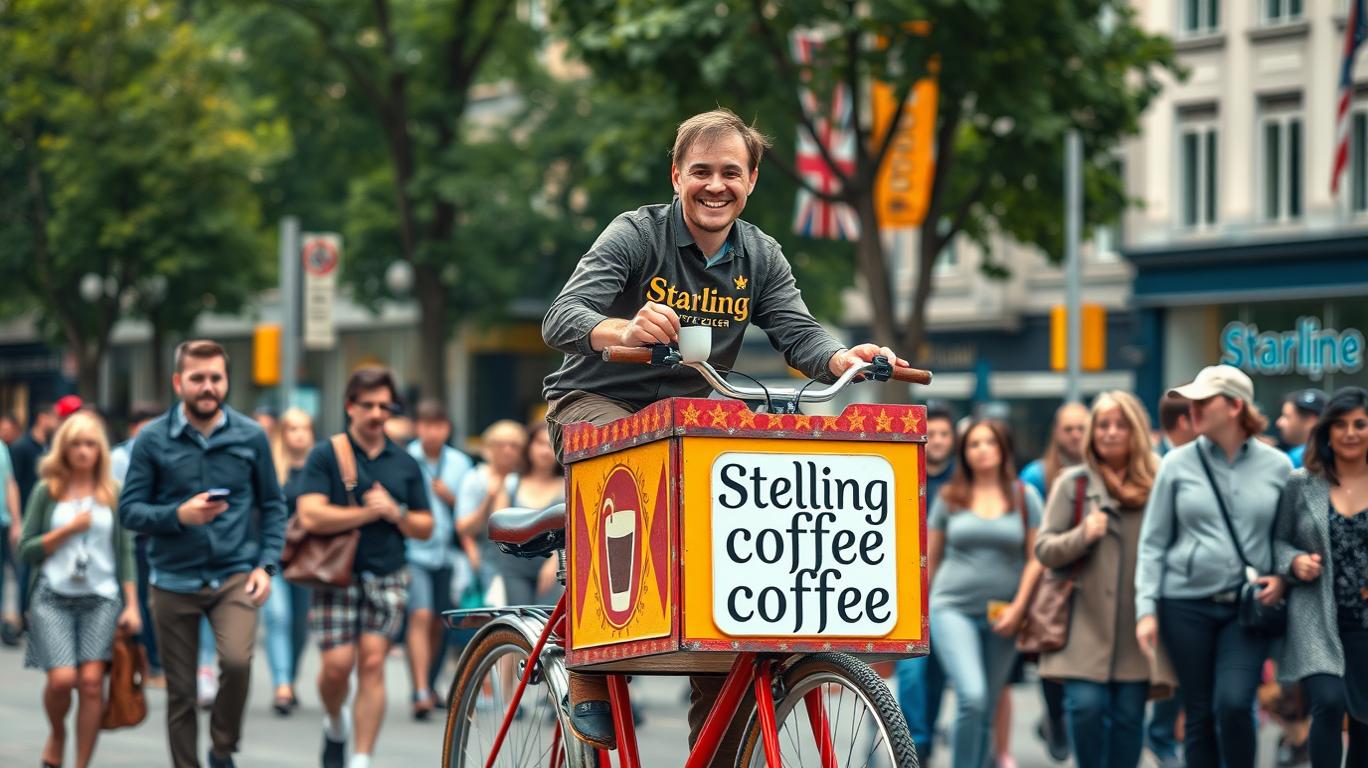
The adoption of the 'Starling' bicycle coffee seller model in Jakarta can be attributed to several factors. Firstly, the uneven distribution of coffee culture in Indonesia, with richer customers purchasing brews from upscale coffee shops, while poorer residents buy instant coffee from mobile sellers like Starlings (Marketscreener, 2024). This creates a demand for affordable, convenient coffee options. Secondly, the high percentage of Indonesian coffee drinkers, with most having at least one cup a day, further fuels this demand (Snapcart, 2024). Additionally, the low startup cost of becoming a Starling coffee seller, requiring only a small amount of money to buy instant coffee and rent equipment, makes it an attractive business option for those looking to earn a living (Marketscreener, 2024). Lastly, the evolution of Jakarta's coffee culture, with mobile sellers replacing traditional kiosks, has also contributed to the growth of Starling coffee sellers (NetizenBali, 2020).
Technological advancements have significantly impacted the mobile coffee seller trend in Jakarta. Mobile payment apps like GoPay have streamlined transactions, reducing the need for cash and enabling greater efficiency. This shift has not only enhanced convenience for both vendors and customers but also facilitated expansion into new areas. Furthermore, the integration of digital platforms has improved inventory management. Suppliers, like Syaiful, can monitor sales and restock accordingly, optimizing resource allocation. Additionally, social media platforms have been employed to promote the mobile coffee seller culture, with users sharing photos and reviews, further boosting its popularity.
In Jakarta, the evolution of coffee culture has seen a shift from traditional kiosks to mobile coffee sellers, known as "Starlings." This transition has been driven by factors such as convenience, affordability, and adaptations to urban life. Initially, people sold bottled tea on pushcarts in the 1980s, but the introduction of bicycle coffee sellers in the early 2000s marked a significant change. Now, there are around 500 Starlings in Kampung Starling, operating mainly in Central Jakarta and even reaching South Jakarta and North Jakarta.
The affordability and convenience of Starling coffee compare favorably to traditional coffee shops and instant coffee options. A cup costs around 4,000 rupiah ($0.25), less than half the price of upscale coffee shops, and is readily available from dawn to midnight. Instant coffee, another affordable option, is popular among poorer residents, but Starlings provide a more accessible, on-the-go solution. Their mobile nature allows them to reach customers in parks, at construction sites, and even during events, providing a level of convenience unmatched by traditional coffee shops or instant coffee.
Cultural preferences and social norms play a significant role in the popularity of Starling coffee sellers among different socio-economic classes. According to Snapcart, an Indonesian research agency, 79% of Indonesians are coffee drinkers, with most having at least one cup a day. The uneven distribution of coffee culture, where richer customers prefer upscale coffee shops and poorer residents opt for instant coffee from Starlings, highlights the importance of affordability and accessibility. The mobile nature of Starling sellers and their ability to operate from dawn to midnight make them readily available, appealing to various socio-economic classes. Additionally, the social norm of supporting local, independent businesses contributes to Starlings' popularity, as they provide employment opportunities and foster a sense of community among vendors and customers.
The evolving urban landscape and infrastructure in Jakarta have significantly contributed to the growth of Starling coffee sellers. The city's expansion and increasing population have led to a surge in demand for affordable, convenient, and mobile beverage options. The emergence of Starling Village, a settlement housing hundreds of Starling riders, is a testament to this growth. The area serves as a hub for coffee suppliers and wholesalers, providing a steady supply of instant coffee and other packaged drinks to Starling sellers. Furthermore, the city's infrastructure, with its busy business districts and construction sites, offers ample opportunities for Starlings to sell their products. The Starling business model, which requires only a small investment to start, has also attracted many individuals, with nearly all Starling riders originating from Madura Island in East Java.
Starling coffee sellers have employed low-cost, organic marketing strategies to attract and retain diverse customer segments. By positioning their bicycles strategically in high-foot-traffic areas like parks, construction sites, and business districts, they ensure visibility and convenience for their customers. Furthermore, their affordable pricing strategy, with instant coffee sachets sold for less than half the price of upscale coffee shops, caters to the budget-conscious segment. Additionally, Starling sellers' extended operating hours, from dawn to midnight, enable them to capture the attention of customers seeking coffee at any time of the day, thereby attracting a diverse customer base.
In conclusion, the rise of mobile coffee sellers, or "Starlings," in Jakarta is a testament to the power of convenience, affordability, and adaptability in the face of evolving urban landscapes and consumer preferences. As the city continues to grow and change, these bicycle coffee sellers remain a vital and growing part of Jakarta's coffee culture.
In the bustling streets of Jakarta, a unique phenomenon is brewing: the rise of mobile coffee sellers, or "Starlings," who pedal their way to success on bicycles laden with instant coffee and other packaged drinks. This article delves into the factors driving the popularity of these bicycle coffee sellers and their impact on Jakarta's evolving coffee culture.
The demand for instant coffee and convenience has significantly contributed to the growth of mobile coffee sellers in Jakarta. According to Snapcart, an Indonesian research agency, 79% of Indonesians are coffee drinkers, with most having at least one cup a day. The uneven distribution of coffee culture, where richer customers prefer upscale coffee shops and poorer residents opt for instant coffee from Starlings at less than half the price, has fueled the popularity of these mobile sellers. The ease of access, affordability, and the convenience they offer have made Starlings an integral part of Jakarta's coffee scene.
The adoption of the 'Starling' bicycle coffee seller model in Jakarta can be attributed to several factors. Firstly, the uneven distribution of coffee culture in Indonesia, with richer customers purchasing brews from upscale coffee shops, while poorer residents buy instant coffee from mobile sellers like Starlings (Marketscreener, 2024). This creates a demand for affordable, convenient coffee options. Secondly, the high percentage of Indonesian coffee drinkers, with most having at least one cup a day, further fuels this demand (Snapcart, 2024). Additionally, the low startup cost of becoming a Starling coffee seller, requiring only a small amount of money to buy instant coffee and rent equipment, makes it an attractive business option for those looking to earn a living (Marketscreener, 2024). Lastly, the evolution of Jakarta's coffee culture, with mobile sellers replacing traditional kiosks, has also contributed to the growth of Starling coffee sellers (NetizenBali, 2020).
Technological advancements have significantly impacted the mobile coffee seller trend in Jakarta. Mobile payment apps like GoPay have streamlined transactions, reducing the need for cash and enabling greater efficiency. This shift has not only enhanced convenience for both vendors and customers but also facilitated expansion into new areas. Furthermore, the integration of digital platforms has improved inventory management. Suppliers, like Syaiful, can monitor sales and restock accordingly, optimizing resource allocation. Additionally, social media platforms have been employed to promote the mobile coffee seller culture, with users sharing photos and reviews, further boosting its popularity.
In Jakarta, the evolution of coffee culture has seen a shift from traditional kiosks to mobile coffee sellers, known as "Starlings." This transition has been driven by factors such as convenience, affordability, and adaptations to urban life. Initially, people sold bottled tea on pushcarts in the 1980s, but the introduction of bicycle coffee sellers in the early 2000s marked a significant change. Now, there are around 500 Starlings in Kampung Starling, operating mainly in Central Jakarta and even reaching South Jakarta and North Jakarta.
The affordability and convenience of Starling coffee compare favorably to traditional coffee shops and instant coffee options. A cup costs around 4,000 rupiah ($0.25), less than half the price of upscale coffee shops, and is readily available from dawn to midnight. Instant coffee, another affordable option, is popular among poorer residents, but Starlings provide a more accessible, on-the-go solution. Their mobile nature allows them to reach customers in parks, at construction sites, and even during events, providing a level of convenience unmatched by traditional coffee shops or instant coffee.
Cultural preferences and social norms play a significant role in the popularity of Starling coffee sellers among different socio-economic classes. According to Snapcart, an Indonesian research agency, 79% of Indonesians are coffee drinkers, with most having at least one cup a day. The uneven distribution of coffee culture, where richer customers prefer upscale coffee shops and poorer residents opt for instant coffee from Starlings, highlights the importance of affordability and accessibility. The mobile nature of Starling sellers and their ability to operate from dawn to midnight make them readily available, appealing to various socio-economic classes. Additionally, the social norm of supporting local, independent businesses contributes to Starlings' popularity, as they provide employment opportunities and foster a sense of community among vendors and customers.
The evolving urban landscape and infrastructure in Jakarta have significantly contributed to the growth of Starling coffee sellers. The city's expansion and increasing population have led to a surge in demand for affordable, convenient, and mobile beverage options. The emergence of Starling Village, a settlement housing hundreds of Starling riders, is a testament to this growth. The area serves as a hub for coffee suppliers and wholesalers, providing a steady supply of instant coffee and other packaged drinks to Starling sellers. Furthermore, the city's infrastructure, with its busy business districts and construction sites, offers ample opportunities for Starlings to sell their products. The Starling business model, which requires only a small investment to start, has also attracted many individuals, with nearly all Starling riders originating from Madura Island in East Java.
Starling coffee sellers have employed low-cost, organic marketing strategies to attract and retain diverse customer segments. By positioning their bicycles strategically in high-foot-traffic areas like parks, construction sites, and business districts, they ensure visibility and convenience for their customers. Furthermore, their affordable pricing strategy, with instant coffee sachets sold for less than half the price of upscale coffee shops, caters to the budget-conscious segment. Additionally, Starling sellers' extended operating hours, from dawn to midnight, enable them to capture the attention of customers seeking coffee at any time of the day, thereby attracting a diverse customer base.
In conclusion, the rise of mobile coffee sellers, or "Starlings," in Jakarta is a testament to the power of convenience, affordability, and adaptability in the face of evolving urban landscapes and consumer preferences. As the city continues to grow and change, these bicycle coffee sellers remain a vital and growing part of Jakarta's coffee culture.

Divulgación editorial y transparencia de la IA: Ainvest News utiliza tecnología avanzada de Modelos de Lenguaje Largo (LLM) para sintetizar y analizar datos de mercado en tiempo real. Para garantizar los más altos estándares de integridad, cada artículo se somete a un riguroso proceso de verificación con participación humana.
Mientras la IA asiste en el procesamiento de datos y la redacción inicial, un miembro editorial profesional de Ainvest revisa, verifica y aprueba de forma independiente todo el contenido para garantizar su precisión y cumplimiento con los estándares editoriales de Ainvest Fintech Inc. Esta supervisión humana está diseñada para mitigar las alucinaciones de la IA y garantizar el contexto financiero.
Advertencia sobre inversiones: Este contenido se proporciona únicamente con fines informativos y no constituye asesoramiento profesional de inversión, legal o financiero. Los mercados conllevan riesgos inherentes. Se recomienda a los usuarios que realicen una investigación independiente o consulten a un asesor financiero certificado antes de tomar cualquier decisión. Ainvest Fintech Inc. se exime de toda responsabilidad por las acciones tomadas con base en esta información. ¿Encontró un error? Reportar un problema


SOBRE NOSOTROS
Nuestra historiaAutores de noticiasBase de conocimientosPolítica de privacidadTérmino de usoDescargo de responsabilidad de corretaje de tercerosTérminos de uso de AIMEDivulgaciones de riesgos de AInvest AICarrerasCONTÁCTENOS
Email: support@ainvest.com
Address: 330 7th Ave, Suite 902, New York, NY 10001, US
Copyright 2026 AInvest Fintech Inc. All rights reserved.


Comentarios
Aún no hay comentarios